THE ADVENTURE COLLECTIVE® · Independent discovery and booking for outdoor travel

Spend a night suspended 400 meters above the Sacred Valley in a transparent Skylodge capsule after ascending by via ferrata or zipping in on a long zipline. Expect exposed climbing, high-altitude views, and a 48-hour adventure that blends adrenaline with a unique overnight stay.
Spend a night suspended 400 meters above the Sacred Valley in a transparent Skylodge capsule after ascending by via ferrata or zipping in on a long zipline. Expect exposed climbing, high-altitude views, and a 48-hour adventure that blends adrenaline with a unique overnight stay.
You clip in at dawn and the valley exhales beneath you—terraced fields and red-tiled villages slipping away as you climb a vertical rib of Andean limestone. Wind tugs at your harness, daring you forward; the rock holds steady. At the top, three transparent capsules hang 400 meters above the Sacred Valley, their polycarbonate shells catching late light while the valley hums far below.
Verified experiences and guided adventures in the surrounding area.
Operated by VIPAC Travel · Ollantaytambo, Cusco
You clip in at dawn and the valley exhales beneath you—terraced fields and red-tiled villages slipping away as you climb a vertical rib of Andean limestone. Wind tugs at your harness, daring you forward; the rock holds steady. At the top, three transparent capsules hang 400 meters above the Sacred Valley, their polycarbonate shells catching late light while the valley hums far below.
This stretch of the Sacred Valley was shaped by glacial carving and millennia of Inca engineering—the terraces and irrigation channels still visible from the route. The area’s Quechua communities keep living traditions close, and the ruins scattered through the valley remind you why the Incas built here: strategic views, arable soils and mineral-rich slopes.
Geologically the cliffs offer fractured volcanic and sedimentary layers—good purchase for via ferrata rungs and anchors. Culturally, guides often share Quechua place names and local stories; smallholder farms and salt pans punctuate the landscape on the ride back.
Practical guidance: the full experience runs about 48 hours—expect a strenuous ascent on a secured via ferrata (moderate technical demand) or an adrenaline-packed zipline option. Capsules sleep four with basic facilities; ecological lighting is provided but bring a headlamp. Acclimatize in Cusco or Ollantaytambo first—altitude is 2,800–3,200 m. Wear layered clothing, sturdy closed-toe shoes, and pack 2+ liters of water, sunscreen and windproof insulation. Minimum age is 18; guides provide harnesses, helmets and via ferrata sets. For those ready to trade a bed for a cliff, this is a rare mix of exposure, comfort and rim-to-river perspective.
moderate.
48 hours.
Participants should have a moderate level of fitness, comfortable with sustained climbs and exposure for several hours at a time.
The capsules are suspended roughly 400 meters above the valley floor, offering expansive views and a pronounced sense of exposure.
No formal climbing experience is required, but participants must be comfortable with heights and have the fitness for a sustained via ferrata ascent; guides provide instruction and gear.
Typical inclusions are professional guides, transfers from Cusco or the Sacred Valley, overnight accommodation in a Skylodge capsule, and safety equipment for the chosen option.
Yes; many operators offer either a via ferrata ascent or a zipline approach to reach the area—confirm your option when booking.
The Sacred Valley was a strategic agricultural and spiritual region for the Inca, with extensive terraces and infrastructure still visible along the route.
Operators emphasize leave-no-trace practices and limit group sizes; stick to marked trails and carry out all non-biodegradable waste to protect fragile highland ecosystems.
VIPAC Travel operates guided outdoor trips and adventures with an emphasis on safety, stewardship, and memorable experiences.
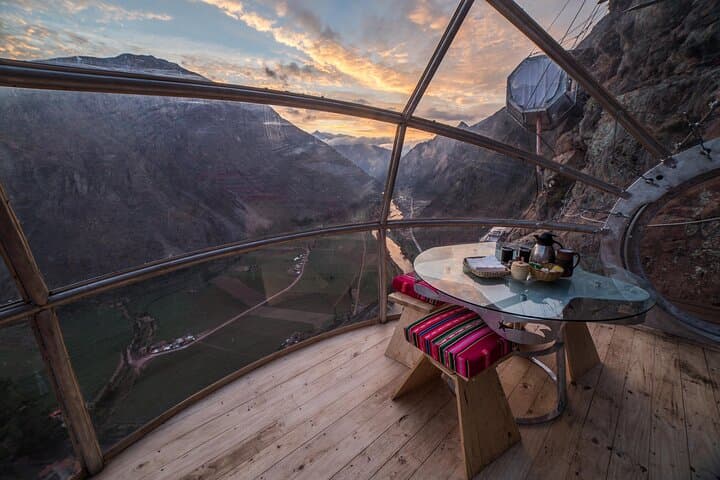
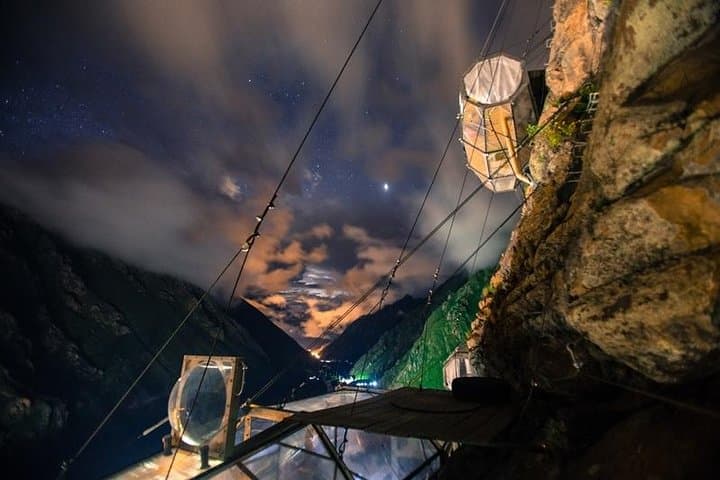
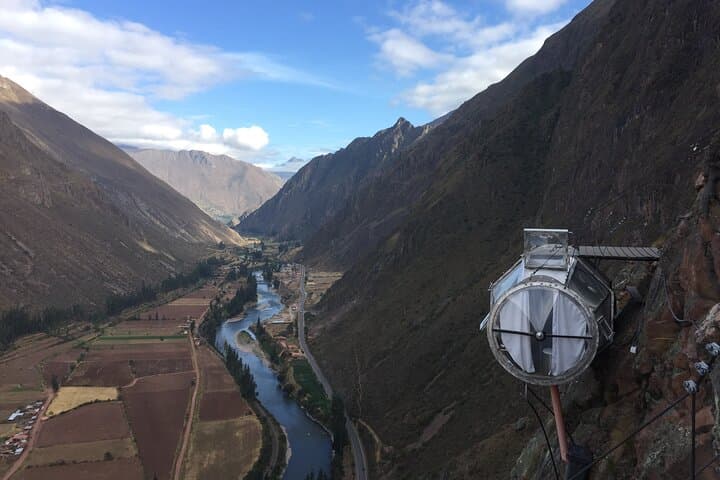
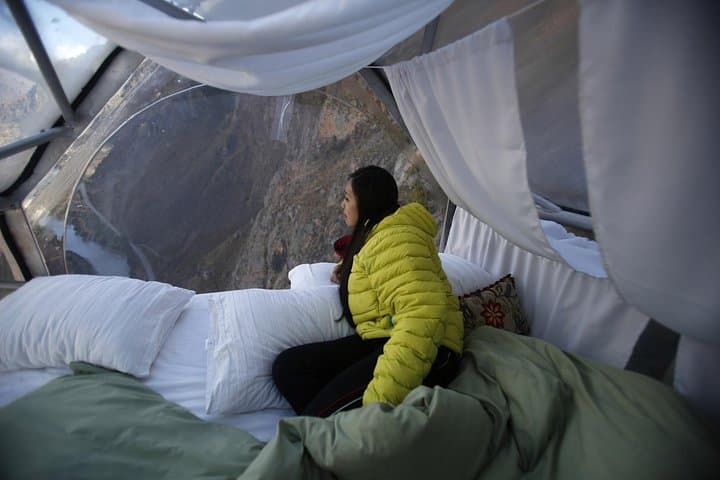
You clip in at dawn and the valley exhales beneath you—terraced fields and red-tiled villages slipping away as you climb a vertical rib of Andean limestone. Wind tugs at your harness, daring you forward; the rock holds steady. At the top, three transparent capsules hang 400 meters above the Sacred Valley, their polycarbonate shells catching late light while the valley hums far below.
You clip in at dawn and the valley exhales beneath you—terraced fields and red-tiled villages slipping away as you climb a vertical rib of Andean limestone. Wind tugs at your harness, daring you forward; the rock holds steady. At the top, three transparent capsules hang 400 meters above the Sacred Valley, their polycarbonate shells catching late light while the valley hums far below.
This stretch of the Sacred Valley was shaped by glacial carving and millennia of Inca engineering—the terraces and irrigation channels still visible from the route. The area’s Quechua communities keep living traditions close, and the ruins scattered through the valley remind you why the Incas built here: strategic views, arable soils and mineral-rich slopes.
Geologically the cliffs offer fractured volcanic and sedimentary layers—good purchase for via ferrata rungs and anchors. Culturally, guides often share Quechua place names and local stories; smallholder farms and salt pans punctuate the landscape on the ride back.
Practical guidance: the full experience runs about 48 hours—expect a strenuous ascent on a secured via ferrata (moderate technical demand) or an adrenaline-packed zipline option. Capsules sleep four with basic facilities; ecological lighting is provided but bring a headlamp. Acclimatize in Cusco or Ollantaytambo first—altitude is 2,800–3,200 m. Wear layered clothing, sturdy closed-toe shoes, and pack 2+ liters of water, sunscreen and windproof insulation. Minimum age is 18; guides provide harnesses, helmets and via ferrata sets. For those ready to trade a bed for a cliff, this is a rare mix of exposure, comfort and rim-to-river perspective.