THE ADVENTURE COLLECTIVE® · Independent discovery and booking for outdoor travel

A full-day private shore excursion from Dublin or nearby ports that follows the Wild Atlantic Way to the Cliffs of Moher, with stops in the Burren and optional visits to Bunratty Castle and Galway. Expect dramatic sea cliffs, limestone karst, short exposed walks and cultural stops.
A full-day private shore excursion from Dublin or nearby ports that follows the Wild Atlantic Way to the Cliffs of Moher, with stops in the Burren and optional visits to Bunratty Castle and Galway. Expect dramatic sea cliffs, limestone karst, short exposed walks and cultural stops.
You step from the coach into a wind that thinks it owns the shore; sea-spray drifts across the viewing platform and the horizon breaks into the ragged edges of the Aran Islands. The Cliffs of Moher stretch away, a stone scar where the Atlantic tests Ireland’s west coast — sheer faces dropping roughly 120–214 metres to foam and tide.
Verified experiences and guided adventures in the surrounding area.
Operated by Dublin Shore Excursions · Doolin, County Clare
You step from the coach into a wind that thinks it owns the shore; sea-spray drifts across the viewing platform and the horizon breaks into the ragged edges of the Aran Islands. The Cliffs of Moher stretch away, a stone scar where the Atlantic tests Ireland’s west coast — sheer faces dropping roughly 120–214 metres to foam and tide.
This route follows the Wild Atlantic Way, a dramatic coastal drive that reveals changing geology: the horizontal bands of limestone in The Burren, wind-polished and plant-studded, give way to the vertical, cliff-cut layers at Moher. Poulnabrone Dolmen’s flat capstone stands as a Neolithic punctuation in that limestone, and Bunratty Castle nearby recalls medieval lordship and later folklore. Galway adds a cultural counterpoint — streets where Irish language and traditional music remain lively.
Expect interpretive stops at the Atlantic Edge centre, brief guided viewpoints, and optional visits to Bunratty or Clonmacnoise if time allows. Walking at the cliffs is short but exposed; paths can be muddy and winds unpredictable. Bring a waterproof layer, stout footwear, and allow time for photography and a warm drink in the visitor centre.
Practically: the day is long—plan for an 11–12 hour excursion if travelling from Dublin—so hydrate before and during the drive, keep valuables secure on windy overlooks, and respect marked fences and wildlife closures. The real reward is that instant gasp when you first see the cliff edge — it’s why people travel west.
moderate.
11–12 hours.
Moderate fitness for brief walking at sites, boarding/exiting the vehicle, and standing on exposed viewpoints.
No; the excursion typically includes transport but not the admission fee to the visitor centre — confirm at booking for any package variations.
Walking is short but exposed: expect 15–60 minutes at viewing platforms. Optional nearby walks (longer) are available but not required.
Yes, with caution: paths are manageable but windy; those with mobility limitations should stay at designated accessible viewpoints and avoid cliff-edge tracks.
Not usually on the same day from Dublin; Aran Islands require separate ferry time from Doolin or Rossaveal and often a dedicated half-day or more.
The cliffs and surrounding coast have been occupied since Neolithic times (see dolmens); later medieval strongholds like Bunratty reflect regional clans and maritime trade.
Erosion, trampling and seabird nesting are ongoing concerns; stay on boardwalks where provided, take litter home, and follow seasonal closures to protect wildlife.
Dublin Shore Excursions operates guided outdoor trips and adventures with an emphasis on safety, stewardship, and memorable experiences.
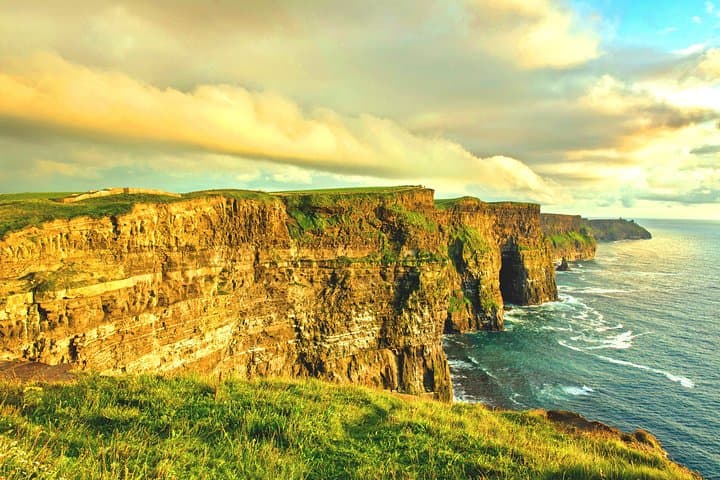


You step from the coach into a wind that thinks it owns the shore; sea-spray drifts across the viewing platform and the horizon breaks into the ragged edges of the Aran Islands. The Cliffs of Moher stretch away, a stone scar where the Atlantic tests Ireland’s west coast — sheer faces dropping roughly 120–214 metres to foam and tide.
You step from the coach into a wind that thinks it owns the shore; sea-spray drifts across the viewing platform and the horizon breaks into the ragged edges of the Aran Islands. The Cliffs of Moher stretch away, a stone scar where the Atlantic tests Ireland’s west coast — sheer faces dropping roughly 120–214 metres to foam and tide.
This route follows the Wild Atlantic Way, a dramatic coastal drive that reveals changing geology: the horizontal bands of limestone in The Burren, wind-polished and plant-studded, give way to the vertical, cliff-cut layers at Moher. Poulnabrone Dolmen’s flat capstone stands as a Neolithic punctuation in that limestone, and Bunratty Castle nearby recalls medieval lordship and later folklore. Galway adds a cultural counterpoint — streets where Irish language and traditional music remain lively.
Expect interpretive stops at the Atlantic Edge centre, brief guided viewpoints, and optional visits to Bunratty or Clonmacnoise if time allows. Walking at the cliffs is short but exposed; paths can be muddy and winds unpredictable. Bring a waterproof layer, stout footwear, and allow time for photography and a warm drink in the visitor centre.
Practically: the day is long—plan for an 11–12 hour excursion if travelling from Dublin—so hydrate before and during the drive, keep valuables secure on windy overlooks, and respect marked fences and wildlife closures. The real reward is that instant gasp when you first see the cliff edge — it’s why people travel west.