THE ADVENTURE COLLECTIVE® · Independent discovery and booking for outdoor travel

Explore Cleveland’s haunted core on a one-hour guided walk that pairs local history with hands-on ghost-hunting tools. Visit Erie Street Cemetery, Grays Armory, and Playhouse Square while testing EMF detectors at after-dark stops.
Explore Cleveland’s haunted core on a one-hour guided walk that pairs local history with hands-on ghost-hunting tools. Visit Erie Street Cemetery, Grays Armory, and Playhouse Square while testing EMF detectors at after-dark stops.
Night settles over Cleveland and the city changes voice: theater marquees flicker like watchful eyes, Erie Street Cemetery lets loose an echo from its headstones, and alley shadows seem to lean closer. On this one-hour guided walk, participants move through downtown blocks where industrial history and urban renewal meet—each stop layered with 19th- and 20th-century stories and the kind of local lore that sticks to brick and iron.
Verified experiences and guided adventures in the surrounding area.
Night settles over Cleveland and the city changes voice: theater marquees flicker like watchful eyes, Erie Street Cemetery lets loose an echo from its headstones, and alley shadows seem to lean closer. On this one-hour guided walk, participants move through downtown blocks where industrial history and urban renewal meet—each stop layered with 19th- and 20th-century stories and the kind of local lore that sticks to brick and iron.
Guides lead groups to sites such as Erie Street Cemetery, Grays Armory, and Playhouse Square, narrating documented events and oral histories that shaped the city’s downtown. Erie Street Cemetery dates to the city’s early settlement era and reads as a ledger of Cleveland’s founders and early epidemics; Playhouse Square reflects the rise, fall, and revival of a Midwestern theater district. The tour mixes recorded history with modern ghost-hunting techniques: groups receive EMF detectors and basic instruction to try readings at chosen locations.
Practically, this is a walking tour on paved city streets and dimly lit lots—comfortable shoes and a jacket are sensible year-round. Expect frequent stops, short walking segments, and close quarters in small groups. Photography is allowed but bring a phone flashlight for uneven curbs. Guides encourage respectful behavior in historic sites and advise leaving markers undisturbed. Whether skeptical or curious, participants should come ready for quick, immersive storytelling and hands-on gadgetry that makes Cleveland’s past feel immediate and a little unsettled.
easy.
1 hour.
Minimal fitness required; participants should be able to stand and walk short distances on paved surfaces for up to an hour.
The tour is primarily outdoors on city sidewalks, plazas, and cemetery paths with brief stops in street-front areas; expect limited indoor access.
Yes—each group receives EMF detectors and basic instruction so participants can try readings under guide supervision.
Older children who can follow safety guidelines and handle night settings are appropriate; the content includes historical accounts and spooky stories that may unsettle younger kids.
Portions include uneven ground and curbs; contact the operator ahead of booking to discuss accessibility needs and potential alternate routes.
Erie Street Cemetery, established in the early 1820s, is one of Cleveland’s oldest public burial grounds and reflects the city’s early civic development and epidemics.
Visitors are asked to respect grave markers and historic fabric—stay on paths and avoid touching or leaning on monuments to preserve them for future generations.
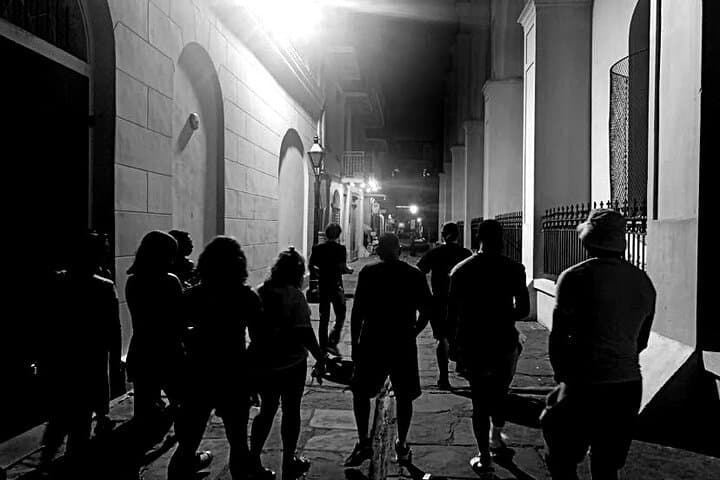
Night settles over Cleveland and the city changes voice: theater marquees flicker like watchful eyes, Erie Street Cemetery lets loose an echo from its headstones, and alley shadows seem to lean closer. On this one-hour guided walk, participants move through downtown blocks where industrial history and urban renewal meet—each stop layered with 19th- and 20th-century stories and the kind of local lore that sticks to brick and iron.
Night settles over Cleveland and the city changes voice: theater marquees flicker like watchful eyes, Erie Street Cemetery lets loose an echo from its headstones, and alley shadows seem to lean closer. On this one-hour guided walk, participants move through downtown blocks where industrial history and urban renewal meet—each stop layered with 19th- and 20th-century stories and the kind of local lore that sticks to brick and iron.
Guides lead groups to sites such as Erie Street Cemetery, Grays Armory, and Playhouse Square, narrating documented events and oral histories that shaped the city’s downtown. Erie Street Cemetery dates to the city’s early settlement era and reads as a ledger of Cleveland’s founders and early epidemics; Playhouse Square reflects the rise, fall, and revival of a Midwestern theater district. The tour mixes recorded history with modern ghost-hunting techniques: groups receive EMF detectors and basic instruction to try readings at chosen locations.
Practically, this is a walking tour on paved city streets and dimly lit lots—comfortable shoes and a jacket are sensible year-round. Expect frequent stops, short walking segments, and close quarters in small groups. Photography is allowed but bring a phone flashlight for uneven curbs. Guides encourage respectful behavior in historic sites and advise leaving markers undisturbed. Whether skeptical or curious, participants should come ready for quick, immersive storytelling and hands-on gadgetry that makes Cleveland’s past feel immediate and a little unsettled.