THE ADVENTURE COLLECTIVE® · Independent discovery and booking for outdoor travel

Walk through Pile Gate into Dubrovnik’s living history on a private 105-minute guided tour. Discover the Old Town’s fountains, squares, port, cathedral, and baroque staircases with local insights and practical tips for a smooth visit.
Walk through Pile Gate into Dubrovnik’s living history on a private 105-minute guided tour. Discover the Old Town’s fountains, squares, port, cathedral, and baroque staircases with local insights and practical tips for a smooth visit.
You step through Pile Gate and the city rearranges itself around you: sun on limestone, voices bouncing off narrow alleyways, the Adriatic suggesting routes along the harbor. A private guide leads the way—your 105-minute introduction to Dubrovnik’s compact Old Town, where stone streets set the pace and the walls keep history close.
Verified experiences and guided adventures in the surrounding area.
Operated by Best Dubrovnik Stay · Dubrovnik, Dubrovnik-Neretva County
You step through Pile Gate and the city rearranges itself around you: sun on limestone, voices bouncing off narrow alleyways, the Adriatic suggesting routes along the harbor. A private guide leads the way—your 105-minute introduction to Dubrovnik’s compact Old Town, where stone streets set the pace and the walls keep history close.
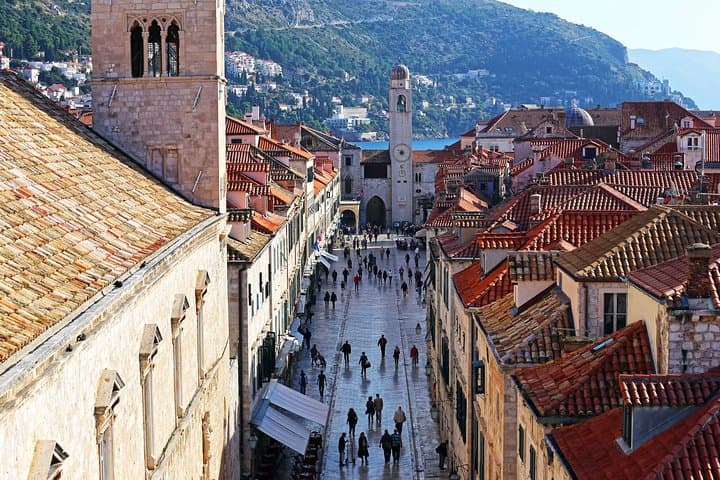
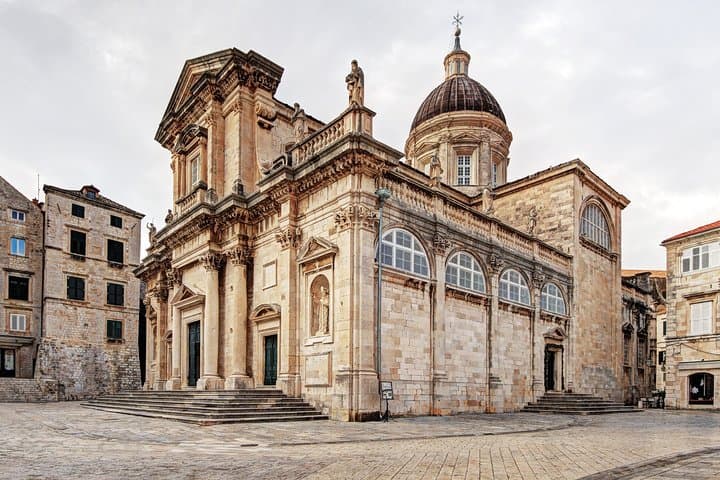
The itinerary threads Stradun (the Placa), Onofrio’s Fountain—part of one of Europe’s oldest water systems—and Luža Square with Orlando’s Column and St. Blaise Church. Walks include the Old Port and Arsenal, where medieval argosy ships once launched, and a pass by the 30-meter-high St. Lawrence Fort on its rocky promontory. The route ends at Bosković Square by the Jesuit Church and famous baroque stairs, a modern landmark shaped by Dubrovnik’s baroque rebuild after the 1667 earthquake.
Geology and geography are plain: the walled city sits on limestone karst, cliffs dropping to a clear, often brisk Adriatic. Culturally, Dubrovnik grew as the Republic of Ragusa—a trading maritime state—and its architecture reflects both defensive necessity and mercantile confidence.
Practical guidance: start early to avoid cruise crowds, wear sturdy shoes for uneven cobbles and stairs, and bring water—there’s limited shade on open squares. The tour is private, English-speaking, and suitable for most fitness levels, but be ready for short stands and stair climbs. Public transport and taxis connect easily to Pile Gate; the guide meets at the main tourist information desk. Expect vivid stories, compact walking, and an efficient primer on why Dubrovnik’s walls and streets matter now, not just in books.
easy.
1.5–2 hours.
Suitable for most travelers who can stand and walk short distances; minimal endurance required.
The guide meets at the Main Information Desk (Tourist Board) at Pile Gate; the tour finishes at Bosković Square in front of St. Ignatius Jesuit Church.
Yes; the tour is rated easy but includes short walks, cobblestones and some stairs—plan accordingly for strollers or mobility concerns.
No; this walking tour covers landmarks inside the Old Town and passes by forts, but does not include official paid access to the full city-wall circuit.
The listed inclusion is a private English-speaking guide; inquire with the operator for other language options when booking.
Dubrovnik developed as the maritime Republic of Ragusa; its defensive walls and baroque rebuilds followed centuries of trade and a catastrophic 1667 earthquake.
Dubrovnik manages visitor pressure through entry limits and local regulations; stay on marked routes, avoid climbing on monuments, and respect local signage to help protect fragile stone and historic fabric.
Best Dubrovnik Stay operates guided outdoor trips and adventures with an emphasis on safety, stewardship, and memorable experiences.


You step through Pile Gate and the city rearranges itself around you: sun on limestone, voices bouncing off narrow alleyways, the Adriatic suggesting routes along the harbor. A private guide leads the way—your 105-minute introduction to Dubrovnik’s compact Old Town, where stone streets set the pace and the walls keep history close.
You step through Pile Gate and the city rearranges itself around you: sun on limestone, voices bouncing off narrow alleyways, the Adriatic suggesting routes along the harbor. A private guide leads the way—your 105-minute introduction to Dubrovnik’s compact Old Town, where stone streets set the pace and the walls keep history close.
The itinerary threads Stradun (the Placa), Onofrio’s Fountain—part of one of Europe’s oldest water systems—and Luža Square with Orlando’s Column and St. Blaise Church. Walks include the Old Port and Arsenal, where medieval argosy ships once launched, and a pass by the 30-meter-high St. Lawrence Fort on its rocky promontory. The route ends at Bosković Square by the Jesuit Church and famous baroque stairs, a modern landmark shaped by Dubrovnik’s baroque rebuild after the 1667 earthquake.
Geology and geography are plain: the walled city sits on limestone karst, cliffs dropping to a clear, often brisk Adriatic. Culturally, Dubrovnik grew as the Republic of Ragusa—a trading maritime state—and its architecture reflects both defensive necessity and mercantile confidence.
Practical guidance: start early to avoid cruise crowds, wear sturdy shoes for uneven cobbles and stairs, and bring water—there’s limited shade on open squares. The tour is private, English-speaking, and suitable for most fitness levels, but be ready for short stands and stair climbs. Public transport and taxis connect easily to Pile Gate; the guide meets at the main tourist information desk. Expect vivid stories, compact walking, and an efficient primer on why Dubrovnik’s walls and streets matter now, not just in books.