THE ADVENTURE COLLECTIVE® · Independent discovery and booking for outdoor travel

A five-day self-guided trek that threads the most dramatic sections of Torres del Paine—the Base Torres, French Valley and Grey Glacier—offering rugged views, refugio stays or camping options, and the kind of variable weather that keeps Patagonia honest.
A five-day self-guided trek that threads the most dramatic sections of Torres del Paine—the Base Torres, French Valley and Grey Glacier—offering rugged views, refugio stays or camping options, and the kind of variable weather that keeps Patagonia honest.
Morning light cuts across a wind-scoured valley as hikers step off the bus at Laguna Amarga and sign the park register—this is the ordinary moment that starts something far from ordinary. The W Circuit in Torres del Paine compresses Patagonia’s raw geology into five intense days: granite spires loom, glaciers groan at the edge of turquoise lakes, and trails switchback through lenga forest and peat bog.
Verified experiences and guided adventures in the surrounding area.
Operated by Tangol · Puerto Natales, Magallanes Region
Morning light cuts across a wind-scoured valley as hikers step off the bus at Laguna Amarga and sign the park register—this is the ordinary moment that starts something far from ordinary. The W Circuit in Torres del Paine compresses Patagonia’s raw geology into five intense days: granite spires loom, glaciers groan at the edge of turquoise lakes, and trails switchback through lenga forest and peat bog.
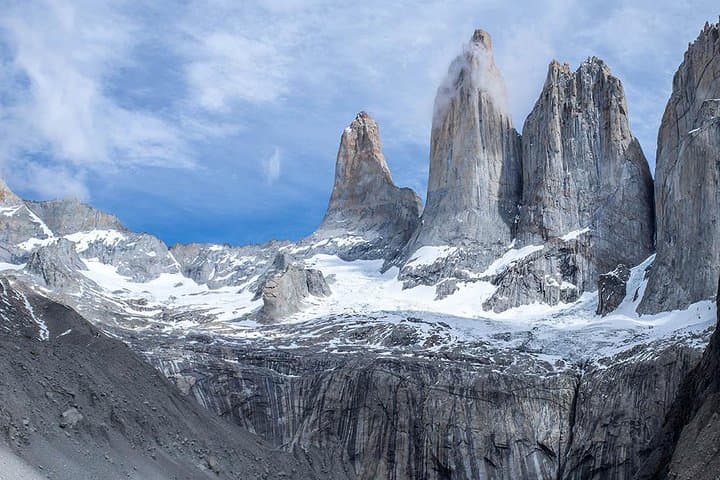
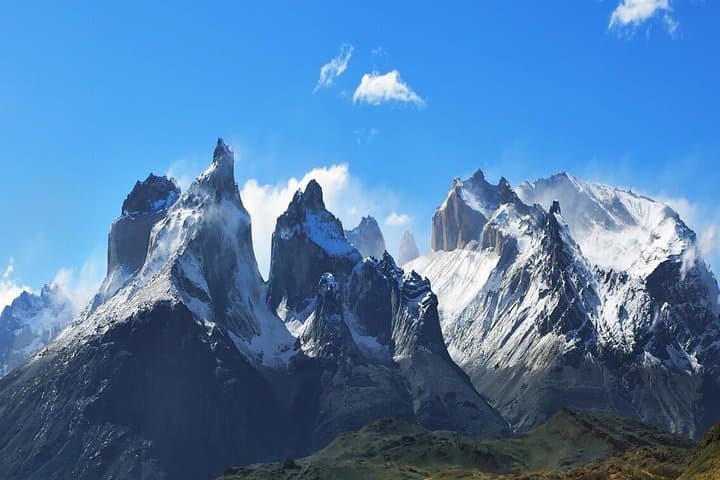
Geology here is loud. The park’s vertical walls—Torres’ granite towers and the jagged horns of Los Cuernos—were uplifted and carved by repeated glaciation, leaving polished rock, moraines and a network of cirques that funnel weather with dramatic effect. Indigenous Tehuelche people once hunted guanaco across these plains; more recently the area became an international focal point for conservation and mountaineering. Today, small refugios and ranger posts thread through the route, providing logistical anchors for self-guided trekkers.
The itinerary balances single-day pushes with gentler linkages: Day 1 is the long haul to Base Torres (11 km / 7 miles each way from Refugio Torre Central; expect 7–9 hours round-trip, with roughly 800 m / 2,600 ft of elevation gain on the final approach), a physically demanding climb with high payoff at the sand-and-boulder lookout beneath the towers. Subsequent days move between Refugio Los Cuernos, Paine Grande, and Refugio Grey—highlights include the French Valley saddle (steep but short ascents; leave heavy packs at CONAF to lighten the push) and the 11 km stretch toward Grey Glacier with optional hanging-bridge viewpoints.
Practicality is a constant companion: Patagonia is famous for sudden wind and cold even in summer, so layering is mandatory. Trail surfaces alternate between packed dirt, rocky talus, and wet boardwalks; good ankle support and waterproof footwear matter. Water is plentiful from streams and lakes—treat or filter as a routine. The self-guided format gives freedom, but plan daily timing conservatively; afternoon winds and low cloud can transform visibility and surface conditions.
Useful planning details: permits and park entry are processed at Laguna Amarga; refugio lodgings or campsite spots should be confirmed in advance; expect shared shuttles to and from Puerto Natales. Carry a compact first-aid kit, a thermos for hot drinks, and a map or GPS—phone coverage is intermittent. Respect the park’s Leave No Trace rules: pack out non-biodegradable waste and follow ranger instructions for camping and fire safety.
On the trail, silence is part of the scenery—the glacier creaks, the wind tests your jacket, and guanacos watch from a ridge as you press on. That tension between weather and terrain is what makes the W Circuit not just a hike, but a condensed Patagonia experience: hard, elemental, and unforgettable.
challenging.
5 days (approx. 25–30 hours hiking total).
Good aerobic base and comfort with sustained elevation gain; able to carry 8–12 kg pack for day sections or full backpacking loads when camping.
No—this is a self-guided program with marked trails; however, you must be comfortable with multi-day hiking and reading maps. Refugios and park signage help navigation.
Southern hemisphere summer (November–March) offers the mildest temperatures and longest days, though winds are still frequent and conditions can change quickly.
Refugio availability is subject to park capacity; if a refugio isn’t available the operator typically arranges campsite accommodation and reimburses the price difference when applicable.
The Base Torres approach is the most strenuous day: steep final ascent, roughly 11 km round trip and about 800 m elevation gain—plan for 7–9 hours including breaks.
Some refugios provide potable water, but throughout the route you should treat or filter natural water sources as a standard practice.
Expect to see guanaco and Andean condors commonly; sightings of foxes occur but are less frequent—keep distance and do not feed wildlife.
The park’s dramatic peaks were formed through uplift and glaciation, and European explorers and ranchers later brought interest that led to protected status; the area is now a global conservation icon.
Visitor impact is managed with strict camping zones and refugio systems; follow Leave No Trace and respect CONAF rules to minimize erosion and disturbance.
Tangol operates guided outdoor trips and adventures with an emphasis on safety, stewardship, and memorable experiences.


Morning light cuts across a wind-scoured valley as hikers step off the bus at Laguna Amarga and sign the park register—this is the ordinary moment that starts something far from ordinary. The W Circuit in Torres del Paine compresses Patagonia’s raw geology into five intense days: granite spires loom, glaciers groan at the edge of turquoise lakes, and trails switchback through lenga forest and peat bog.
Morning light cuts across a wind-scoured valley as hikers step off the bus at Laguna Amarga and sign the park register—this is the ordinary moment that starts something far from ordinary. The W Circuit in Torres del Paine compresses Patagonia’s raw geology into five intense days: granite spires loom, glaciers groan at the edge of turquoise lakes, and trails switchback through lenga forest and peat bog.
Geology here is loud. The park’s vertical walls—Torres’ granite towers and the jagged horns of Los Cuernos—were uplifted and carved by repeated glaciation, leaving polished rock, moraines and a network of cirques that funnel weather with dramatic effect. Indigenous Tehuelche people once hunted guanaco across these plains; more recently the area became an international focal point for conservation and mountaineering. Today, small refugios and ranger posts thread through the route, providing logistical anchors for self-guided trekkers.
The itinerary balances single-day pushes with gentler linkages: Day 1 is the long haul to Base Torres (11 km / 7 miles each way from Refugio Torre Central; expect 7–9 hours round-trip, with roughly 800 m / 2,600 ft of elevation gain on the final approach), a physically demanding climb with high payoff at the sand-and-boulder lookout beneath the towers. Subsequent days move between Refugio Los Cuernos, Paine Grande, and Refugio Grey—highlights include the French Valley saddle (steep but short ascents; leave heavy packs at CONAF to lighten the push) and the 11 km stretch toward Grey Glacier with optional hanging-bridge viewpoints.
Practicality is a constant companion: Patagonia is famous for sudden wind and cold even in summer, so layering is mandatory. Trail surfaces alternate between packed dirt, rocky talus, and wet boardwalks; good ankle support and waterproof footwear matter. Water is plentiful from streams and lakes—treat or filter as a routine. The self-guided format gives freedom, but plan daily timing conservatively; afternoon winds and low cloud can transform visibility and surface conditions.
Useful planning details: permits and park entry are processed at Laguna Amarga; refugio lodgings or campsite spots should be confirmed in advance; expect shared shuttles to and from Puerto Natales. Carry a compact first-aid kit, a thermos for hot drinks, and a map or GPS—phone coverage is intermittent. Respect the park’s Leave No Trace rules: pack out non-biodegradable waste and follow ranger instructions for camping and fire safety.
On the trail, silence is part of the scenery—the glacier creaks, the wind tests your jacket, and guanacos watch from a ridge as you press on. That tension between weather and terrain is what makes the W Circuit not just a hike, but a condensed Patagonia experience: hard, elemental, and unforgettable.