THE ADVENTURE COLLECTIVE® · Independent discovery and booking for outdoor travel

Stand on a blinding white plain at 3,656 m where scale collapses and the horizon dares you to play with perspective. This full-day Classic Uyuni Salt Flat tour mixes photographic moments, local saltwork culture, and geological wonder.
Stand on a blinding white plain at 3,656 m where scale collapses and the horizon dares you to play with perspective. This full-day Classic Uyuni Salt Flat tour mixes photographic moments, local saltwork culture, and geological wonder.
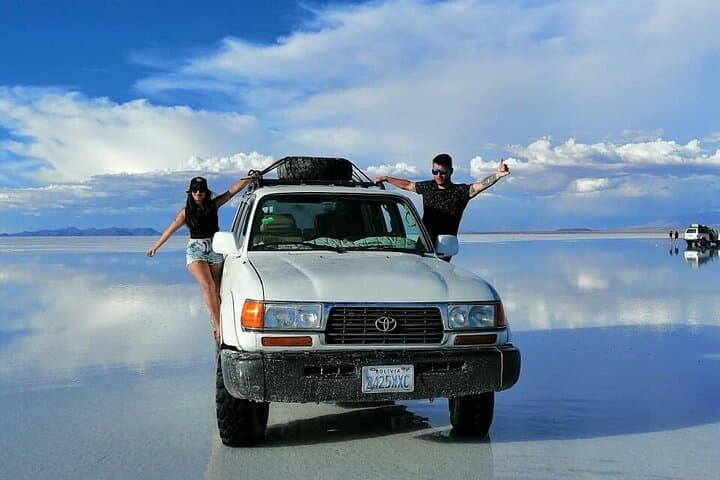
A bright, hard light presses down across an endless plane of salt; shoes crunch on a white crust that seems to go on forever. Drivers pull off the dusty road and the vehicle door opens to a wind that rearranges the horizon—scale collapses, shadows sharpen, and the salt flat dares you to set up a playful perspective shot.
Verified experiences and guided adventures in the surrounding area.
Operated by Nomadex Bolivia · Uyuni, Potosí Department
A bright, hard light presses down across an endless plane of salt; shoes crunch on a white crust that seems to go on forever. Drivers pull off the dusty road and the vehicle door opens to a wind that rearranges the horizon—scale collapses, shadows sharpen, and the salt flat dares you to set up a playful perspective shot.
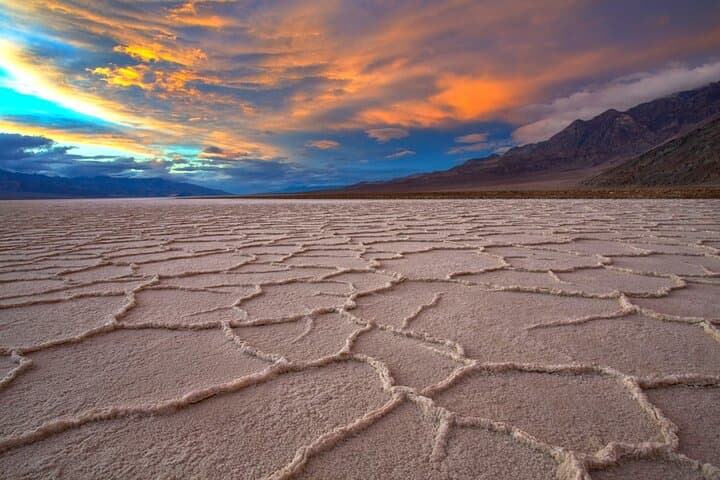
The Salar de Uyuni formed where a prehistoric lake evaporated, leaving a three-meter-thick crust of crystalline salt over a mineral-rich basin at roughly 3,656 m (11,995 ft). The railway relics outside Uyuni and the salt-processing hamlet of Colchani speak to the region’s industrial past: trains once ferried ore from Potosí, and local families still harvest salt using traditional tools.
Travelers visit for photographic trickery, the Hotel de Sal’s bleached architecture, and Incahuasi (the “High Island”) with giant cacti and rock outcrops. Wildlife—vizcachas digging in crevices and small hummingbirds at flowering cacti—adds surprising life to the desert immensity.
Practical guidance: expect an 8–10 hour outing with several short stops (train cemetery, Colchani, salt holes, Hotel de Sal, Incahuasi). Bring layered clothing for strong sun and cold winds, sun protection, and a camera with a wide-angle lens. Footwear should handle salty, sometimes wet ground—organizers commonly provide water boots. Altitude can cause breathlessness; drink water, move slowly, and avoid heavy exertion on arrival day.
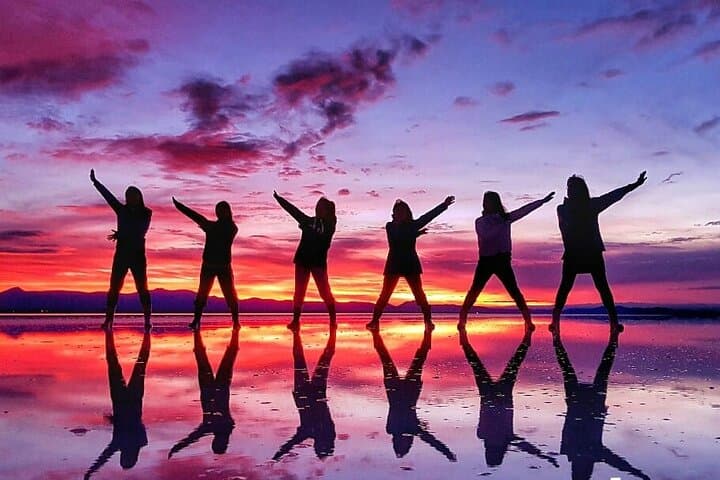
Plan for bright noon light or the softer hours near sunrise and sunset for the best photos. Respect local salt-working sites and follow vehicle tracks to minimize surface damage.
easy.
8–10 hours.
Suitable for most fitness levels; expect light walking and standing at altitude—basic cardiovascular fitness helps.
Salar de Uyuni sits around 3,656 m (11,995 ft). Mild altitude symptoms are common—headache, shortness of breath—so hydrate, rest, and avoid overexertion; seek medical help if symptoms worsen.
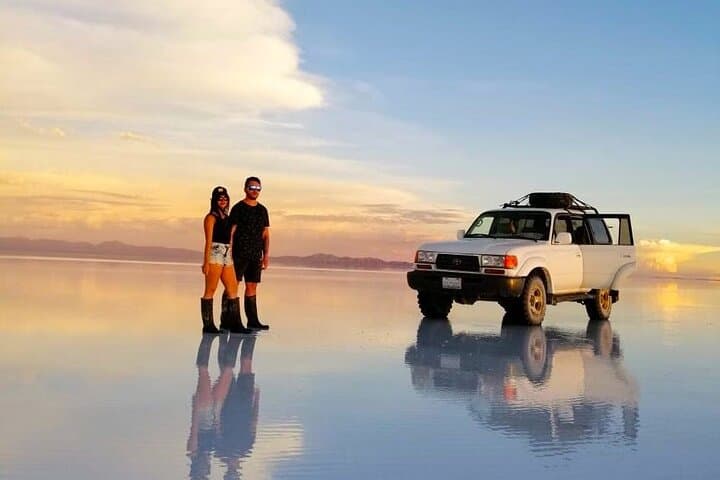
Dry season (May–Nov) offers firm salt crust and clear skies; wet season (Jan–Mar) can create the famous mirror effect when shallow water covers the surface—both have photographic appeal but different conditions.
Many tours include water boots for short wet sections around Colchani or after rain; they’re useful but you can also wear quick-drying shoes if you prefer.
Tours often accommodate children and strollers in parts, but this operator notes the experience is not recommended for pregnant travelers; check provider policies and consult a doctor if uncertain.
The flat is the remnant of prehistoric Lake Minchin; nearby railways and mining linked Uyuni to Potosí’s colonial-era silver extraction.
The salt crust is ecologically fragile—stay on established tracks, carry out waste, and support local businesses that follow low-impact practices.
Nomadex Bolivia operates guided outdoor trips and adventures with an emphasis on safety, stewardship, and memorable experiences.
A bright, hard light presses down across an endless plane of salt; shoes crunch on a white crust that seems to go on forever. Drivers pull off the dusty road and the vehicle door opens to a wind that rearranges the horizon—scale collapses, shadows sharpen, and the salt flat dares you to set up a playful perspective shot.
A bright, hard light presses down across an endless plane of salt; shoes crunch on a white crust that seems to go on forever. Drivers pull off the dusty road and the vehicle door opens to a wind that rearranges the horizon—scale collapses, shadows sharpen, and the salt flat dares you to set up a playful perspective shot.
The Salar de Uyuni formed where a prehistoric lake evaporated, leaving a three-meter-thick crust of crystalline salt over a mineral-rich basin at roughly 3,656 m (11,995 ft). The railway relics outside Uyuni and the salt-processing hamlet of Colchani speak to the region’s industrial past: trains once ferried ore from Potosí, and local families still harvest salt using traditional tools.
Travelers visit for photographic trickery, the Hotel de Sal’s bleached architecture, and Incahuasi (the “High Island”) with giant cacti and rock outcrops. Wildlife—vizcachas digging in crevices and small hummingbirds at flowering cacti—adds surprising life to the desert immensity.
Practical guidance: expect an 8–10 hour outing with several short stops (train cemetery, Colchani, salt holes, Hotel de Sal, Incahuasi). Bring layered clothing for strong sun and cold winds, sun protection, and a camera with a wide-angle lens. Footwear should handle salty, sometimes wet ground—organizers commonly provide water boots. Altitude can cause breathlessness; drink water, move slowly, and avoid heavy exertion on arrival day.
Plan for bright noon light or the softer hours near sunrise and sunset for the best photos. Respect local salt-working sites and follow vehicle tracks to minimize surface damage.