THE ADVENTURE COLLECTIVE® · Independent discovery and booking for outdoor travel

Run the Canyon de l'Enfer on the Dora Baltea: nine kilometres of rapids, wave trains and cliff-lined navigation from Arvier to Aymavilles. This classic guided raft balances accessible thrills with alpine scenery and medieval castles above the river.
Run the Canyon de l'Enfer on the Dora Baltea: nine kilometres of rapids, wave trains and cliff-lined navigation from Arvier to Aymavilles. This classic guided raft balances accessible thrills with alpine scenery and medieval castles above the river.
You push off from the gravel shore and the river answers: a cold, precise pull that moves under the raft like a living floor. For the next nine kilometres the Dora Baltea will test your timing and reward your attention—she pushes you into open bowls of water, hurls the raft through narrow gorges, then eases you under the watchful silhouettes of medieval stone keeps.
Verified experiences and guided adventures in the surrounding area.
Operated by Rafting Republic · Aosta, Aosta Valley
You push off from the gravel shore and the river answers: a cold, precise pull that moves under the raft like a living floor. For the next nine kilometres the Dora Baltea will test your timing and reward your attention—she pushes you into open bowls of water, hurls the raft through narrow gorges, then eases you under the watchful silhouettes of medieval stone keeps.
This stretch—Arvier to Aymavilles—runs through the Canyon de l'Enfer, a steep-walled cut where glacial melt once scoured bedrock and left seams of exposed gneiss and limestone. The river here is a product of alpine geology and human history. Castles at Villeneuve, St-Pierre, Aymavilles and Sarre perch above the current as reminders of a time when controlling the river meant controlling trade routes down into the Po plain. Today, guides licensed by the Italian Rafting Federation shepherd commercial rafts through the same corridor, turning what was strategic terrain into a playground for measured adrenaline.
The valley carries the scent of winter melt into summer heat: grassy terraces, talus slopes, and little farms where Fontina cheese is still made by families who read the river's seasons like calendars. Wildlife is subtle—kingfishers dart along the banks, brown trout ghost beneath riffles, and if you listen from the raft, the cliff faces carry the distant call of alpine birds.
Practicalities are straightforward. Meet at the rafting base off the A5 (exit Aosta Ovest / St-Pierre); there’s a large parking lot, changing rooms and hot showers. The experience takes about 2½ hours total, with roughly 9 km of actual downstream navigation. Guides give a safety briefing, fit helmets and lifejackets, run a paddle drill, then shuttle you to the put-in. Expect a mix of class II–III rapids—big waves and technical maneuvers but suitable for paddlers with basic stamina and no prior whitewater experience.
What to bring: swimsuit, quick-dry layers, sturdy water shoes or neoprene booties, towel, and a lanyard for glasses or a secured action camera. Operators provide helmets, lifejackets and transport to the boarding point; they also respect accessibility and run private-group options. Note medical restrictions: this is not recommended for pregnant guests or those with serious back or heart conditions.
Timing matters—late spring runoff can be punchier, while late summer offers lower, clearer water. Whatever season you choose, listen closely to the guide, lean into the paddling rhythm, and take a moment between rapids to let the canyon settle around you. The river will keep moving; on shore, those stone keeps will wait, unchanged by the splash of a modern raft.
moderate.
2–3 hours.
Suitable for people with average fitness who can sit, paddle and follow instructions for 1–2 hours on moving water.
The navigation stretch from Arvier to Aymavilles is about 9 km and the full experience lasts roughly 2½ hours including briefing and transport.
No—this Classic run is guided for mixed-ability groups; basic paddling is taught during the safety briefing.
Guides provide helmets, lifejackets and wetsuit tops where needed; bring your own water shoes and quick-dry layers.
Children are allowed but check age restrictions with the operator; younger participants must be able to follow instructions and fit provided safety gear.
Trips generally run in light rain; the operator will cancel for unsafe river conditions—confirm cancellation policy when booking.
Yes, the nautical base offers a secure area for personal items and showers after the activity.
Castles above the river—Villeneuve, St-Pierre, Aymavilles and Sarre—mark medieval river crossings and toll points that controlled trade routes through the valley.
Operators follow local regulations to minimize impacts; avoid leaving litter and use biodegradable sunscreen to protect aquatic life.
Rafting Republic operates guided outdoor trips and adventures with an emphasis on safety, stewardship, and memorable experiences.
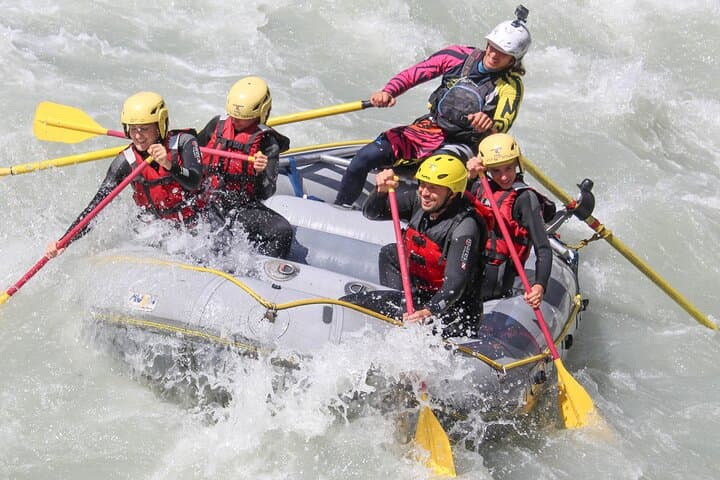
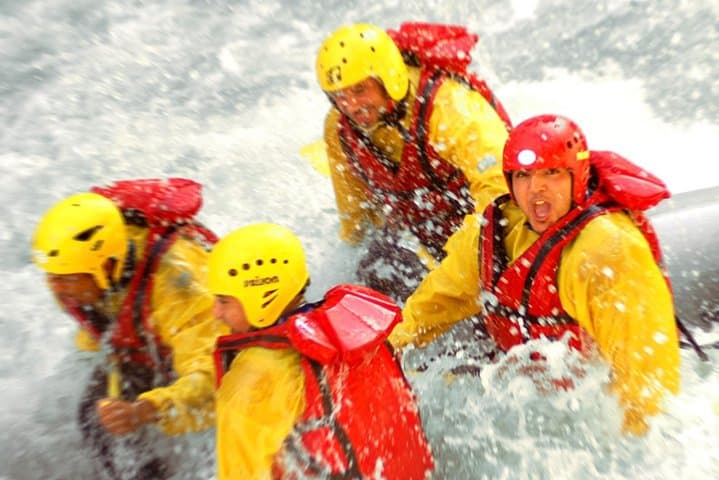
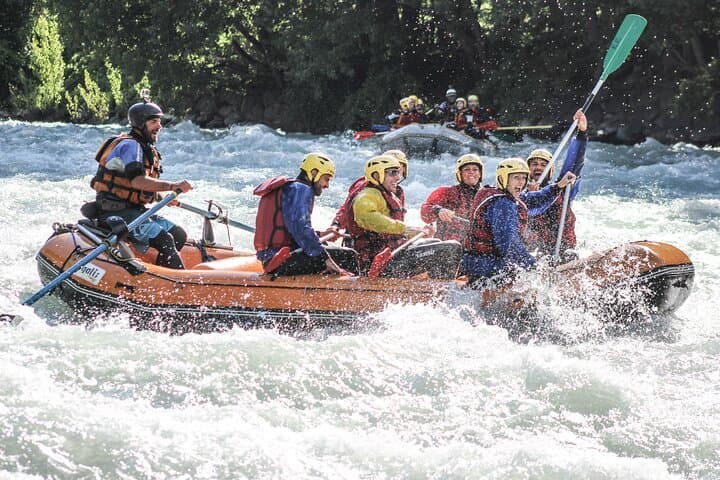
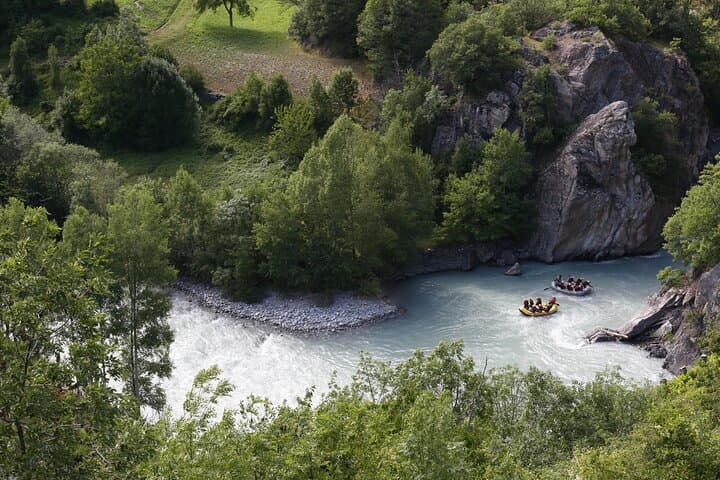
You push off from the gravel shore and the river answers: a cold, precise pull that moves under the raft like a living floor. For the next nine kilometres the Dora Baltea will test your timing and reward your attention—she pushes you into open bowls of water, hurls the raft through narrow gorges, then eases you under the watchful silhouettes of medieval stone keeps.
You push off from the gravel shore and the river answers: a cold, precise pull that moves under the raft like a living floor. For the next nine kilometres the Dora Baltea will test your timing and reward your attention—she pushes you into open bowls of water, hurls the raft through narrow gorges, then eases you under the watchful silhouettes of medieval stone keeps.
This stretch—Arvier to Aymavilles—runs through the Canyon de l'Enfer, a steep-walled cut where glacial melt once scoured bedrock and left seams of exposed gneiss and limestone. The river here is a product of alpine geology and human history. Castles at Villeneuve, St-Pierre, Aymavilles and Sarre perch above the current as reminders of a time when controlling the river meant controlling trade routes down into the Po plain. Today, guides licensed by the Italian Rafting Federation shepherd commercial rafts through the same corridor, turning what was strategic terrain into a playground for measured adrenaline.
The valley carries the scent of winter melt into summer heat: grassy terraces, talus slopes, and little farms where Fontina cheese is still made by families who read the river's seasons like calendars. Wildlife is subtle—kingfishers dart along the banks, brown trout ghost beneath riffles, and if you listen from the raft, the cliff faces carry the distant call of alpine birds.
Practicalities are straightforward. Meet at the rafting base off the A5 (exit Aosta Ovest / St-Pierre); there’s a large parking lot, changing rooms and hot showers. The experience takes about 2½ hours total, with roughly 9 km of actual downstream navigation. Guides give a safety briefing, fit helmets and lifejackets, run a paddle drill, then shuttle you to the put-in. Expect a mix of class II–III rapids—big waves and technical maneuvers but suitable for paddlers with basic stamina and no prior whitewater experience.
What to bring: swimsuit, quick-dry layers, sturdy water shoes or neoprene booties, towel, and a lanyard for glasses or a secured action camera. Operators provide helmets, lifejackets and transport to the boarding point; they also respect accessibility and run private-group options. Note medical restrictions: this is not recommended for pregnant guests or those with serious back or heart conditions.
Timing matters—late spring runoff can be punchier, while late summer offers lower, clearer water. Whatever season you choose, listen closely to the guide, lean into the paddling rhythm, and take a moment between rapids to let the canyon settle around you. The river will keep moving; on shore, those stone keeps will wait, unchanged by the splash of a modern raft.