THE ADVENTURE COLLECTIVE® · Independent discovery and booking for outdoor travel

A brisk, guided loop through Lucerne’s Old Town that hits the Lion Monument, Chapel Bridge, Jesuit Church and painted market squares in about an hour. Ideal for first-time visitors who want a compact introduction to the city’s history and landmarks.
A brisk, guided loop through Lucerne’s Old Town that hits the Lion Monument, Chapel Bridge, Jesuit Church and painted market squares in about an hour. Ideal for first-time visitors who want a compact introduction to the city’s history and landmarks.
You step out of your hotel into a cool Lucerne morning; the Reuss River nudges past stone quays while church bells mark the hour. Your guide, a local with a map and crisp knowledge, leads a short loop through alleys where painted facades and guild houses hold stories in their plaster.
Verified experiences and guided adventures in the surrounding area.
Operated by Citytrip AG · Lucerne, Canton of Lucerne
You step out of your hotel into a cool Lucerne morning; the Reuss River nudges past stone quays while church bells mark the hour. Your guide, a local with a map and crisp knowledge, leads a short loop through alleys where painted facades and guild houses hold stories in their plaster.
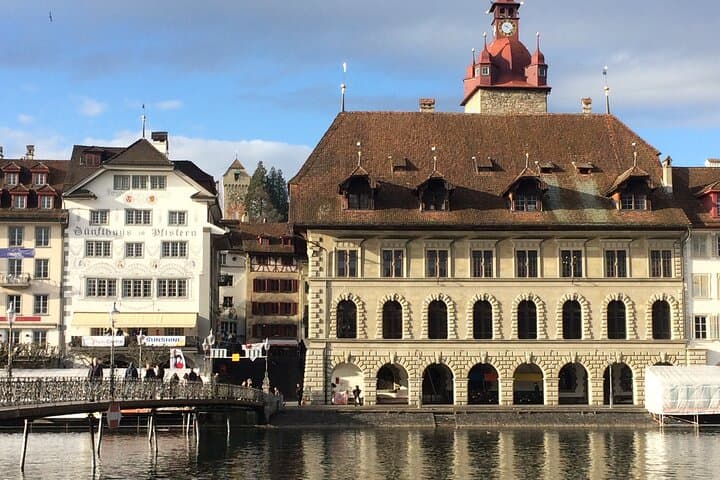
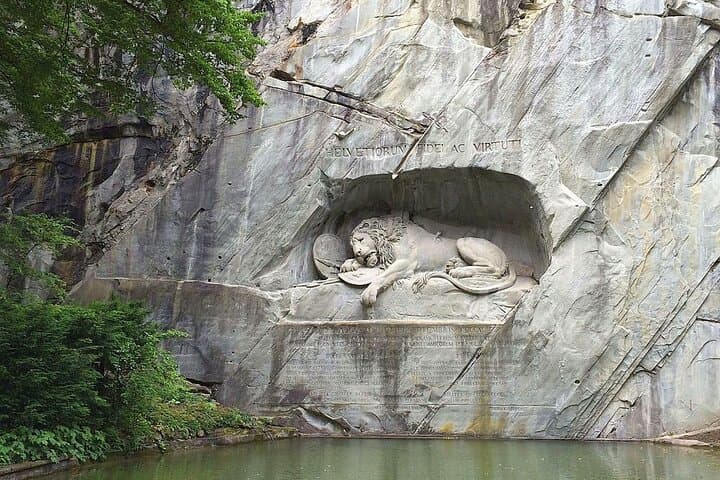
The walk threads past the Bourbaki Panorama and arrives at the Lion Monument, carved into sandstone in memory of Swiss Guards lost in 1792. The route continues into the medieval heart—Kornmarkt, Hirschenplatz and Weinmarkt—where timbered buildings, the 17th-century Town Hall tower, and the city’s oldest fountain reveal civic life from guild times to today.
Geology is close at hand: the shallow, glacial-carved bed of Lake Lucerne and the Reuss’s clear flow define the city’s layout, while Baroque architecture of the Jesuit Church speaks to 17th-century Catholic revival. Local culture shows itself in water taps still valued for taste, in postcard kiosks, and in baker-guild history etched above doors.
Practical note: the route is compact and mostly flat—60–90 minutes total and suitable for almost all walkers. Wear comfortable shoes and carry a small bottle; public buses are used if your hotel is farther out. Bring a lightweight layer for lake breezes and a rain shell in spring or autumn. Ask your guide about less-visited viewpoints—Musegg wall towers offer a quick climb for skyline views—or where to find the best roast chestnuts in season. The tour ends back near your hotel, with time for questions and tailored suggestions for deeper exploration of Lucerne’s streets and shores.
easy.
60–90 minutes.
Suitable for most fitness levels; minimal walking on mostly flat streets, short standing periods.
The tour lasts about 60–90 minutes and covers roughly 1.5–2 km on mostly flat, paved streets.
Yes; the route is stroller-accessible though some cobbled sections can be bumpy—ask the guide for an easier line if needed.
This is an exterior-focused walk with short stops; interior visits are possible if time allows but may require separate admission and extra time.
Cards are widely accepted, but small vendors and tip jars may prefer cash—carry some Swiss francs for convenience.
Lucerne grew around a river crossing and guild-driven market squares; the Lion Monument commemorates Swiss Guards killed in 1792 and reflects the city’s links to European military history.
Lucerne emphasizes clean waterways and pedestrian zones; use refill stations and remain on designated paths to limit wear on historic stonework.
Citytrip AG operates guided outdoor trips and adventures with an emphasis on safety, stewardship, and memorable experiences.
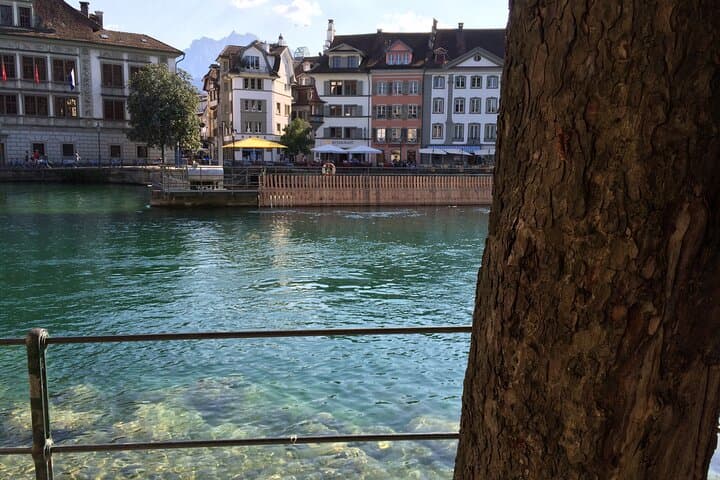
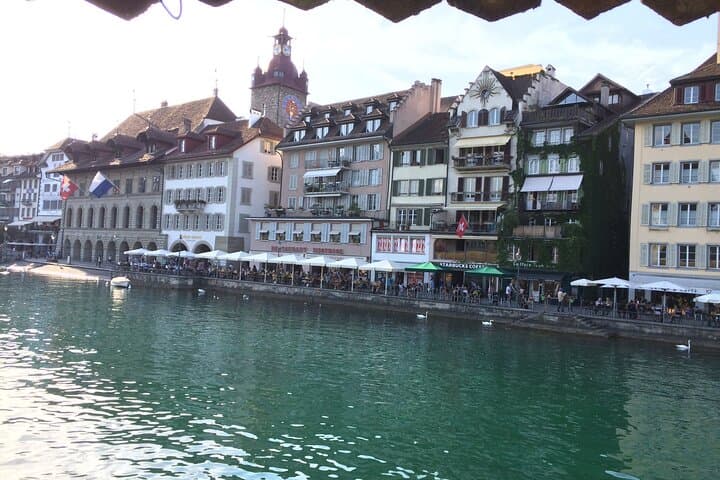
You step out of your hotel into a cool Lucerne morning; the Reuss River nudges past stone quays while church bells mark the hour. Your guide, a local with a map and crisp knowledge, leads a short loop through alleys where painted facades and guild houses hold stories in their plaster.
You step out of your hotel into a cool Lucerne morning; the Reuss River nudges past stone quays while church bells mark the hour. Your guide, a local with a map and crisp knowledge, leads a short loop through alleys where painted facades and guild houses hold stories in their plaster.
The walk threads past the Bourbaki Panorama and arrives at the Lion Monument, carved into sandstone in memory of Swiss Guards lost in 1792. The route continues into the medieval heart—Kornmarkt, Hirschenplatz and Weinmarkt—where timbered buildings, the 17th-century Town Hall tower, and the city’s oldest fountain reveal civic life from guild times to today.
Geology is close at hand: the shallow, glacial-carved bed of Lake Lucerne and the Reuss’s clear flow define the city’s layout, while Baroque architecture of the Jesuit Church speaks to 17th-century Catholic revival. Local culture shows itself in water taps still valued for taste, in postcard kiosks, and in baker-guild history etched above doors.
Practical note: the route is compact and mostly flat—60–90 minutes total and suitable for almost all walkers. Wear comfortable shoes and carry a small bottle; public buses are used if your hotel is farther out. Bring a lightweight layer for lake breezes and a rain shell in spring or autumn. Ask your guide about less-visited viewpoints—Musegg wall towers offer a quick climb for skyline views—or where to find the best roast chestnuts in season. The tour ends back near your hotel, with time for questions and tailored suggestions for deeper exploration of Lucerne’s streets and shores.