THE ADVENTURE COLLECTIVE® · Independent discovery and booking for outdoor travel

Explore limestone caverns, hilltop pagodas and coastal viewpoints on a compact day trip from Da Nang. This guided tour pairs the Marble Mountains’ carved temples with the sweeping vistas and Lady Buddha at Son Tra Peninsula.
Explore limestone caverns, hilltop pagodas and coastal viewpoints on a compact day trip from Da Nang. This guided tour pairs the Marble Mountains’ carved temples with the sweeping vistas and Lady Buddha at Son Tra Peninsula.
You step off an air-conditioned minivan onto warm stone and sea-scented air. The Marble Mountains rise ahead—five limestone and marble outcrops scoring the coast—their stair-stepped paths, cave mouths and temple courtyards carved into sun-warmed rock. Later, the road climbs Son Tra Peninsula where a solemn white Lady Buddha watches the China Sea, wind pressing pine needles like a chorus against the hillside.
Verified experiences and guided adventures in the surrounding area.
Operated by MyProGuide Vietnam · Da Nang, Da Nang
You step off an air-conditioned minivan onto warm stone and sea-scented air. The Marble Mountains rise ahead—five limestone and marble outcrops scoring the coast—their stair-stepped paths, cave mouths and temple courtyards carved into sun-warmed rock. Later, the road climbs Son Tra Peninsula where a solemn white Lady Buddha watches the China Sea, wind pressing pine needles like a chorus against the hillside.
Geology here is blunt and visible: karst towers of marble and limestone formed under ancient seas, now perforated by caves and grottoes. The Marble Mountains have been sculpted by human hands as well—Buddhist shrines, carved niches and a nearby stone village where sculptors still shape local marble. Son Tra’s forested slopes are an ecological patchwork—monkey-saving habitat, coastal scrub and dramatic viewpoints that trace shipping lanes toward Da Nang Bay.
Culturally, the sites blend pilgrimage and industry: quiet incense at pagodas, stone-carving stalls selling small keepsakes, and memorials that mark the region’s layered history from Champa kingdoms through colonial trade.
Practical guidance: expect 4–5 hours total with moderate walking, many steps and some uneven cave floors. Wear grippy shoes, sun protection and carry a refillable bottle—bottled water is supplied but refill points are scarce. Morning light softens the caves and crowds are lighter; afternoons bring stronger wind on Son Tra and better offshore views. Respect temple spaces—dress modestly and keep voices low. The tour runs from central Da Nang with hotel pickup in the city; photographers, light hikers and culture-focused travelers will find this a compact, rewarding half-day excursion.
easy.
4–5 hours.
Suitable for most fitness levels; involves walking, stairs and short uphill sections.
The shared tour runs about 4–5 hours and normally includes hotel pickup (central Da Nang), transport in an air-conditioned vehicle and bottled water; admission to Marble Mountains and Linh Ung Pagoda is typically covered.
Yes—organizers list it as suitable for all fitness levels, but there are many steps and uneven ground; those with mobility limits should plan accordingly.
Photography is generally allowed in outdoor and cave areas, but be respectful inside active shrines—follow signage and avoid flash on worshippers.
Modest clothing that covers shoulders and knees is requested; bring a lightweight wrap if visiting in hot weather.
Marble Mountains have long been a source of sculpted stone and spiritual sites; the area also sits near former Champa kingdom routes and wartime histories that shaped Da Nang’s coastline.
Son Tra Peninsula is an ecologically sensitive area—stay on marked roads and trails, avoid feeding wildlife, and support local guides who follow conservation practices.
MyProGuide Vietnam operates guided outdoor trips and adventures with an emphasis on safety, stewardship, and memorable experiences.
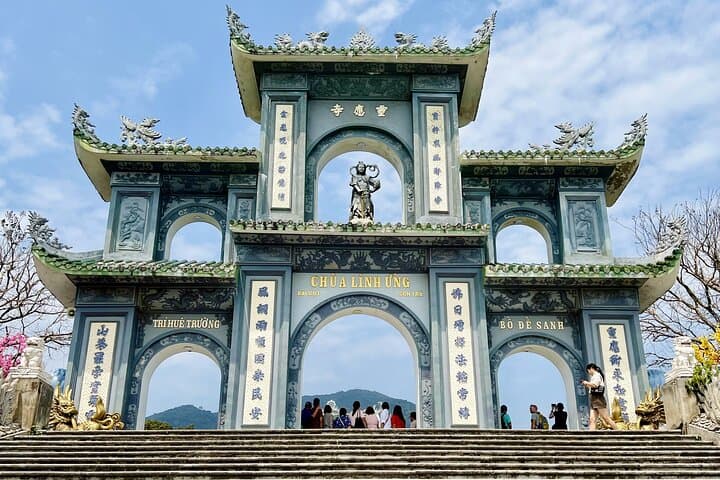
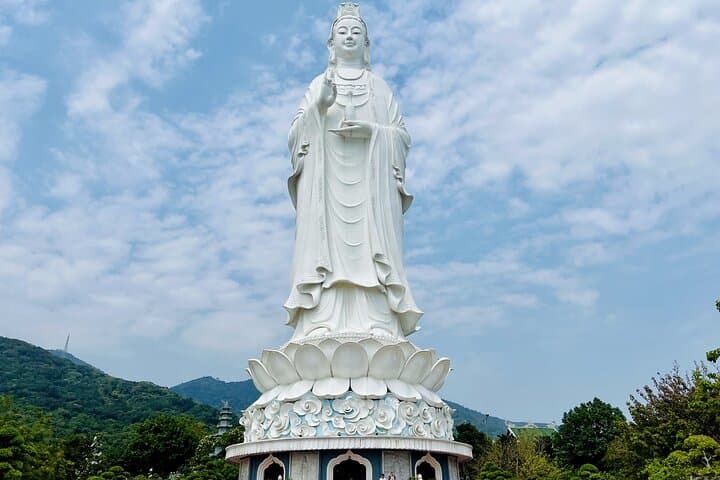
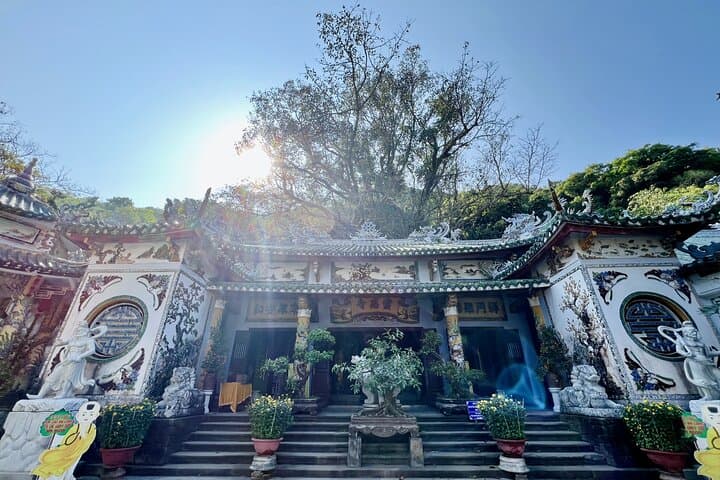

You step off an air-conditioned minivan onto warm stone and sea-scented air. The Marble Mountains rise ahead—five limestone and marble outcrops scoring the coast—their stair-stepped paths, cave mouths and temple courtyards carved into sun-warmed rock. Later, the road climbs Son Tra Peninsula where a solemn white Lady Buddha watches the China Sea, wind pressing pine needles like a chorus against the hillside.
You step off an air-conditioned minivan onto warm stone and sea-scented air. The Marble Mountains rise ahead—five limestone and marble outcrops scoring the coast—their stair-stepped paths, cave mouths and temple courtyards carved into sun-warmed rock. Later, the road climbs Son Tra Peninsula where a solemn white Lady Buddha watches the China Sea, wind pressing pine needles like a chorus against the hillside.
Geology here is blunt and visible: karst towers of marble and limestone formed under ancient seas, now perforated by caves and grottoes. The Marble Mountains have been sculpted by human hands as well—Buddhist shrines, carved niches and a nearby stone village where sculptors still shape local marble. Son Tra’s forested slopes are an ecological patchwork—monkey-saving habitat, coastal scrub and dramatic viewpoints that trace shipping lanes toward Da Nang Bay.
Culturally, the sites blend pilgrimage and industry: quiet incense at pagodas, stone-carving stalls selling small keepsakes, and memorials that mark the region’s layered history from Champa kingdoms through colonial trade.
Practical guidance: expect 4–5 hours total with moderate walking, many steps and some uneven cave floors. Wear grippy shoes, sun protection and carry a refillable bottle—bottled water is supplied but refill points are scarce. Morning light softens the caves and crowds are lighter; afternoons bring stronger wind on Son Tra and better offshore views. Respect temple spaces—dress modestly and keep voices low. The tour runs from central Da Nang with hotel pickup in the city; photographers, light hikers and culture-focused travelers will find this a compact, rewarding half-day excursion.