THE ADVENTURE COLLECTIVE® · Independent discovery and booking for outdoor travel

Drive a restored classic from Madrid into the Sierra Oeste on an immersive day tour that combines El Escorial’s royal complex, Civil War bunkers and panoramic mountain roads. Expect curated stops, historical narratives and a support car guiding the route.
Drive a restored classic from Madrid into the Sierra Oeste on an immersive day tour that combines El Escorial’s royal complex, Civil War bunkers and panoramic mountain roads. Expect curated stops, historical narratives and a support car guiding the route.
Morning light catches chrome and leather as the engine settles into a steady purr — you pull out of Madrid and the city noise yields to a ribbon of asphalt cutting into the Sierra Oeste. The route threads through cork oak and granite ridges, curves that invite careful hands at the wheel and eyes fixed on shifting panoramas. Stops are intentional: a monastery terrace that frames distant peaks, a faded plaza of granite, a Civil War bunker you can walk into and imagine radio static and orders barked through the night.
Verified experiences and guided adventures in the surrounding area.
Operated by 600 Tour Madrid · San Lorenzo de El Escorial, Community of Madrid
Morning light catches chrome and leather as the engine settles into a steady purr — you pull out of Madrid and the city noise yields to a ribbon of asphalt cutting into the Sierra Oeste. The route threads through cork oak and granite ridges, curves that invite careful hands at the wheel and eyes fixed on shifting panoramas. Stops are intentional: a monastery terrace that frames distant peaks, a faded plaza of granite, a Civil War bunker you can walk into and imagine radio static and orders barked through the night.
The itinerary centers on San Lorenzo de El Escorial and the Royal Monastery commissioned by King Philip II in the 16th century, a compact complex of royal, religious and administrative architecture. Geologically the ride traverses the western rims of the Sierra de Guadarrama — rounded granite outcrops, steep-lookout passes and forested valleys shaped by millennia of erosion and seasonal runoff. Local towns keep a practical, regional character: stone-built churches, simple taverns serving roast meats and local wines, and roadside viewpoints where shepherding and small-scale agriculture still mark the landscape.
Practically, expect an all-day, private driving experience (roughly 8–9 hours) with an expert guide in a support car, scheduled stops for photos, a light breakfast and a two-person lunch per vehicle. Roads vary from well-paved provincial highways to narrow, twisty local lanes; visibility and traction change quickly in wet weather. Bring layered clothing, a full phone battery and patience for single-lane stretches. This is a cultural-drive: pace yourself, enjoy conversations about local history, and allow extra time for unscripted viewpoints — the mountains reward slow appreciation.
easy.
8–9 hours.
Suitable for travelers who can sit for extended periods and manage short walks and stairs at stops.
Guests typically drive the classic car themselves while an expert guide follows in a support vehicle and provides directions via radio.
The operator lists wheelchair-accessible options for certain vehicles and locations, but some historic sites include stairs — check specific accessibility needs when booking.
The tour can be canceled for bad weather; the host’s policy allows a full refund if canceled at least 24 hours before departure and they reserve the right to cancel for safety reasons.
The tour includes breakfast, lunch for two people per car and a fuel surcharge is applied as noted in the booking inclusions.
El Escorial was built under King Philip II in the 16th century as a royal monastery and burial site; nearby towns later saw action during the Spanish Civil War, leaving bunkers and battlefield traces.
Stay on public roads and marked paths, avoid disturbing wildlife and support local eateries to keep tourism benefits within small communities.
600 Tour Madrid operates guided outdoor trips and adventures with an emphasis on safety, stewardship, and memorable experiences.
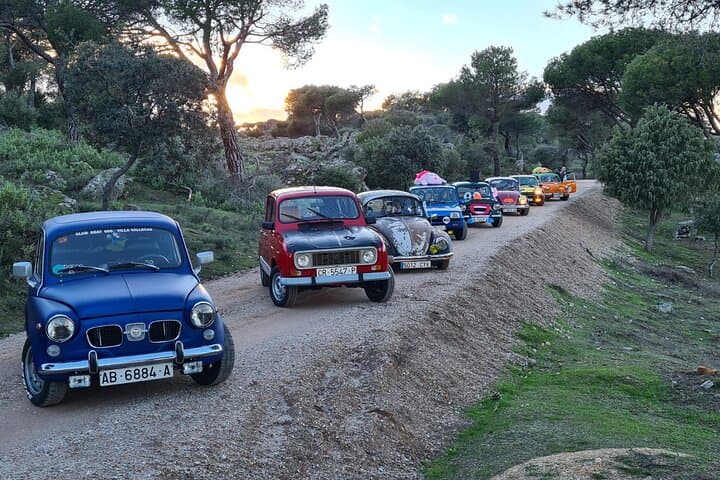
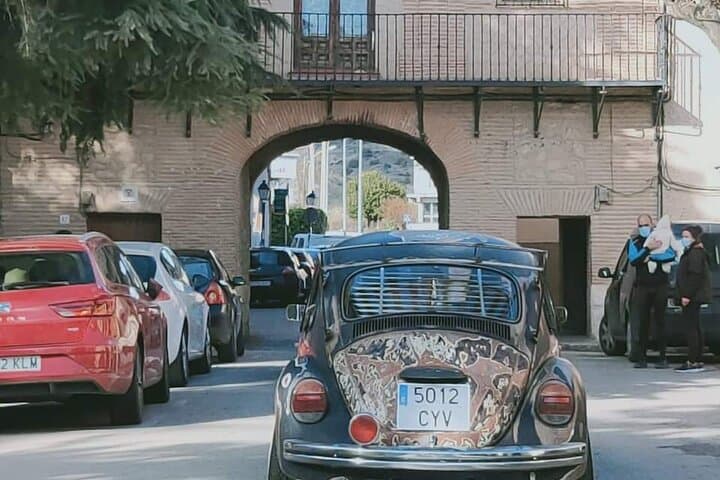
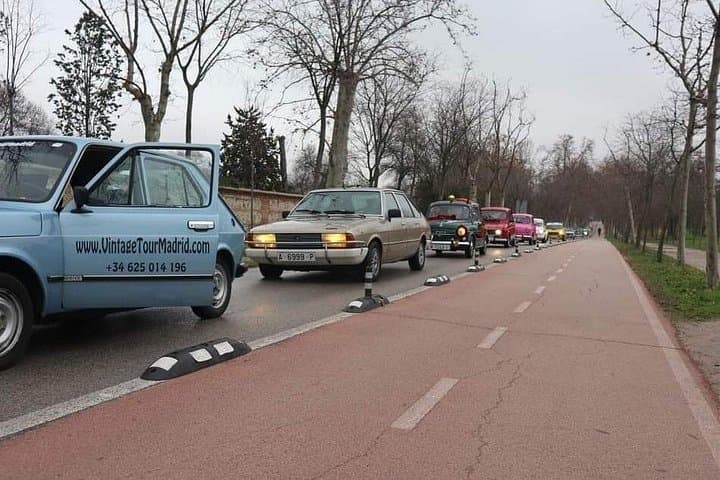
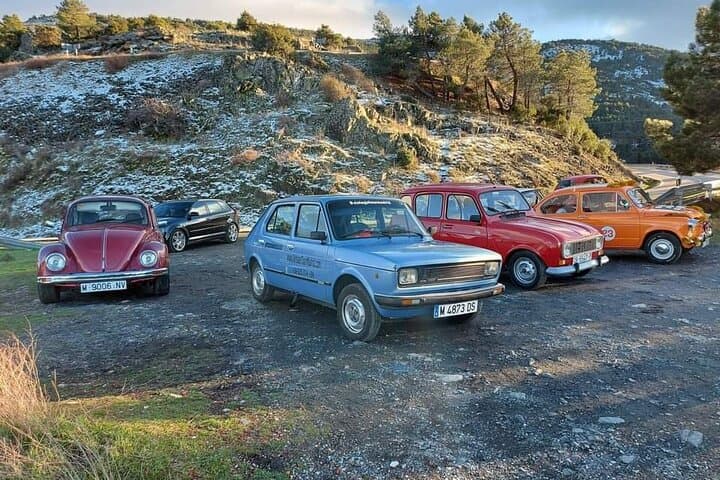
Morning light catches chrome and leather as the engine settles into a steady purr — you pull out of Madrid and the city noise yields to a ribbon of asphalt cutting into the Sierra Oeste. The route threads through cork oak and granite ridges, curves that invite careful hands at the wheel and eyes fixed on shifting panoramas. Stops are intentional: a monastery terrace that frames distant peaks, a faded plaza of granite, a Civil War bunker you can walk into and imagine radio static and orders barked through the night.
Morning light catches chrome and leather as the engine settles into a steady purr — you pull out of Madrid and the city noise yields to a ribbon of asphalt cutting into the Sierra Oeste. The route threads through cork oak and granite ridges, curves that invite careful hands at the wheel and eyes fixed on shifting panoramas. Stops are intentional: a monastery terrace that frames distant peaks, a faded plaza of granite, a Civil War bunker you can walk into and imagine radio static and orders barked through the night.
The itinerary centers on San Lorenzo de El Escorial and the Royal Monastery commissioned by King Philip II in the 16th century, a compact complex of royal, religious and administrative architecture. Geologically the ride traverses the western rims of the Sierra de Guadarrama — rounded granite outcrops, steep-lookout passes and forested valleys shaped by millennia of erosion and seasonal runoff. Local towns keep a practical, regional character: stone-built churches, simple taverns serving roast meats and local wines, and roadside viewpoints where shepherding and small-scale agriculture still mark the landscape.
Practically, expect an all-day, private driving experience (roughly 8–9 hours) with an expert guide in a support car, scheduled stops for photos, a light breakfast and a two-person lunch per vehicle. Roads vary from well-paved provincial highways to narrow, twisty local lanes; visibility and traction change quickly in wet weather. Bring layered clothing, a full phone battery and patience for single-lane stretches. This is a cultural-drive: pace yourself, enjoy conversations about local history, and allow extra time for unscripted viewpoints — the mountains reward slow appreciation.