THE ADVENTURE COLLECTIVE® · Independent discovery and booking for outdoor travel

A full-day private transfer from Alexandria that delivers the Pyramids of Giza, the Great Sphinx, the Papyrus Institute and the Grand Egyptian Museum in one long, history-rich loop. Expect extensive walking, sun exposure and museum galleries filled with newly rehoused antiquities.
A full-day private transfer from Alexandria that delivers the Pyramids of Giza, the Great Sphinx, the Papyrus Institute and the Grand Egyptian Museum in one long, history-rich loop. Expect extensive walking, sun exposure and museum galleries filled with newly rehoused antiquities.
The morning stretches pale and wide as the coach leaves Alexandria’s harbor; seawater gives way to low desert that seems to breathe heat toward the horizon. By midmorning the Western Plateau appears—angular stones rising like a deliberate skyline—and the Great Pyramid dominates the light, daring you to close the distance with your camera.
Verified experiences and guided adventures in the surrounding area.
Operated by NORTH AFRICAN SHIPPING AND TOURISM COMPANY (NASCO TOURS) · Giza, Giza Governorate
The morning stretches pale and wide as the coach leaves Alexandria’s harbor; seawater gives way to low desert that seems to breathe heat toward the horizon. By midmorning the Western Plateau appears—angular stones rising like a deliberate skyline—and the Great Pyramid dominates the light, daring you to close the distance with your camera.
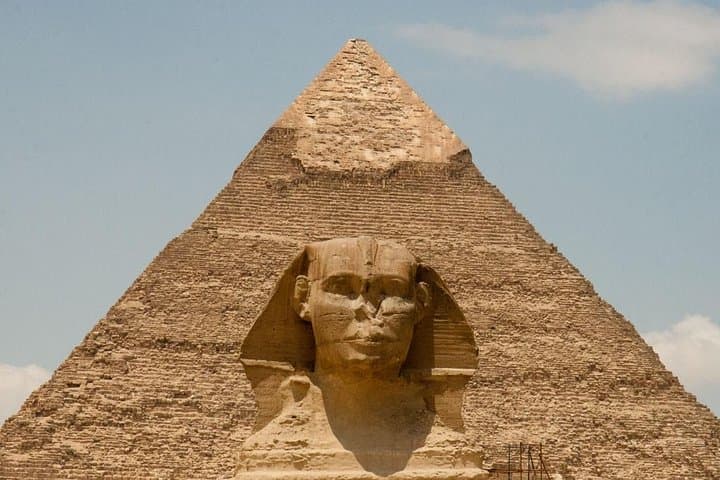
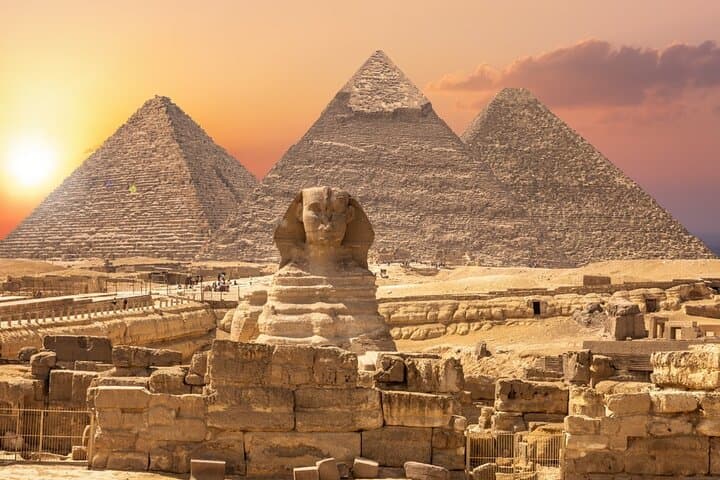
These monuments date to Egypt’s Fourth Dynasty (circa 2600–2500 BCE), engineered from limestone and granite laid in precise courses. The plateau’s geology is an exposed seam of Eocene limestone; wind and sand have sanded faces and exposed ancient quarry marks. Nearby, the Great Sphinx keeps a watchful, weathered stance that has fueled myth and scholarship for centuries.
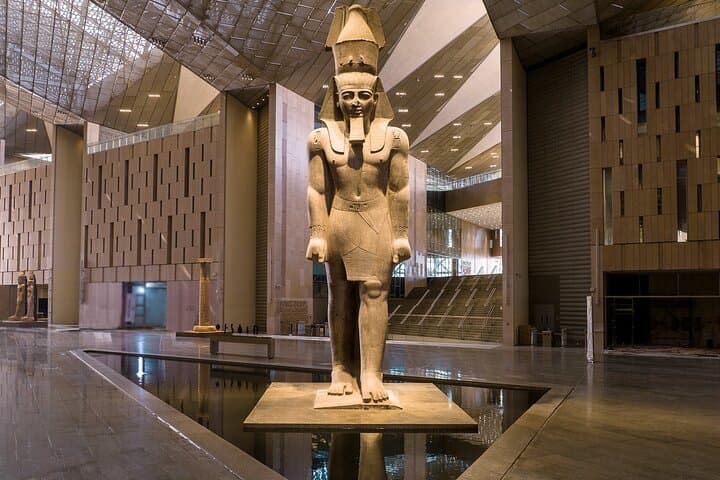
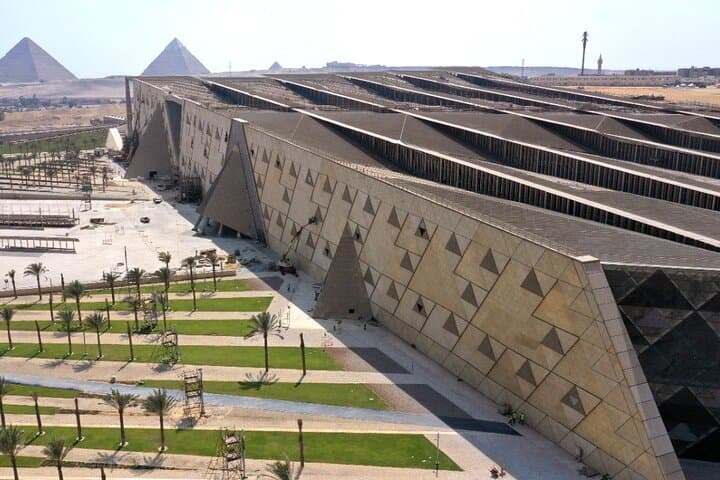
Cairo’s pulse is layered: Pharaonic relics, Coptic alleyways and the muddle of modern commerce. The Papyrus Institute demonstrates a millennia-old craft—reed pith pressed and dried into sheets that once recorded gods and kings. The Grand Egyptian Museum curates artifacts with a new clarity; many Tutankhamun pieces now rest behind controlled lighting and glass.
Practical edge: this is a long, full-day private transfer with sizable walking and sun exposure—plan for 12–13 hours including transit. Expect paved walkways mixed with uneven stone and short desert paths at the plateau. Bring photocopies of travel documents for inspections, keep to marked routes at archaeological sites, and follow your guide’s schedule to avoid crowds around key displays.
Finish the day with a shaded lunch of local plates before the return drive to the port—tired, informed and carrying clear photographs of one of human history’s largest-scale projects.
easy.
12–13 hours.
Suitable for travelers in average shape; includes walking on uneven ground and several stairs
Yes—this private shore excursion collects travelers at Alexandria Port and returns them to the ship; confirm exact pickup point when booking.
Admissions to the Giza plateau and the Grand Egyptian Museum are included per the itinerary; confirm ticket inclusions on your voucher.
The tour is listed as suitable for all fitness levels, but long transit and sun exposure may be taxing—consider mobility needs and sun precautions.
Full refunds are available if you cancel at least 24 hours before the scheduled departure; bad-weather cancellations are possible.
The Giza Pyramids were built as royal tombs during Egypt’s Old Kingdom; the Grand Egyptian Museum centralizes thousands of artifacts, bolstering conservation and research.
High visitor numbers stress fragile surfaces—stay on marked paths, avoid touching reliefs, and support licensed guides and authorized vendors to sustain local stewardship.
NORTH AFRICAN SHIPPING AND TOURISM COMPANY (NASCO TOURS) operates guided outdoor trips and adventures with an emphasis on safety, stewardship, and memorable experiences.
The morning stretches pale and wide as the coach leaves Alexandria’s harbor; seawater gives way to low desert that seems to breathe heat toward the horizon. By midmorning the Western Plateau appears—angular stones rising like a deliberate skyline—and the Great Pyramid dominates the light, daring you to close the distance with your camera.
The morning stretches pale and wide as the coach leaves Alexandria’s harbor; seawater gives way to low desert that seems to breathe heat toward the horizon. By midmorning the Western Plateau appears—angular stones rising like a deliberate skyline—and the Great Pyramid dominates the light, daring you to close the distance with your camera.
These monuments date to Egypt’s Fourth Dynasty (circa 2600–2500 BCE), engineered from limestone and granite laid in precise courses. The plateau’s geology is an exposed seam of Eocene limestone; wind and sand have sanded faces and exposed ancient quarry marks. Nearby, the Great Sphinx keeps a watchful, weathered stance that has fueled myth and scholarship for centuries.
Cairo’s pulse is layered: Pharaonic relics, Coptic alleyways and the muddle of modern commerce. The Papyrus Institute demonstrates a millennia-old craft—reed pith pressed and dried into sheets that once recorded gods and kings. The Grand Egyptian Museum curates artifacts with a new clarity; many Tutankhamun pieces now rest behind controlled lighting and glass.
Practical edge: this is a long, full-day private transfer with sizable walking and sun exposure—plan for 12–13 hours including transit. Expect paved walkways mixed with uneven stone and short desert paths at the plateau. Bring photocopies of travel documents for inspections, keep to marked routes at archaeological sites, and follow your guide’s schedule to avoid crowds around key displays.
Finish the day with a shaded lunch of local plates before the return drive to the port—tired, informed and carrying clear photographs of one of human history’s largest-scale projects.