THE ADVENTURE COLLECTIVE® · Independent discovery and booking for outdoor travel

From Suez Port to the Giza Plateau and the National Archaeological Museum: a full day that pairs the pyramids’ ancient geology with hands‑on papyrus demonstrations and museum highlights. Expect long drives, short walks, and concentrated history.
From Suez Port to the Giza Plateau and the National Archaeological Museum: a full day that pairs the pyramids’ ancient geology with hands‑on papyrus demonstrations and museum highlights. Expect long drives, short walks, and concentrated history.
You step off the gangway at Suez Port and the coast gives way to long road and ochre desert — the city is an hour and a half away, growing taller until the silhouette of the Pyramids punctures the horizon.
Verified experiences and guided adventures in the surrounding area.
Operated by NORTH AFRICAN SHIPPING AND TOURISM COMPANY (NASCO TOURS) · Cairo, Cairo Governorate
You step off the gangway at Suez Port and the coast gives way to long road and ochre desert — the city is an hour and a half away, growing taller until the silhouette of the Pyramids punctures the horizon.
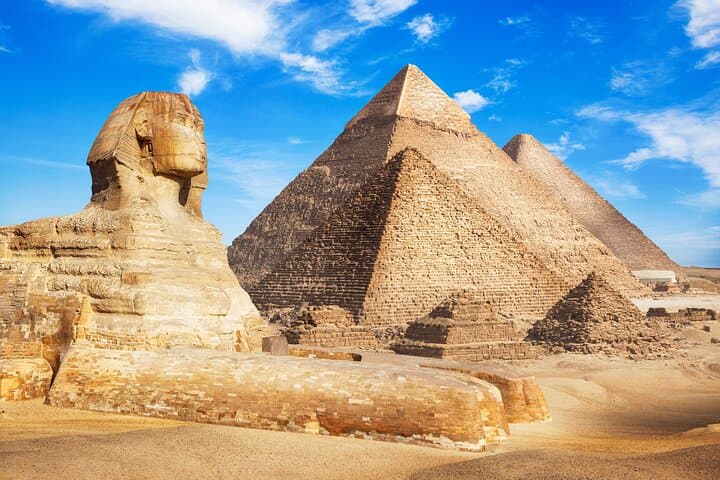
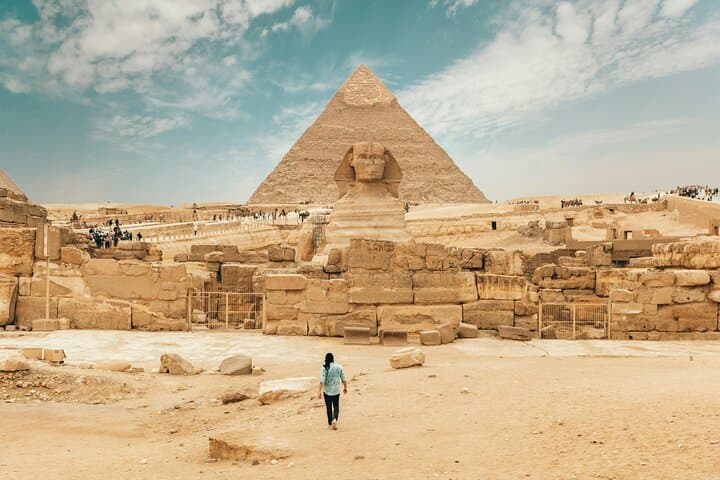
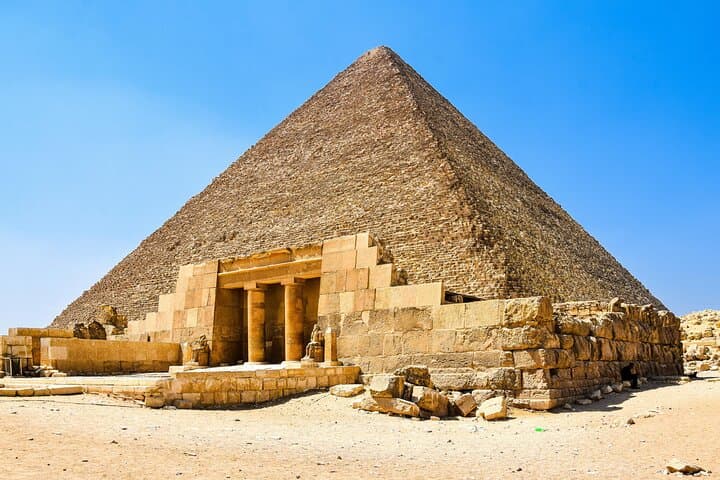
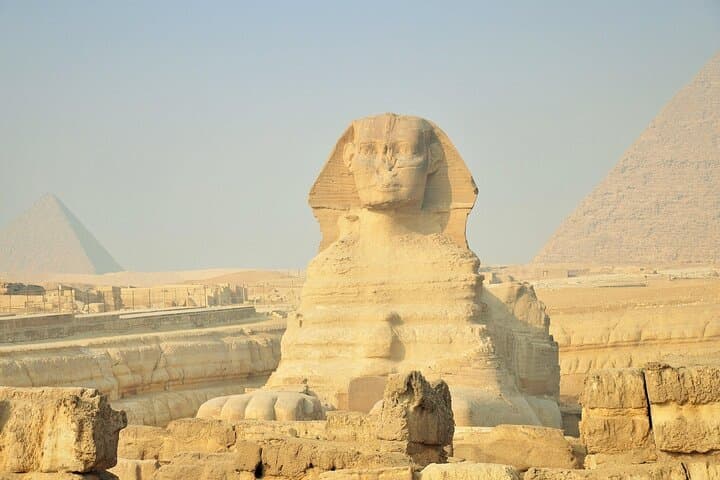
At Giza the plateau feels elemental: limestone beds heaved and carved into the Great Pyramid, a geomorphic story locked in stacked stones. The Sphinx gazes across a valley that once held funerary processions and boat pits; nearby, craftsmen still beat papyrus fibers into paper using methods that date back to Pharaonic workshops. Cairo’s streets fold around history — Ottoman facades, modern boulevards and the crowded bustle of Tahrir Square leading to the National Archaeological Museum, home to Tutankhamun’s funerary trove and centuries of decorated stone.
Culturally this is a day of contrasts: quiet desert wind versus the city’s constant motion; practiced guide narration and the informal calls of vendors. Expect lots of short walks on uneven ground, close-up photo stops on the Western Plateau, a guided look at papermaking, a sit-down lunch and two hours inside the museum.
Practical notes: start early to beat traffic and mid‑day heat, bring sun protection and comfortable walking shoes, and carry your passport (required for cruise transfers). Security checkpoints and timed entries are part of the rhythm — keep small local currency for tips and souvenirs. The route is fully guided with air‑conditioned transport; return to your ship in the evening with a packed day of Cairo’s essentials.
easy.
10–11 hours.
Suitable for travelers in average physical condition—requires repeated short walks and standing; not strenuous.
The tour is approximately 10–11 hours round trip, including driving time, site visits, lunch and museum time.
The itinerary indicates admission to Giza Plateau and the National Archaeological Museum is included; verify any optional extras with your operator.
The tour involves uneven ground, steps and short walks; it’s generally suitable for those who can walk short distances but not recommended for severe mobility limitations.
Yes—vendors offer camel rides and souvenir photos, but agree prices up front and be prepared with small local currency for tipping.
The Giza pyramids date to around 2600–2500 BCE; the Sphinx and funerary complexes reflect royal burial traditions and advanced engineering of Old Kingdom Egypt.
High visitor numbers stress fragile stone and desert soils—follow signage, don’t climb monuments, and support licensed guides to reduce impact.
NORTH AFRICAN SHIPPING AND TOURISM COMPANY (NASCO TOURS) operates guided outdoor trips and adventures with an emphasis on safety, stewardship, and memorable experiences.
You step off the gangway at Suez Port and the coast gives way to long road and ochre desert — the city is an hour and a half away, growing taller until the silhouette of the Pyramids punctures the horizon.
You step off the gangway at Suez Port and the coast gives way to long road and ochre desert — the city is an hour and a half away, growing taller until the silhouette of the Pyramids punctures the horizon.
At Giza the plateau feels elemental: limestone beds heaved and carved into the Great Pyramid, a geomorphic story locked in stacked stones. The Sphinx gazes across a valley that once held funerary processions and boat pits; nearby, craftsmen still beat papyrus fibers into paper using methods that date back to Pharaonic workshops. Cairo’s streets fold around history — Ottoman facades, modern boulevards and the crowded bustle of Tahrir Square leading to the National Archaeological Museum, home to Tutankhamun’s funerary trove and centuries of decorated stone.
Culturally this is a day of contrasts: quiet desert wind versus the city’s constant motion; practiced guide narration and the informal calls of vendors. Expect lots of short walks on uneven ground, close-up photo stops on the Western Plateau, a guided look at papermaking, a sit-down lunch and two hours inside the museum.
Practical notes: start early to beat traffic and mid‑day heat, bring sun protection and comfortable walking shoes, and carry your passport (required for cruise transfers). Security checkpoints and timed entries are part of the rhythm — keep small local currency for tips and souvenirs. The route is fully guided with air‑conditioned transport; return to your ship in the evening with a packed day of Cairo’s essentials.