THE ADVENTURE COLLECTIVE® · Independent discovery and booking for outdoor travel

Spend a full day exploring Angkor Wat, Ta Prohm, Ta Nei and Bayon with a private English-speaking guide, ending at Bakheng for sunset. This full-day tour includes hotel pickup, an air-conditioned vehicle, and bottled water—perfect for first-time visitors wanting a curated, comfortable temple experience.
Spend a full day exploring Angkor Wat, Ta Prohm, Ta Nei and Bayon with a private English-speaking guide, ending at Bakheng for sunset. This full-day tour includes hotel pickup, an air-conditioned vehicle, and bottled water—perfect for first-time visitors wanting a curated, comfortable temple experience.
You enter the Angkor grounds through a humid morning that smells faintly of dust and frangipani, the air moving across carved sandstone faces as your guide leads you toward Angkor Wat. The day unfolds through corridors of bas-relief, strangler figs at Ta Prohm that still pry apart stone, and the compact, maze-like galleries of Bayon with its 12th-century smiling faces. The finale is Bakheng’s ridge at dusk—an unpaved climb rewarded with a horizon of temple spires against a burning sky.
Verified experiences and guided adventures in the surrounding area.
Operated by MyProGuide Cambodia · Siem Reap, Siem Reap Province
You enter the Angkor grounds through a humid morning that smells faintly of dust and frangipani, the air moving across carved sandstone faces as your guide leads you toward Angkor Wat. The day unfolds through corridors of bas-relief, strangler figs at Ta Prohm that still pry apart stone, and the compact, maze-like galleries of Bayon with its 12th-century smiling faces. The finale is Bakheng’s ridge at dusk—an unpaved climb rewarded with a horizon of temple spires against a burning sky.
Angkor sits on a raised inland plain shaped by seasonal rivers and the great baray reservoirs of the Khmer Empire (9th–15th centuries). The architecture is primarily sandstone and laterite; expect worn steps, soft bas-relief, and exposed tree roots that give context to the sites’ slow reclamation by forest. Locally, temples remain places of reverence—monks in orange robes and small offerings are common.
Practically, this is a full-day, on-foot experience across uneven ground and short stair sections; total walking can reach several kilometers between stops. Admission to the Angkor Archaeological Park is not included; buy your pass in advance to save time. Dress respectfully: shoulders and knees covered. Wear sturdy walking shoes with good grip for slick stone and root-strewn paths. Hydrate regularly—supplied cold water and towels are helpful, but bring a refillable bottle. Sunset at Bakheng draws crowds; arrive early to claim a viewing spot and be prepared for limited railings and dim paths on descent. Your private, air-conditioned vehicle and English-speaking guide streamline logistics, letting you focus on the temples, the stories etched into stone, and the light as it changes on centuries-old reliefs.
moderate.
9 hours.
Light to moderate fitness; you should be comfortable walking multiple short stretches and climbing uneven temple steps throughout the day
No—Angkor Archaeological Park admission is purchased separately at the ticket center; bring your passport for the pass purchase.
Many areas include uneven ground, steps, and narrow corridors; some sites have limited accessibility—contact the operator ahead to arrange vehicle access near specific temples.
Yes, a private English-speaking guide will advise on best photo spots and timing, and will help you navigate crowds for sunset at Bakheng.
Tipping is discretionary but customary—many travelers leave a modest tip at the end of the day (amount depends on service quality).
Angkor was the political and religious heart of the Khmer Empire (9th–15th centuries); Bayon was built under King Jayavarman VII in the late 12th century and is known for its carved face towers.
Heavy visitation affects fragile sandstone and surface reliefs—follow established paths, avoid touching carvings, and carry out waste to support preservation efforts.
MyProGuide Cambodia operates guided outdoor trips and adventures with an emphasis on safety, stewardship, and memorable experiences.
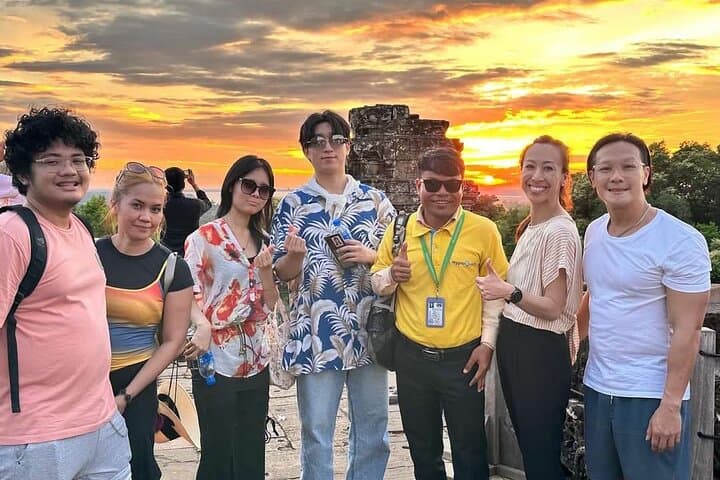
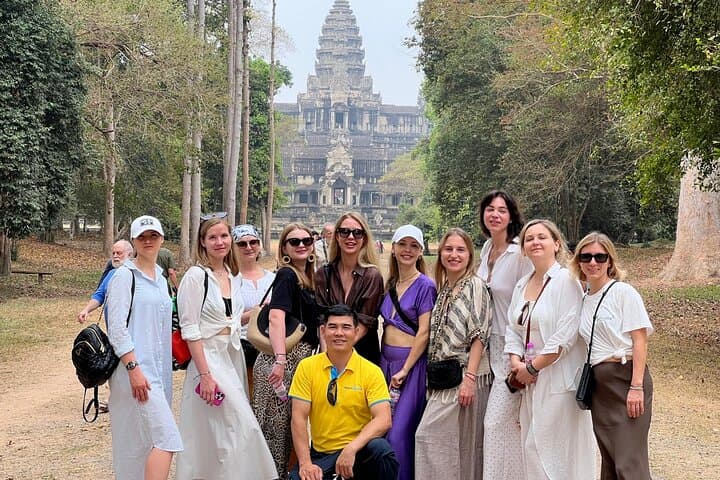
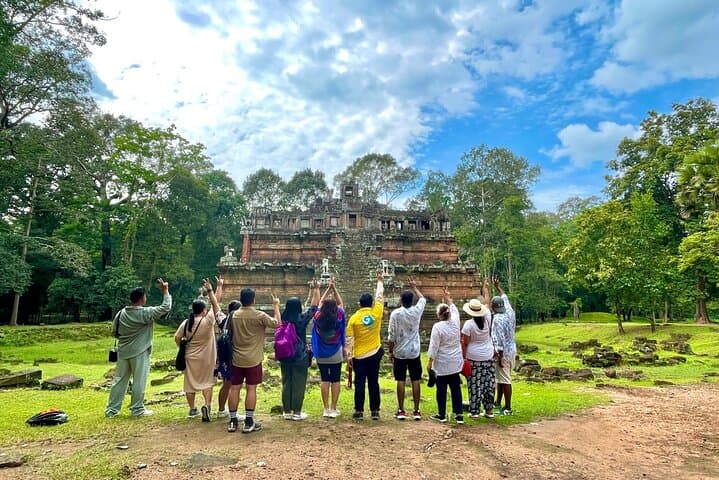

You enter the Angkor grounds through a humid morning that smells faintly of dust and frangipani, the air moving across carved sandstone faces as your guide leads you toward Angkor Wat. The day unfolds through corridors of bas-relief, strangler figs at Ta Prohm that still pry apart stone, and the compact, maze-like galleries of Bayon with its 12th-century smiling faces. The finale is Bakheng’s ridge at dusk—an unpaved climb rewarded with a horizon of temple spires against a burning sky.
You enter the Angkor grounds through a humid morning that smells faintly of dust and frangipani, the air moving across carved sandstone faces as your guide leads you toward Angkor Wat. The day unfolds through corridors of bas-relief, strangler figs at Ta Prohm that still pry apart stone, and the compact, maze-like galleries of Bayon with its 12th-century smiling faces. The finale is Bakheng’s ridge at dusk—an unpaved climb rewarded with a horizon of temple spires against a burning sky.
Angkor sits on a raised inland plain shaped by seasonal rivers and the great baray reservoirs of the Khmer Empire (9th–15th centuries). The architecture is primarily sandstone and laterite; expect worn steps, soft bas-relief, and exposed tree roots that give context to the sites’ slow reclamation by forest. Locally, temples remain places of reverence—monks in orange robes and small offerings are common.
Practically, this is a full-day, on-foot experience across uneven ground and short stair sections; total walking can reach several kilometers between stops. Admission to the Angkor Archaeological Park is not included; buy your pass in advance to save time. Dress respectfully: shoulders and knees covered. Wear sturdy walking shoes with good grip for slick stone and root-strewn paths. Hydrate regularly—supplied cold water and towels are helpful, but bring a refillable bottle. Sunset at Bakheng draws crowds; arrive early to claim a viewing spot and be prepared for limited railings and dim paths on descent. Your private, air-conditioned vehicle and English-speaking guide streamline logistics, letting you focus on the temples, the stories etched into stone, and the light as it changes on centuries-old reliefs.