THE ADVENTURE COLLECTIVE® · Independent discovery and booking for outdoor travel

An 8-day loop through Paro, Thimphu, Punakha and Phobjikha that combines easy daily hikes with visits to Bhutan’s most iconic dzongs and monasteries — including a climb to Tiger’s Nest. Ideal for travelers who want active cultural immersion with minimal driving.
An 8-day loop through Paro, Thimphu, Punakha and Phobjikha that combines easy daily hikes with visits to Bhutan’s most iconic dzongs and monasteries — including a climb to Tiger’s Nest. Ideal for travelers who want active cultural immersion with minimal driving.
Book with Bhutan Travel Club
Book directly with Bhutan Travel Club for the best rates and real-time scheduling.
Reserve NowVerified experiences and guided adventures in the surrounding area.
Operated by Bhutan Travel Club · Thimphu, Thimphu District
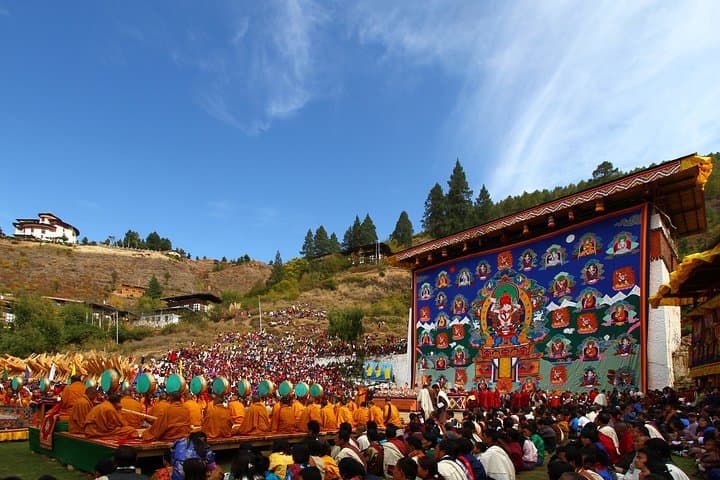
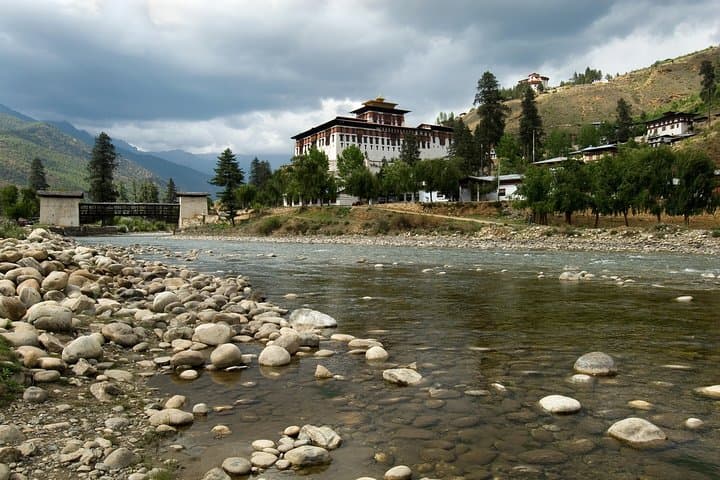
You step off the tarmac into a thin, cool air and the Paro valley opens like a folded map — rivers carving silver lines, terraced fields stepping down the slopes, prayer flags snapping at ridgelines. The first drive to Thimphu introduces you to Bhutan’s compact mix of alpine ridges and cultivated lowlands, and each day the landscape shifts: rhododendron forests high on Dochula Pass, rice flats around Punakha, a glacial hollow at Phobjikha where cranes glide in winter.
moderate.
8 days.
Suitable for travelers in good general health who can walk 2–6 km on uneven ground and tolerate short steep sections; not technical.
Yes — all visitors enter Bhutan under a government-authorized tour with permitted fees included by the operator; passports are required for permit processing.
It’s a steep 2–3 hour round-trip climb for most people; the trail is well maintained but involves sustained uphill sections and uneven stone steps.
You may spot birds, Himalayan civet and, in winter at Phobjikha, the endangered black-necked crane; sightings are seasonal and never guaranteed.
Daily elevations vary — Paro and Thimphu sit around 2,200–2,600 m; Dochula Pass reaches ~3,140 m and some viewpoints approach 3,800 m, so plan for mild altitude acclimatization.
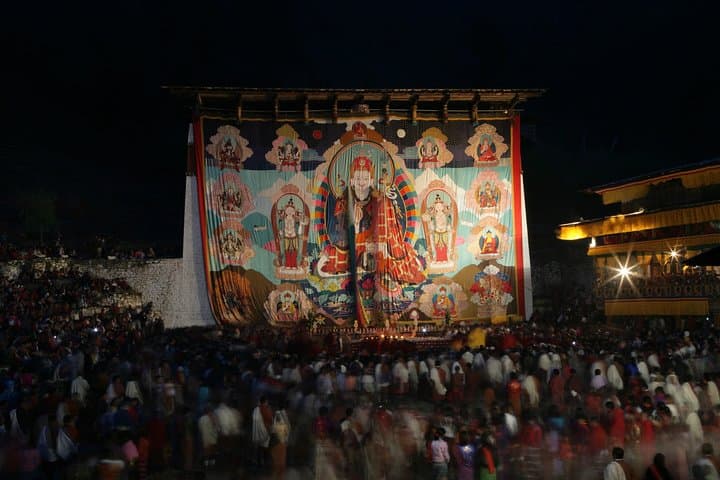
Many dzongs and temples on this route were built between the 7th and 17th centuries and reflect Bhutan’s fusion of religious and administrative roles.
Phobjikha is a protected habitat for wintering cranes and local communities work with authorities to balance agriculture and crane conservation; visitors are urged to follow trail rules and avoid disturbing wildlife.
Bhutan Travel Club operates guided outdoor trips and adventures with an emphasis on safety, stewardship, and memorable experiences.
Book with Bhutan Travel Club
Book directly with Bhutan Travel Club for the best rates and real-time scheduling.
Reserve Now