THE ADVENTURE COLLECTIVE® · Independent discovery and booking for outdoor travel

A focused, three-day loop through Angkor’s must-see temples—Angkor Wat at sunrise, the carved faces of Bayon, Ta Phrom’s tree-entwined ruins, plus Banteay Srei and Beng Mealea. Expect long days on uneven stone, early starts to beat heat, and rich historical interpretation.
A focused, three-day loop through Angkor’s must-see temples—Angkor Wat at sunrise, the carved faces of Bayon, Ta Phrom’s tree-entwined ruins, plus Banteay Srei and Beng Mealea. Expect long days on uneven stone, early starts to beat heat, and rich historical interpretation.
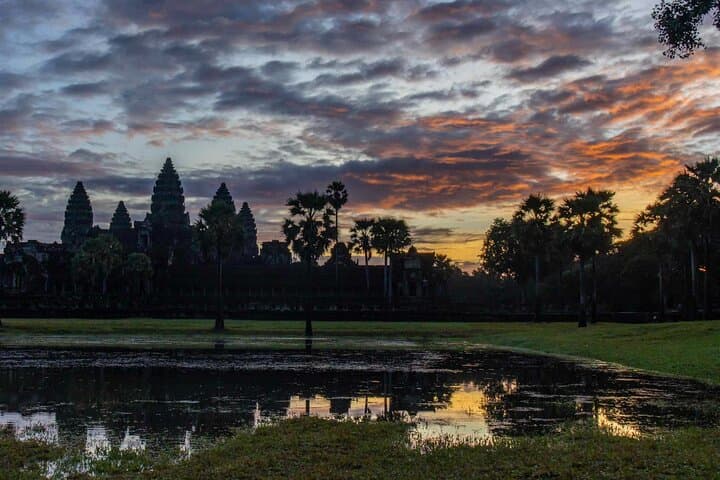
You step out before dawn onto a causeway that seems to hold its breath. The reflection pool mirrors the central towers of Angkor Wat, and the air—warm and damp—presses gently against your skin as the first light eases the shadows from carvings that have watched centuries pass.
Verified experiences and guided adventures in the surrounding area.
Operated by Van Express Tours · Siem Reap, Siem Reap Province
You step out before dawn onto a causeway that seems to hold its breath. The reflection pool mirrors the central towers of Angkor Wat, and the air—warm and damp—presses gently against your skin as the first light eases the shadows from carvings that have watched centuries pass.
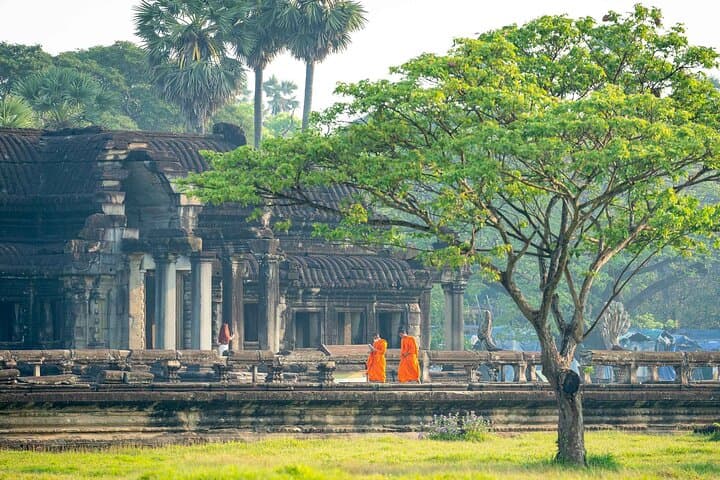
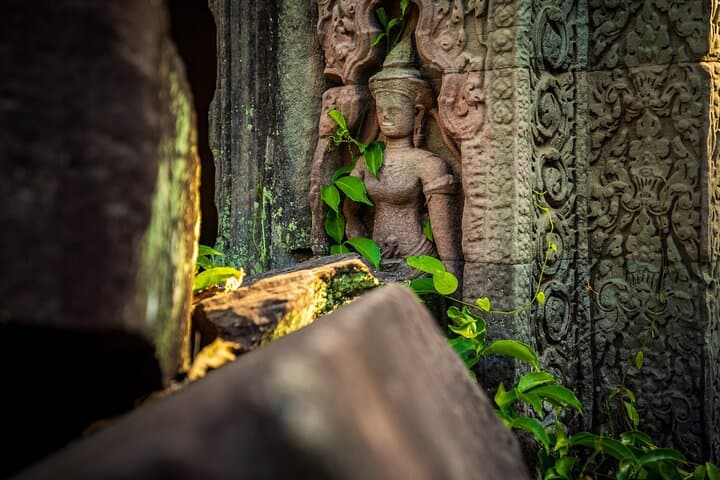
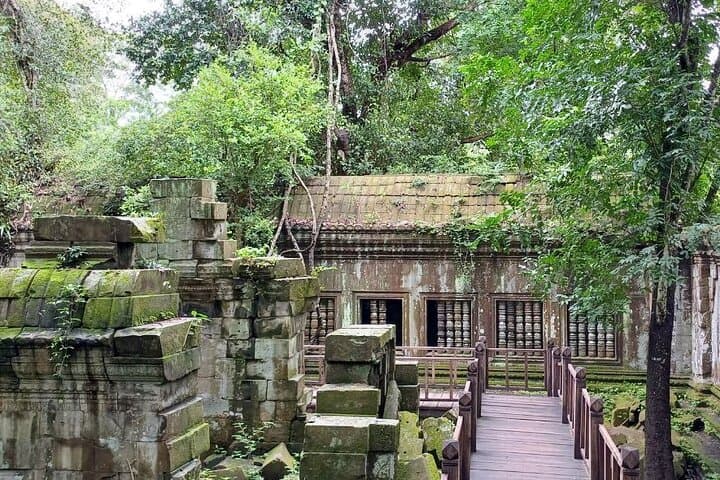
This three-day itinerary moves from the grand, water-ringed terraces of Angkor Wat to the face-lined galleries of Bayon inside Angkor Thom, then into the strangling roots and moss of Ta Phrom. Day two visits the delicate pink sandstone reliefs of Banteay Srei and the river-carved bas-reliefs at Kbal Spean; day three covers the ruined jungle maze of Beng Mealea and the early Rolous group, offering a cross-section of Khmer temple styles from the 9th to 12th centuries.
Geology here—sandstone and laterite—shapes every corridor and collapse; rivers and seasonal floods have quietly redistributed silt and supported the vast barays that powered the Angkorian capital. Culturally, these sites trace the shift from Hindu cosmology to Mahayana and Theravada Buddhist patronage; guides explain iconography and the region’s more recent, turbulent 20th-century history.
Practical notes: plan for early starts to avoid heat and crowds, wear sturdy shoes for uneven stone and roots, and carry at least 2–3 liters of water per day. Respect temple rules—no shorts or sleeveless tops when required—and budget time for tuk‑tuk transfers between distant sites. With moderate fitness and sensible gear, three days delivers a layered, walkable study of Angkor’s architecture and the jungle that keeps insisting it still belongs to the forest.
moderate.
3 days (full days of touring).
Good walking fitness; able to manage uneven stone steps, short climbs, and several hours on your feet each day
Yes—entry requires an Angkor Pass (1-, 3- or 7-day options); the 3-day pass is the most common for a full tour of key sites.
Many temple complexes have uneven steps and steep access routes; some areas can be seen from lower levels, but full access is limited—ask your operator about tailored transport and routing.
November to February brings cooler, drier weather and clearer skies; the wet season (May–October) offers fewer crowds and lush scenery but heavier rains.
A local guide greatly enhances understanding of iconography, history and cultural etiquette and helps navigate timing to avoid crowds and heat.
Angkor was the political and religious center of the Khmer Empire (9th–15th centuries); many temples reflect shifts from Hindu to Buddhist patronage and later colonial-era and modern history.
Conservation balances tourism revenue with fragile sandstone conservation; visitors are asked to avoid climbing unrestored structures and to follow signage to protect archaeological fabric.
Van Express Tours operates guided outdoor trips and adventures with an emphasis on safety, stewardship, and memorable experiences.
You step out before dawn onto a causeway that seems to hold its breath. The reflection pool mirrors the central towers of Angkor Wat, and the air—warm and damp—presses gently against your skin as the first light eases the shadows from carvings that have watched centuries pass.
You step out before dawn onto a causeway that seems to hold its breath. The reflection pool mirrors the central towers of Angkor Wat, and the air—warm and damp—presses gently against your skin as the first light eases the shadows from carvings that have watched centuries pass.
This three-day itinerary moves from the grand, water-ringed terraces of Angkor Wat to the face-lined galleries of Bayon inside Angkor Thom, then into the strangling roots and moss of Ta Phrom. Day two visits the delicate pink sandstone reliefs of Banteay Srei and the river-carved bas-reliefs at Kbal Spean; day three covers the ruined jungle maze of Beng Mealea and the early Rolous group, offering a cross-section of Khmer temple styles from the 9th to 12th centuries.
Geology here—sandstone and laterite—shapes every corridor and collapse; rivers and seasonal floods have quietly redistributed silt and supported the vast barays that powered the Angkorian capital. Culturally, these sites trace the shift from Hindu cosmology to Mahayana and Theravada Buddhist patronage; guides explain iconography and the region’s more recent, turbulent 20th-century history.
Practical notes: plan for early starts to avoid heat and crowds, wear sturdy shoes for uneven stone and roots, and carry at least 2–3 liters of water per day. Respect temple rules—no shorts or sleeveless tops when required—and budget time for tuk‑tuk transfers between distant sites. With moderate fitness and sensible gear, three days delivers a layered, walkable study of Angkor’s architecture and the jungle that keeps insisting it still belongs to the forest.