THE ADVENTURE COLLECTIVE® · Independent discovery and booking for outdoor travel

A private day tour from Rome leads to Civita di Bagnoregio, a tiny medieval village balanced on tuff and reached by a single pedestrian bridge. Discover its Etruscan roots, up‑close geology, and practical tips for timing, footwear, and accessibility.
A private day tour from Rome leads to Civita di Bagnoregio, a tiny medieval village balanced on tuff and reached by a single pedestrian bridge. Discover its Etruscan roots, up‑close geology, and practical tips for timing, footwear, and accessibility.
You step off the private vehicle onto a low ridge and the town appears: a compact cluster of stone houses balanced on a pillar of soft tuff, reached only by a single pedestrian bridge that cuts the valley like a deliberate invitation. The bridge’s 300‑metre span narrows your pace; the wind and the distant gull of tourists shape how you approach the village.
Verified experiences and guided adventures in the surrounding area.
Operated by Rome Italy Explora · Bagnoregio, Lazio
You step off the private vehicle onto a low ridge and the town appears: a compact cluster of stone houses balanced on a pillar of soft tuff, reached only by a single pedestrian bridge that cuts the valley like a deliberate invitation. The bridge’s 300‑metre span narrows your pace; the wind and the distant gull of tourists shape how you approach the village.
Civita di Bagnoregio has Etruscan origins and a medieval core that survived centuries of erosion. The hill is volcanic tuff—soft, porous rock worn by rain and two small torrents—so the place has earned the nickname "the dying city." Its survival is a live conversation between geology and human care: narrow lanes, restored facades, and terraces that frame views across Lazio toward Lake Bolsena and Orvieto.
Locally the village runs on small‑scale tourism, private guides, and a handful of artisan shops and cafes that preserve regional foodways. Expect cobbled alleys, steep steps, and viewpoints that reward patience with long sightlines and strong light for photographs.
Practical guidance: the private tour typically lasts 4–5 hours with pick‑up and drop‑off from Rome included. Entrance fees are usually part of packaged tours; there’s a short, mostly level walk from the bridge into the town but surfaces are uneven—strollers and mobility aids can be difficult beyond the first piazza. Aim for early morning or late afternoon to avoid peak crowds and heat. Bring sturdy walking shoes, sun protection, water, and a light jacket for wind on the ridge. If you have mobility limits, flag this when booking: small lanes and steps are common and some areas are not wheelchair accessible.
easy.
4–5 hours.
Suitable for most travelers who can manage short walks on uneven ground and some steps
The access bridge is roughly 300 metres; it’s a gentle but exposed walk that leads directly to the village entrance.
Many private tour packages include entrance tickets to Civita di Bagnoregio; confirm with your operator at booking.
The bridge is passable for strollers to reach the main entrance, but interior lanes are cobbled and stepped—mobility can be limited beyond the first square.
Early morning and late afternoon are quieter and offer better light for photos; mid‑day is busiest, especially in summer.
Founded by the Etruscans and reworked in the medieval period, Civita di Bagnoregio sits on a tuff plateau whose slow erosion has shaped both settlement pattern and preservation efforts.
Ongoing stabilization and restoration programs aim to slow tuff erosion; visitors are asked to respect restricted zones and avoid climbing fragile walls.
Rome Italy Explora operates guided outdoor trips and adventures with an emphasis on safety, stewardship, and memorable experiences.
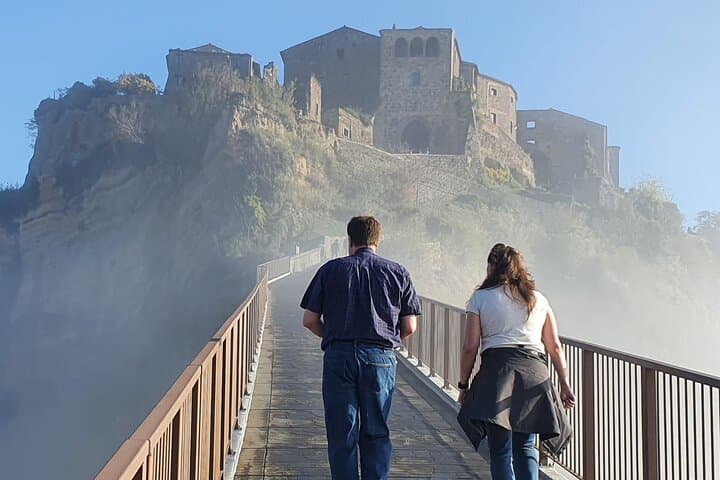
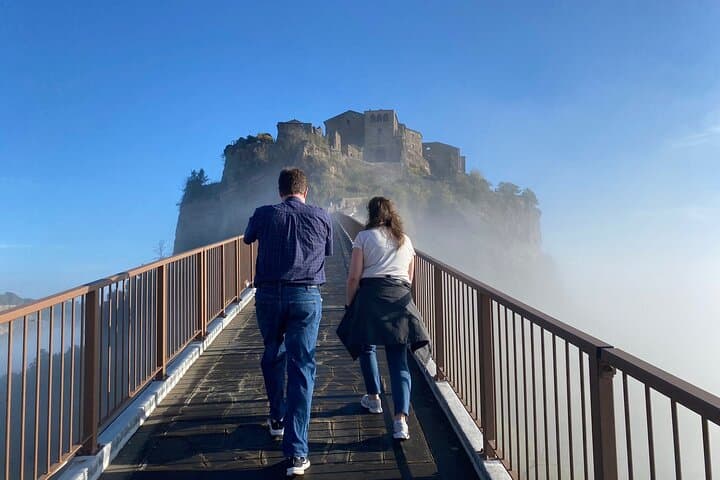
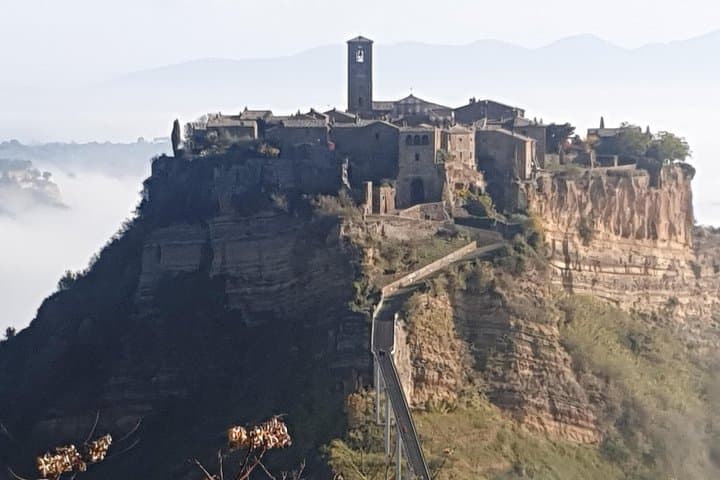
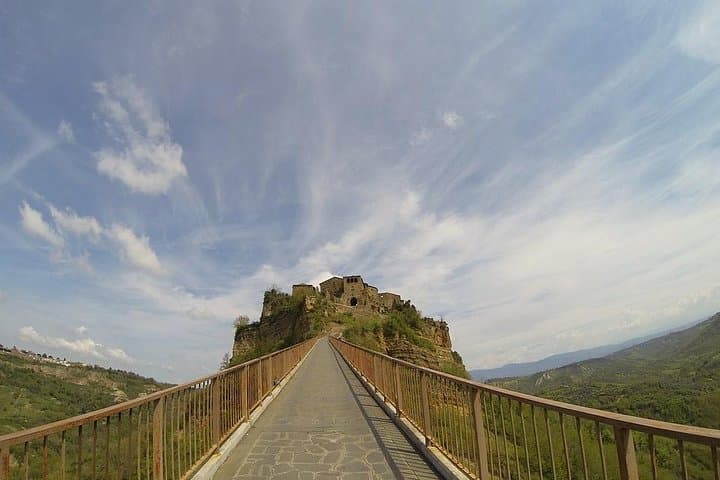
You step off the private vehicle onto a low ridge and the town appears: a compact cluster of stone houses balanced on a pillar of soft tuff, reached only by a single pedestrian bridge that cuts the valley like a deliberate invitation. The bridge’s 300‑metre span narrows your pace; the wind and the distant gull of tourists shape how you approach the village.
You step off the private vehicle onto a low ridge and the town appears: a compact cluster of stone houses balanced on a pillar of soft tuff, reached only by a single pedestrian bridge that cuts the valley like a deliberate invitation. The bridge’s 300‑metre span narrows your pace; the wind and the distant gull of tourists shape how you approach the village.
Civita di Bagnoregio has Etruscan origins and a medieval core that survived centuries of erosion. The hill is volcanic tuff—soft, porous rock worn by rain and two small torrents—so the place has earned the nickname "the dying city." Its survival is a live conversation between geology and human care: narrow lanes, restored facades, and terraces that frame views across Lazio toward Lake Bolsena and Orvieto.
Locally the village runs on small‑scale tourism, private guides, and a handful of artisan shops and cafes that preserve regional foodways. Expect cobbled alleys, steep steps, and viewpoints that reward patience with long sightlines and strong light for photographs.
Practical guidance: the private tour typically lasts 4–5 hours with pick‑up and drop‑off from Rome included. Entrance fees are usually part of packaged tours; there’s a short, mostly level walk from the bridge into the town but surfaces are uneven—strollers and mobility aids can be difficult beyond the first piazza. Aim for early morning or late afternoon to avoid peak crowds and heat. Bring sturdy walking shoes, sun protection, water, and a light jacket for wind on the ridge. If you have mobility limits, flag this when booking: small lanes and steps are common and some areas are not wheelchair accessible.