THE ADVENTURE COLLECTIVE® · Independent discovery and booking for outdoor travel

Cycle the reconstructed Ćiro railway from Mostar to Čapljina, following the Neretva past Ottoman tekke, Roman ruins and spring-fed rivers. This full-day gravel ride combines easy terrain with significant cultural stops — ideal for riders who want history and scenery in one route.
Cycle the reconstructed Ćiro railway from Mostar to Čapljina, following the Neretva past Ottoman tekke, Roman ruins and spring-fed rivers. This full-day gravel ride combines easy terrain with significant cultural stops — ideal for riders who want history and scenery in one route.
You start on a narrow riverside lane with the Neretva daring you downstream; gravel crunches under tires and the hulking arches of old railway bridges loom overhead. Morning light slants across citrus trees as the reconstructed Ćiro railroad bed leads out of Mostar, following the river toward stone villages and Roman ruins.
Verified experiences and guided adventures in the surrounding area.
Operated by Ero Travel · Mostar, Herzegovina-Neretva
You start on a narrow riverside lane with the Neretva daring you downstream; gravel crunches under tires and the hulking arches of old railway bridges loom overhead. Morning light slants across citrus trees as the reconstructed Ćiro railroad bed leads out of Mostar, following the river toward stone villages and Roman ruins.
The line was laid between 1898 and 1901 under Austro-Hungarian rule to connect inland Herzegovina with the Adriatic. Today the railbed has been repurposed into a mixed gravel-and-hardpack cycling track that threads past the Buna spring at Blagaj, the Ottoman-era tekke, and the walled streets of Počitelj before descending toward Čapljina and the Mogorjelo Roman villa rustica.
Geology here is karst limestone carved by the Neretva; expect short climbs where the bed narrows and open river flats in the valley. Culture shifts quickly — Ottoman-era mosques and austere Austro-Hungarian engineering sit within bicycle range. Local cafés near Blagaj serve trout from the Buna and simple ćevapi in Mostar.
Practical guide: the route is mostly non-technical but uses gravel and compact dirt; a hybrid or gravel bike with tires 35–45mm is ideal. Expect a full-day outing (plan 6–9 hours including stops), bring layered rain protection, sun protection, and enough water for long stretches between villages. Helmets are provided with the tour, but bring your own gloves and a small repair kit. Timing: start early to avoid midday heat and allow time for short cultural stops and a relaxed return transfer from Čapljina.
moderate.
6–9 hours.
Reasonable cycling fitness for continuous pedaling and short climbs; beginners can join if comfortable on gravel.
The guided excursion runs as a full-day outing with riding and stops; expect 6–9 hours door-to-door including cultural visits and the return transfer.
No advanced skills are required — basic bike handling on gravel is sufficient; the tour is suitable for most fitness levels.
Yes, the tour includes bicycles (GT) and helmets, along with route notes and vehicle support for transfers.
Yes — transfers from Split, Dubrovnik, Makarska and Sarajevo are available on request; confirm at booking.
The Ćiro line was built at the turn of the 20th century under Austro-Hungarian administration to connect inland towns to the Adriatic; settlements en route show Ottoman and Roman layers of occupation.
Tours use existing tracks and promote low-impact travel; stay on the trail and avoid disturbing riverbanks and archaeological sites to help protect fragile karst and heritage areas.
Ero Travel operates guided outdoor trips and adventures with an emphasis on safety, stewardship, and memorable experiences.
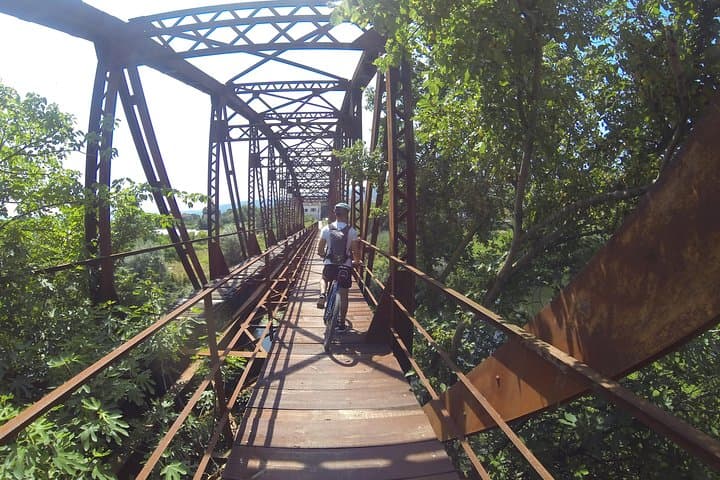
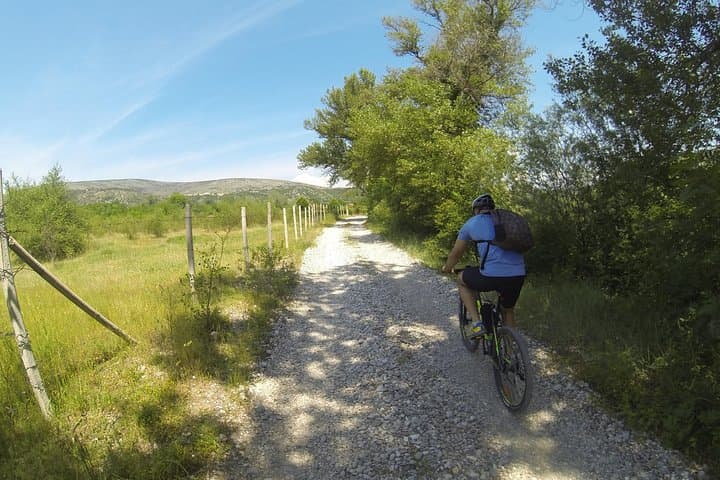
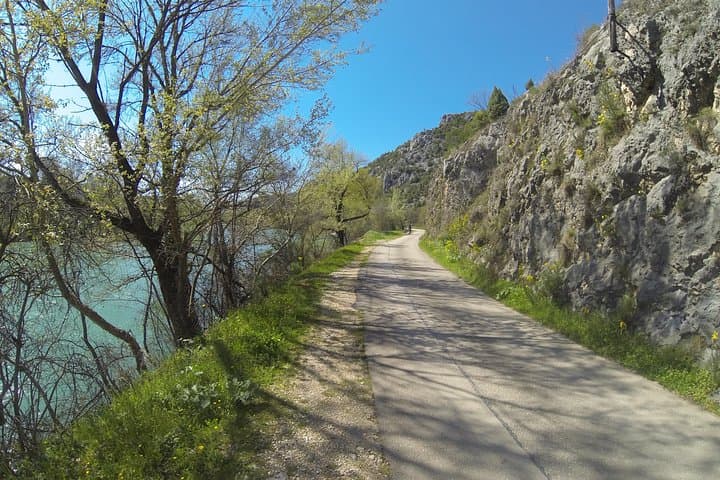
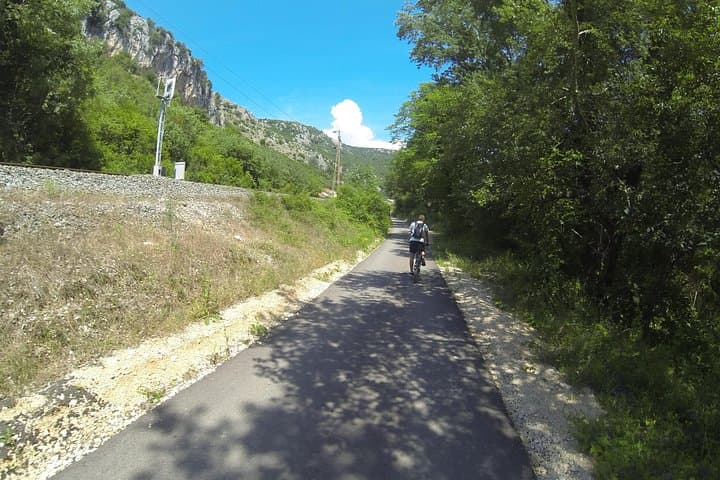
You start on a narrow riverside lane with the Neretva daring you downstream; gravel crunches under tires and the hulking arches of old railway bridges loom overhead. Morning light slants across citrus trees as the reconstructed Ćiro railroad bed leads out of Mostar, following the river toward stone villages and Roman ruins.
You start on a narrow riverside lane with the Neretva daring you downstream; gravel crunches under tires and the hulking arches of old railway bridges loom overhead. Morning light slants across citrus trees as the reconstructed Ćiro railroad bed leads out of Mostar, following the river toward stone villages and Roman ruins.
The line was laid between 1898 and 1901 under Austro-Hungarian rule to connect inland Herzegovina with the Adriatic. Today the railbed has been repurposed into a mixed gravel-and-hardpack cycling track that threads past the Buna spring at Blagaj, the Ottoman-era tekke, and the walled streets of Počitelj before descending toward Čapljina and the Mogorjelo Roman villa rustica.
Geology here is karst limestone carved by the Neretva; expect short climbs where the bed narrows and open river flats in the valley. Culture shifts quickly — Ottoman-era mosques and austere Austro-Hungarian engineering sit within bicycle range. Local cafés near Blagaj serve trout from the Buna and simple ćevapi in Mostar.
Practical guide: the route is mostly non-technical but uses gravel and compact dirt; a hybrid or gravel bike with tires 35–45mm is ideal. Expect a full-day outing (plan 6–9 hours including stops), bring layered rain protection, sun protection, and enough water for long stretches between villages. Helmets are provided with the tour, but bring your own gloves and a small repair kit. Timing: start early to avoid midday heat and allow time for short cultural stops and a relaxed return transfer from Čapljina.