THE ADVENTURE COLLECTIVE® · Independent discovery and booking for outdoor travel

Walk Whitehall with an expert guide and descend into Churchill’s preserved underground War Rooms on this 2.5-hour semi-private tour. Small groups, timed entry, and first-hand storytelling bring Britain’s wartime decisions to life.
Walk Whitehall with an expert guide and descend into Churchill’s preserved underground War Rooms on this 2.5-hour semi-private tour. Small groups, timed entry, and first-hand storytelling bring Britain’s wartime decisions to life.
You meet at the bronze Churchill statue in Parliament Square as the city hums around you — buses cough, the Thames dares you to look across its grey ribbon, and the facades of Whitehall stare back with long memories.
Verified experiences and guided adventures in the surrounding area.
Operated by Babylon Tours London · London, England
You meet at the bronze Churchill statue in Parliament Square as the city hums around you — buses cough, the Thames dares you to look across its grey ribbon, and the facades of Whitehall stare back with long memories.
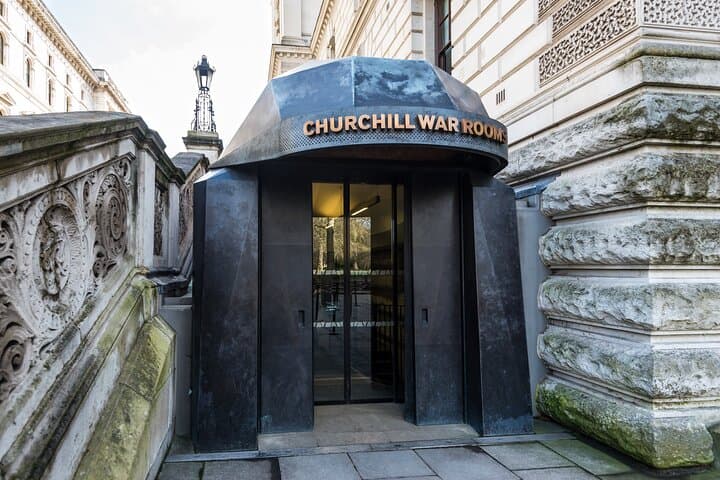
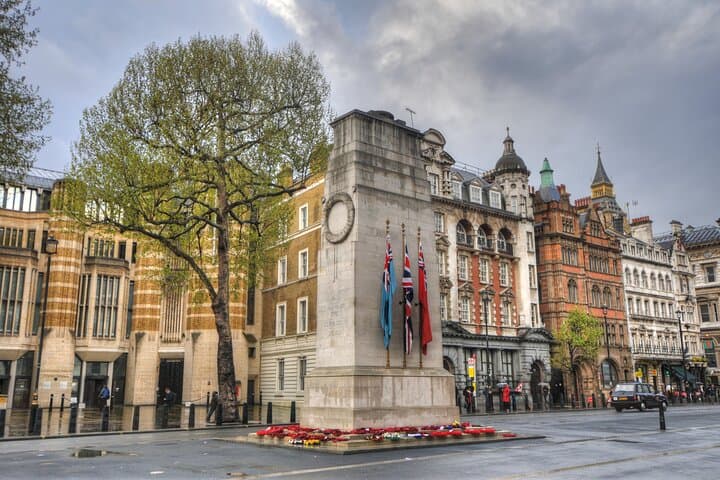
The 2.5-hour semi-private walk threads political landmarks and quieter corners of wartime London before descending into the Churchill War Rooms, a preserved subterranean HQ where strategy, smoke, and late-night maps shaped history. The route sketches a short social history of the capital: the Cenotaph's ceremonial silence, St Margaret’s Church and its role in elite civic life, the Horse Guards' ceremonial precision. Geologically the area sits on river gravels above London Clay, which made tunnelling for the bunker feasible in 20th-century engineering terms.
Your guide places Churchill against the era: the pressures of coalition politics, civil resilience during bombing, and the improvisation that defined the war office. Inside the War Rooms, the map room's low light and cork boards feel almost animate — decisions seem to breathe from the walls.
Practical guidance: wear comfortable shoes and expect stairs and low ceilings in the bunker; bring a compact bag only and a charged phone for emergency contact. Tours are limited to eight guests, so book early for morning slots to avoid crowds. Allow extra time to photograph Horse Guards Parade before or after the tour and to visit nearby museums if openings align. A measured, historically curious walk — sensory, urban, and claustrophobic in the best way for anyone who wants the war years made immediate.
moderate.
2.5 hours.
Moderate — you should be able to stand and walk for 2–3 hours and navigate short flights of stairs.
Yes — the tour includes timed access to Churchill’s War Rooms as part of the itinerary.
Meet at the Churchill statue in Parliament Square; the guide will brief the group and begin the walk there.
Strollers may be used on street sections, but the War Rooms contain tight corridors and stairs — access is limited for those with reduced mobility.
This is a semi-private tour capped at eight guests; full refunds are available for cancellations made at least 24 hours before departure.
The Churchill War Rooms are a preserved underground command centre used by Churchill and his cabinet during WWII; opened to the public as a museum in 1984 and part of the Imperial War Museums.
The site limits group sizes and enforces bag policies to protect fragile interiors; visitors are asked to avoid touching artifacts and to stay on marked paths.
Babylon Tours London operates guided outdoor trips and adventures with an emphasis on safety, stewardship, and memorable experiences.
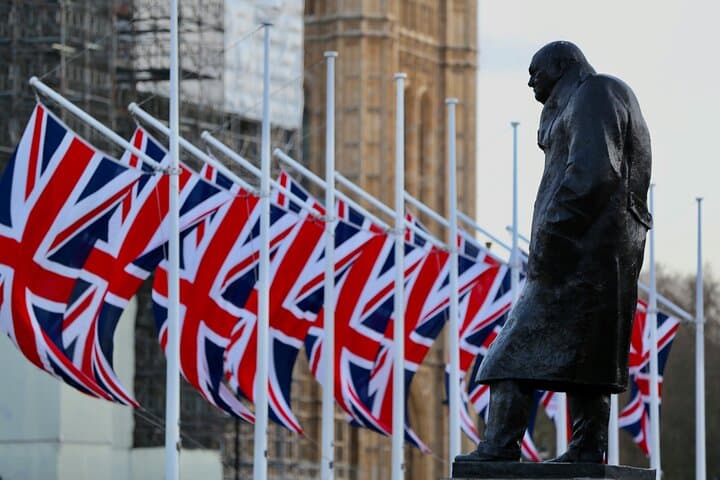
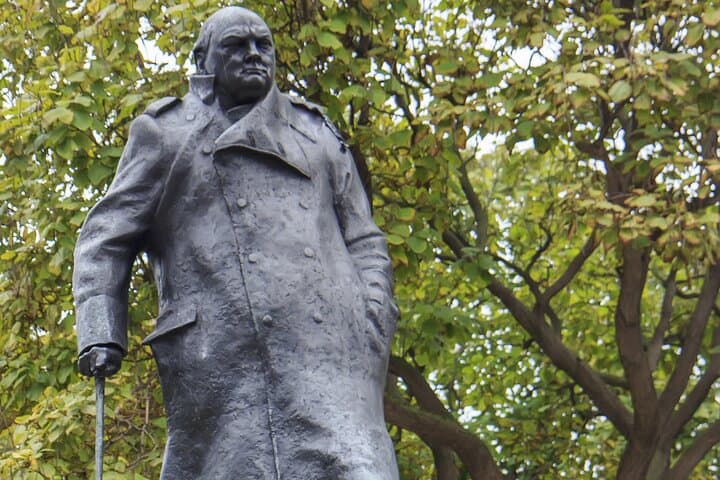
You meet at the bronze Churchill statue in Parliament Square as the city hums around you — buses cough, the Thames dares you to look across its grey ribbon, and the facades of Whitehall stare back with long memories.
You meet at the bronze Churchill statue in Parliament Square as the city hums around you — buses cough, the Thames dares you to look across its grey ribbon, and the facades of Whitehall stare back with long memories.
The 2.5-hour semi-private walk threads political landmarks and quieter corners of wartime London before descending into the Churchill War Rooms, a preserved subterranean HQ where strategy, smoke, and late-night maps shaped history. The route sketches a short social history of the capital: the Cenotaph's ceremonial silence, St Margaret’s Church and its role in elite civic life, the Horse Guards' ceremonial precision. Geologically the area sits on river gravels above London Clay, which made tunnelling for the bunker feasible in 20th-century engineering terms.
Your guide places Churchill against the era: the pressures of coalition politics, civil resilience during bombing, and the improvisation that defined the war office. Inside the War Rooms, the map room's low light and cork boards feel almost animate — decisions seem to breathe from the walls.
Practical guidance: wear comfortable shoes and expect stairs and low ceilings in the bunker; bring a compact bag only and a charged phone for emergency contact. Tours are limited to eight guests, so book early for morning slots to avoid crowds. Allow extra time to photograph Horse Guards Parade before or after the tour and to visit nearby museums if openings align. A measured, historically curious walk — sensory, urban, and claustrophobic in the best way for anyone who wants the war years made immediate.