THE ADVENTURE COLLECTIVE® · Independent discovery and booking for outdoor travel

Experience Churchill’s night skies from tundra vantage points, with guided dog sledding, snowshoeing and local cultural visits. This multi-day winter tour pairs aurora viewing with hands-on northern experiences and expert interpretive guides.
Experience Churchill’s night skies from tundra vantage points, with guided dog sledding, snowshoeing and local cultural visits. This multi-day winter tour pairs aurora viewing with hands-on northern experiences and expert interpretive guides.
You step from the plane into a cold so clear it scrubs the senses—Churchill’s sky opens like a deep well, and the aurora waits to be earned.
Verified experiences and guided adventures in the surrounding area.
Operated by Frontiers North Adventures · Churchill, Manitoba
You step from the plane into a cold so clear it scrubs the senses—Churchill’s sky opens like a deep well, and the aurora waits to be earned.
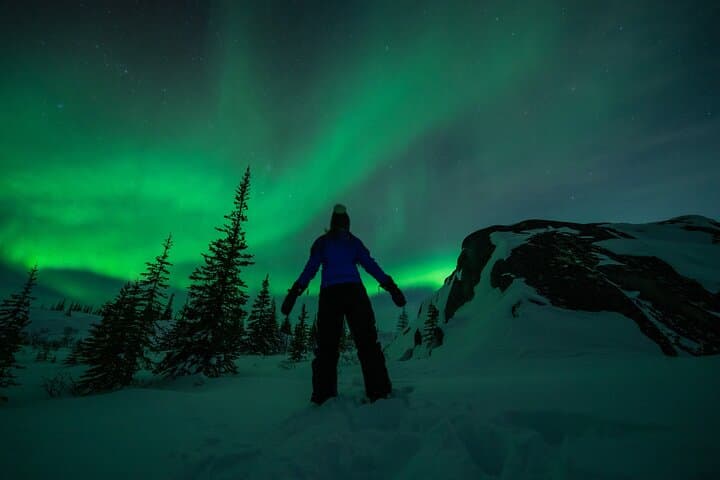
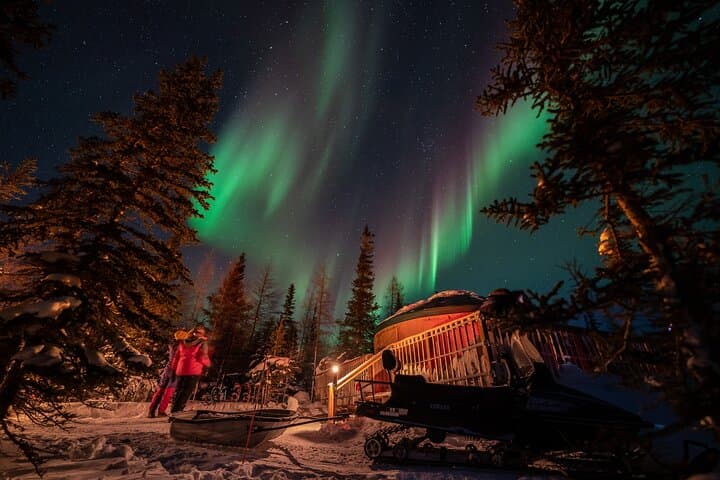
Here, directly beneath the auroral oval, nights can unfurl in curtains of green and violet that move with a will of their own. The itinerary moves you between secluded tundra vantage points and small-community experiences: an Itsanitaq Museum visit to read local stories in carvings, a snowshoe trek through black spruce transitioning to open tundra, and an evening at Dan’s Diner on the frozen bank of the Churchill River where food and frost meet.
Geology is simple and strict—Hudson Bay’s shallow shelf, seasonal sea ice, and patches of permafrost shape the coast and the low, wind-swept landscape. The area’s human history is layered: Hudson’s Bay Company trading routes, and the ongoing cultural presence of Inuit and Cree peoples who continue to guide seasonal life here.
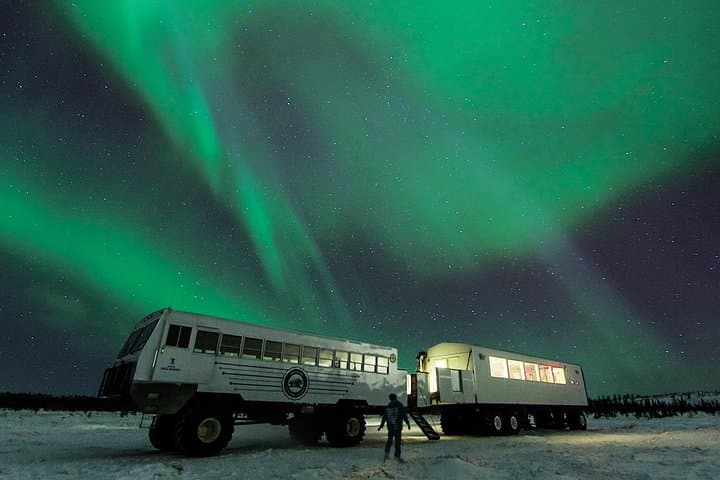
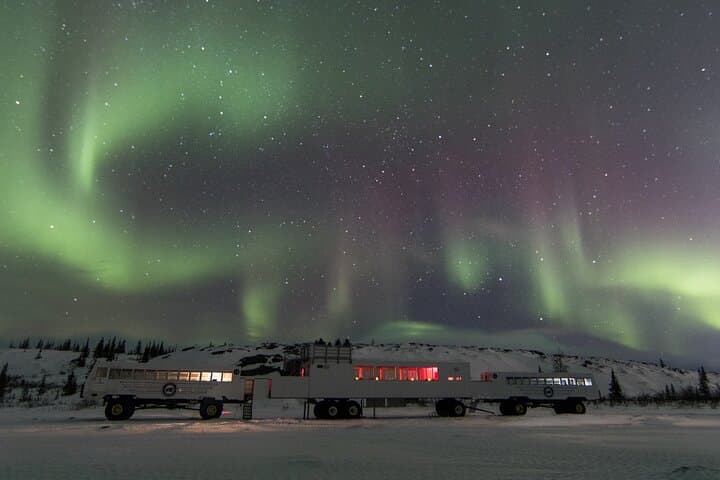
Practically, this is a winter-first trip: long nights and predictable auroral activity make December–March prime. Expect cold that demands insulated layers, waterproof boots, and time outside waiting for a show; guides move vehicles to quieter sites each night for optimal viewing. Snowshoeing and dog sled rides are guided and accessible, but the cold and remoteness mean attention to hydration, battery care for cameras, and strict wildlife protocols—polar bears inhabit the region; stay with guides and follow Parks Canada rules.
For photographers, bring a sturdy tripod, spare batteries kept warm, and a wide-aperture lens. Nights here are not just about sight—they are a weathered, breathing performance you’ll remember long after takeoff.
easy.
5–6 days.
Suitable for most fitness levels; participants should be comfortable standing and walking short uneven distances in cold conditions for up to a few hours.
The prime window is late fall through early spring (December–March) when nights are longest and auroral activity is often strong; guides still chase clear skies nightly.
No—programs are guided and designed for a wide range of abilities, but participants should be able to walk short distances on uneven, snowy terrain and tolerate cold for extended periods.
Travel insurance that covers trip interruption and medical evacuation is recommended for remote Arctic travel; no special vaccinations are typically required beyond routine immunizations.
Always follow guide instructions, avoid solo excursions outside town, never approach wildlife, and be aware that polar bears may require special safety protocols coordinated by operators and Parks Canada.
Churchill grew as a Hudson’s Bay Company trading post and later a rail and aviation gateway; Indigenous Inuit and Cree communities have long shaped local culture and knowledge of the land.
Visitor activities follow Parks Canada and local guidelines to minimize disturbance to wildlife and habitat; responsible tourism supports polar bear research and local conservation initiatives.
Frontiers North Adventures operates guided outdoor trips and adventures with an emphasis on safety, stewardship, and memorable experiences.
You step from the plane into a cold so clear it scrubs the senses—Churchill’s sky opens like a deep well, and the aurora waits to be earned.
You step from the plane into a cold so clear it scrubs the senses—Churchill’s sky opens like a deep well, and the aurora waits to be earned.
Here, directly beneath the auroral oval, nights can unfurl in curtains of green and violet that move with a will of their own. The itinerary moves you between secluded tundra vantage points and small-community experiences: an Itsanitaq Museum visit to read local stories in carvings, a snowshoe trek through black spruce transitioning to open tundra, and an evening at Dan’s Diner on the frozen bank of the Churchill River where food and frost meet.
Geology is simple and strict—Hudson Bay’s shallow shelf, seasonal sea ice, and patches of permafrost shape the coast and the low, wind-swept landscape. The area’s human history is layered: Hudson’s Bay Company trading routes, and the ongoing cultural presence of Inuit and Cree peoples who continue to guide seasonal life here.
Practically, this is a winter-first trip: long nights and predictable auroral activity make December–March prime. Expect cold that demands insulated layers, waterproof boots, and time outside waiting for a show; guides move vehicles to quieter sites each night for optimal viewing. Snowshoeing and dog sled rides are guided and accessible, but the cold and remoteness mean attention to hydration, battery care for cameras, and strict wildlife protocols—polar bears inhabit the region; stay with guides and follow Parks Canada rules.
For photographers, bring a sturdy tripod, spare batteries kept warm, and a wide-aperture lens. Nights here are not just about sight—they are a weathered, breathing performance you’ll remember long after takeoff.