THE ADVENTURE COLLECTIVE® · Independent discovery and booking for outdoor travel

Spend two hours exploring Kutná Hora’s Gothic highlights and Christmas market on a private walking tour. Discover St Mary on Náměti, Palackého Square, the Gothic Fountain, and St Barbara’s Cathedral with a local guide.
Spend two hours exploring Kutná Hora’s Gothic highlights and Christmas market on a private walking tour. Discover St Mary on Náměti, Palackého Square, the Gothic Fountain, and St Barbara’s Cathedral with a local guide.
Step off a winter train and into a town that still keeps its medieval edges—narrow lanes, carved stone, and church spires cutting into a low gray sky. The two-hour private walk through Kutná Hora focuses on seasonal light and architecture: St Mary on Náměti, Palackého Square’s market glow, the Gothic Fountain, and the high vaults of St Barbara’s Cathedral.
Verified experiences and guided adventures in the surrounding area.
Operated by Opatrip.com Czech · Kutná Hora, Central Bohemian Region
Step off a winter train and into a town that still keeps its medieval edges—narrow lanes, carved stone, and church spires cutting into a low gray sky. The two-hour private walk through Kutná Hora focuses on seasonal light and architecture: St Mary on Náměti, Palackého Square’s market glow, the Gothic Fountain, and the high vaults of St Barbara’s Cathedral.
Kutná Hora grew wealthy on silver in the 13th–16th centuries; its Gothic churches and fortifications record that boom. Geologically, the town sits on ore-bearing veins that fed Central Europe’s medieval mints, while the cathedral’s flying buttresses reveal centuries of evolving masonry techniques. Culturally, the town oscillates between quiet local life and tourist pulses—at Christmas the market becomes the social hearth, with mulled drinks and handcrafted decorations.
Expect close-up architectural study rather than strenuous hiking: cobbled streets, a few short staircases, and open squares framed by timber-framed houses. The guide will thread history, folklore, and practical stops for photos and a warm drink. During winter the wind off the silver mines seems to move with intent; in clearer seasons the views across the valley open like a layered map.
Practical notes: wear grippy shoes on uneven cobbles, layer for quick temperature shifts, and bring small Czech koruna for market vendors. Tours start from a central meeting point—confirm exact location with your provider—and allow time for short, unhurried pauses at each landmark. This is a compact, sensory way to experience Kutná Hora’s winter character without the crowds.
easy.
2 hours.
Suitable for most fitness levels; involves standing and short walks on uneven cobbles
Meeting is typically at St Mary on Náměti or a nearby central point; your confirmation will list the exact location.
This itinerary focuses on exterior views and short visits; cathedral admission is usually not included—check with the provider if you wish to enter.
Yes—distance and pace are gentle, but participants should manage short staircases and cobbled surfaces.
Private tours can alter routing for heavy snow or rain; cancellations generally follow the provider’s 24-hour policy.
Kutná Hora’s prosperity came from medieval silver mining and coin minting; its churches were funded by mine wealth and the royal mint.
The town is a UNESCO World Heritage Site—respect pathways and historic fabric, and avoid touching fragile masonry or frescoes.
Opatrip.com Czech operates guided outdoor trips and adventures with an emphasis on safety, stewardship, and memorable experiences.
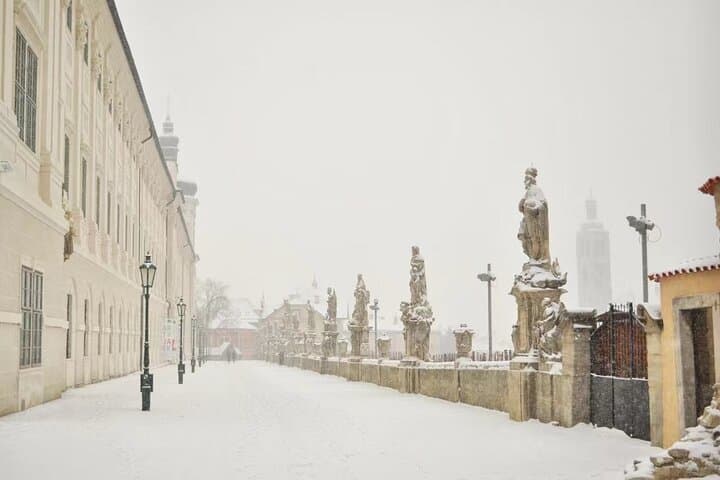
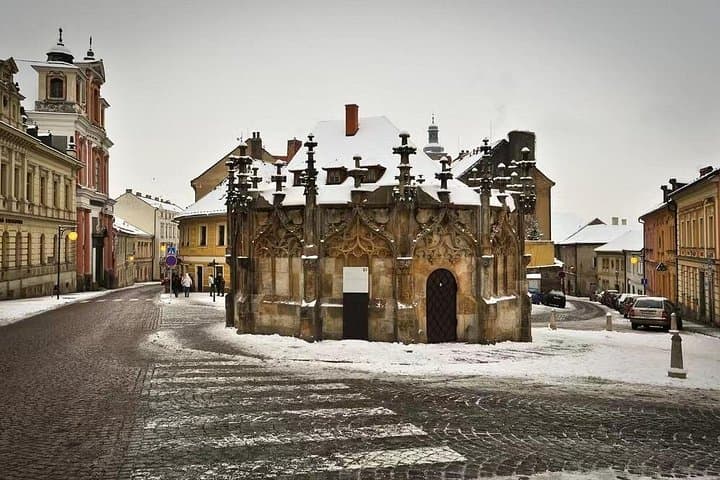
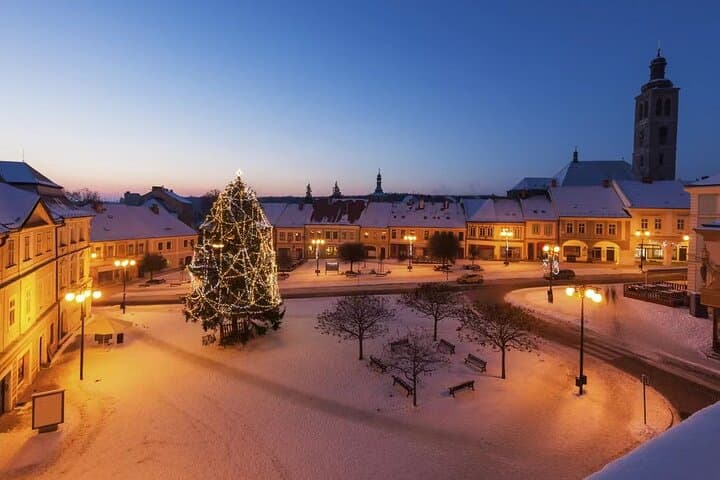

Step off a winter train and into a town that still keeps its medieval edges—narrow lanes, carved stone, and church spires cutting into a low gray sky. The two-hour private walk through Kutná Hora focuses on seasonal light and architecture: St Mary on Náměti, Palackého Square’s market glow, the Gothic Fountain, and the high vaults of St Barbara’s Cathedral.
Step off a winter train and into a town that still keeps its medieval edges—narrow lanes, carved stone, and church spires cutting into a low gray sky. The two-hour private walk through Kutná Hora focuses on seasonal light and architecture: St Mary on Náměti, Palackého Square’s market glow, the Gothic Fountain, and the high vaults of St Barbara’s Cathedral.
Kutná Hora grew wealthy on silver in the 13th–16th centuries; its Gothic churches and fortifications record that boom. Geologically, the town sits on ore-bearing veins that fed Central Europe’s medieval mints, while the cathedral’s flying buttresses reveal centuries of evolving masonry techniques. Culturally, the town oscillates between quiet local life and tourist pulses—at Christmas the market becomes the social hearth, with mulled drinks and handcrafted decorations.
Expect close-up architectural study rather than strenuous hiking: cobbled streets, a few short staircases, and open squares framed by timber-framed houses. The guide will thread history, folklore, and practical stops for photos and a warm drink. During winter the wind off the silver mines seems to move with intent; in clearer seasons the views across the valley open like a layered map.
Practical notes: wear grippy shoes on uneven cobbles, layer for quick temperature shifts, and bring small Czech koruna for market vendors. Tours start from a central meeting point—confirm exact location with your provider—and allow time for short, unhurried pauses at each landmark. This is a compact, sensory way to experience Kutná Hora’s winter character without the crowds.