THE ADVENTURE COLLECTIVE® · Independent discovery and booking for outdoor travel

Explore Cholula’s enormous pyramid and Puebla’s UNESCO‑listed center on a private day tour from Mexico City. This full‑day excursion mixes pre‑Columbian archaeology, colonial architecture and local gastronomy for a compact cultural immersion.
Explore Cholula’s enormous pyramid and Puebla’s UNESCO‑listed center on a private day tour from Mexico City. This full‑day excursion mixes pre‑Columbian archaeology, colonial architecture and local gastronomy for a compact cultural immersion.
Standing on the grassy shoulder of the Great Pyramid of Cholula, the city of Puebla spreads out like a living map—red-tiled roofs, church spires, and the distant silhouette of Popocatépetl daring the horizon. The pyramid itself feels paradoxical: an ancient earthwork wearing a colonial cathedral on its back, a reminder that landscapes here keep histories stacked one on another.
Verified experiences and guided adventures in the surrounding area.
Operated by Néctar Experiences Mexico · Cholula, Puebla
Standing on the grassy shoulder of the Great Pyramid of Cholula, the city of Puebla spreads out like a living map—red-tiled roofs, church spires, and the distant silhouette of Popocatépetl daring the horizon. The pyramid itself feels paradoxical: an ancient earthwork wearing a colonial cathedral on its back, a reminder that landscapes here keep histories stacked one on another.
Cholula’s pyramid (Tlachihualtepetl) is the largest by volume in the world, its core built by pre‑Columbian cultures and later reimagined by Spanish settlers who placed the Cathedral of Our Lady of the Remedies atop the summit in the 16th century. Puebla, founded in 1531, grew as a colonial crossroads; its geology of volcanic valley soils supported adobe and tile industries, giving rise to the famed Talavera ceramics that still color the city’s facades.
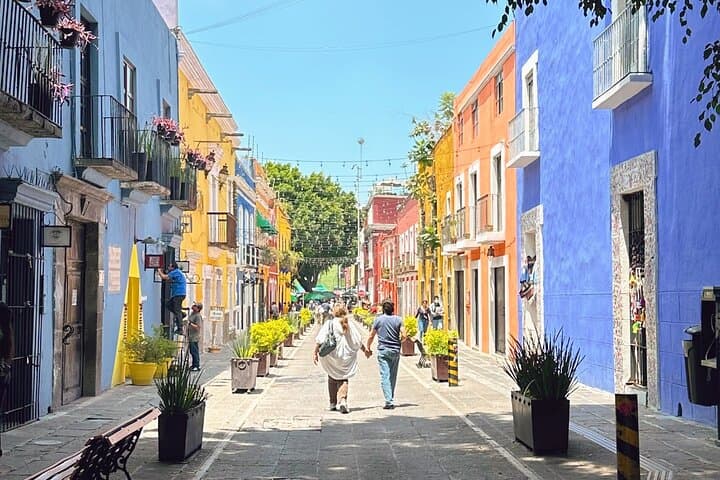
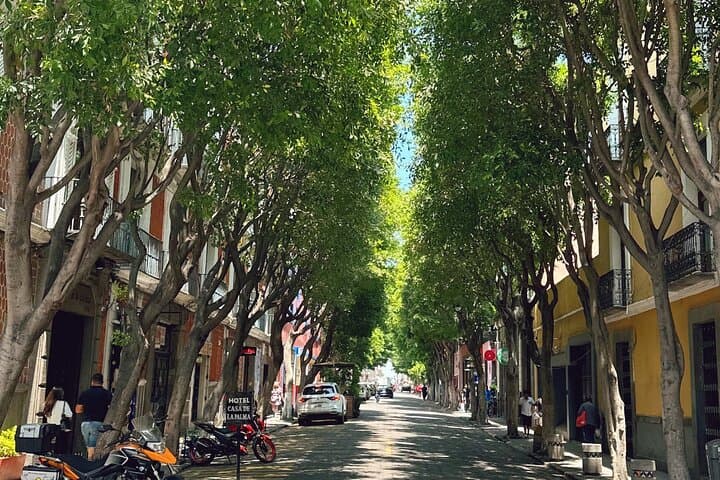
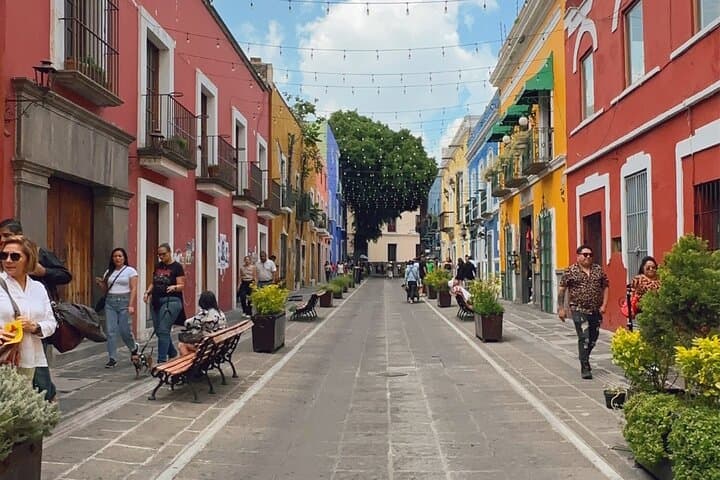
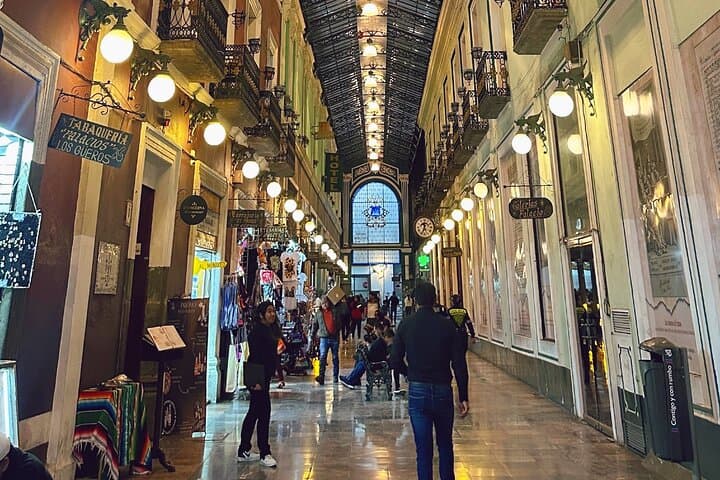
A guided day tour pairs archaeological walking with colonial streetscapes: stroll cobblestone alleys, inspect Baroque altarpieces, and taste mole poblano where spice and chocolate negotiate balance. The markets reward curiosity—hand‑painted tiles, street vendors selling tamales, and small ateliers where craftsmen throw clay into shape.
Practical note: expect 10–12 hours away from Mexico City with several short walks and stairs at historic sites. Wear sturdy shoes, bring sun protection and a refillable water bottle, and plan for cooler air near the pyramid at dawn or sunset. Photography is welcome but respect ecclesiastical spaces and archeological boundaries. Timing your visit early or late in the day reduces heat and crowds, and leaving room in the schedule for a market lunch turns a checklist into a fuller encounter with Puebla’s living heritage.
moderate.
10–12 hours.
Moderate fitness—able to walk several short uphill sections, climb stairs, and stand for guided stops.
The private tour runs about 10–12 hours and typically departs from designated pickup points in Mexico City; check your voucher for exact pickup details.
This tour description lists admission as not applicable—confirm with the operator whether site fees are covered or paid locally.
Children are allowed but the day is long; the itinerary involves stairs and uneven ground, so it’s not recommended for travelers with significant mobility constraints.
Yes—tour itineraries usually include a recommended lunch stop where you can sample Puebla specialties like mole poblano and chiles en nogada (seasonal availability may vary).
Cholula’s pyramid was a major ceremonial center long before the Spanish arrived; its summit church was built in the 16th century to Christianize an already sacred site. Puebla was a strategic colonial city founded in 1531 and became famous for Talavera ceramics and Baroque architecture.
Archaeological layers at Cholula are fragile—stick to paths and avoid touching exposed structures. Support certified local artisans and markets to encourage sustainable cultural tourism.
Néctar Experiences Mexico operates guided outdoor trips and adventures with an emphasis on safety, stewardship, and memorable experiences.
Standing on the grassy shoulder of the Great Pyramid of Cholula, the city of Puebla spreads out like a living map—red-tiled roofs, church spires, and the distant silhouette of Popocatépetl daring the horizon. The pyramid itself feels paradoxical: an ancient earthwork wearing a colonial cathedral on its back, a reminder that landscapes here keep histories stacked one on another.
Standing on the grassy shoulder of the Great Pyramid of Cholula, the city of Puebla spreads out like a living map—red-tiled roofs, church spires, and the distant silhouette of Popocatépetl daring the horizon. The pyramid itself feels paradoxical: an ancient earthwork wearing a colonial cathedral on its back, a reminder that landscapes here keep histories stacked one on another.
Cholula’s pyramid (Tlachihualtepetl) is the largest by volume in the world, its core built by pre‑Columbian cultures and later reimagined by Spanish settlers who placed the Cathedral of Our Lady of the Remedies atop the summit in the 16th century. Puebla, founded in 1531, grew as a colonial crossroads; its geology of volcanic valley soils supported adobe and tile industries, giving rise to the famed Talavera ceramics that still color the city’s facades.
A guided day tour pairs archaeological walking with colonial streetscapes: stroll cobblestone alleys, inspect Baroque altarpieces, and taste mole poblano where spice and chocolate negotiate balance. The markets reward curiosity—hand‑painted tiles, street vendors selling tamales, and small ateliers where craftsmen throw clay into shape.
Practical note: expect 10–12 hours away from Mexico City with several short walks and stairs at historic sites. Wear sturdy shoes, bring sun protection and a refillable water bottle, and plan for cooler air near the pyramid at dawn or sunset. Photography is welcome but respect ecclesiastical spaces and archeological boundaries. Timing your visit early or late in the day reduces heat and crowds, and leaving room in the schedule for a market lunch turns a checklist into a fuller encounter with Puebla’s living heritage.