THE ADVENTURE COLLECTIVE® · Independent discovery and booking for outdoor travel

Spend six immersive hours along the Chobe Riverfront with Leon Safaris, where elephants concentrate in the dry season and predators follow. Morning coffee, a light bush lunch and expert guiding combine with patient wildlife viewing for a classic Botswana safari.
Spend six immersive hours along the Chobe Riverfront with Leon Safaris, where elephants concentrate in the dry season and predators follow. Morning coffee, a light bush lunch and expert guiding combine with patient wildlife viewing for a classic Botswana safari.
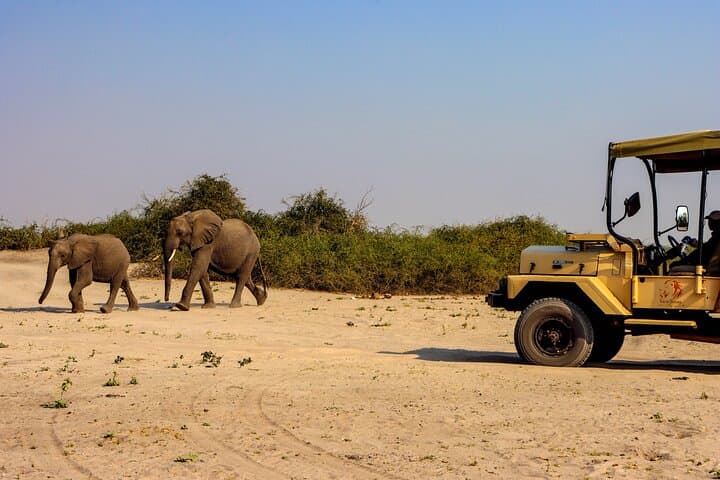
Dawn breaks over the Chobe River like a slow exhale — gold light sliding across waterlogged grass and the silhouettes of elephants knuckling through the shallows. You step into an open 4x4 and the vehicle becomes a negotiation between patience and possibility: will the herd be grazing at the bend, will a pride be lying low in the riverine shade? The riverfront is alive; it pushes the savannah’s animals toward its promise of water, and everything gathers to answer.
Verified experiences and guided adventures in the surrounding area.
Operated by Leon Safaris · Kasane, Chobe District
Dawn breaks over the Chobe River like a slow exhale — gold light sliding across waterlogged grass and the silhouettes of elephants knuckling through the shallows. You step into an open 4x4 and the vehicle becomes a negotiation between patience and possibility: will the herd be grazing at the bend, will a pride be lying low in the riverine shade? The riverfront is alive; it pushes the savannah’s animals toward its promise of water, and everything gathers to answer.
Chobe National Park, one of Botswana’s oldest parks, occupies a low-lying floodplain where seasonal rains and the perennial river shape behavior. The area’s geology is flat Kalahari sands overlying older formations, creating broad plains and dense riverine woodland that support large elephant congregations in the dry months. Culturally, communities in nearby Kasane have long depended on the river for transport and trade; today tourism helps support conservation and local livelihoods.
On a six-hour morning drive with Leon Safaris expect a measured pace: coffee and muffins to wake the eyes, slow scanning for trunks and tails, and a light bush lunch served amid the view. Wildlife sightings are the objective, but weather, water levels and animal movement dictate the score.
Practical: wear neutral clothing, bring binoculars and a camera with a telephoto lens, and prepare for dust on the roads. The drive is low-impact physically but can be long — hydrate and plan for sun and wind exposure. Respect ranger guidance: keep distance, silence devices during sightings, and follow vehicle instructions to minimize disturbance. This is a safari of observation and restraint — the best stories come from waiting well.
easy.
6 hours.
Minimal fitness required — you should be able to get in/out of a vehicle and sit for several hours.
Shared drives are limited to around 12 passengers, keeping groups small to reduce disturbance and improve sightlines.
Yes — park fees are included in this excursion, as noted in the tour inclusions.
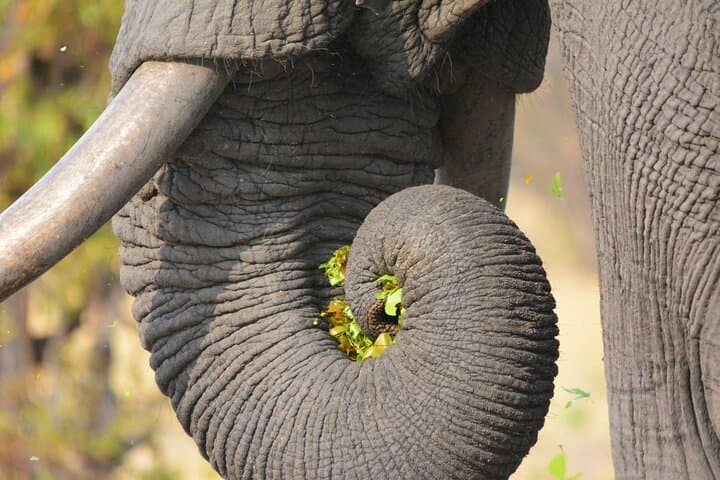
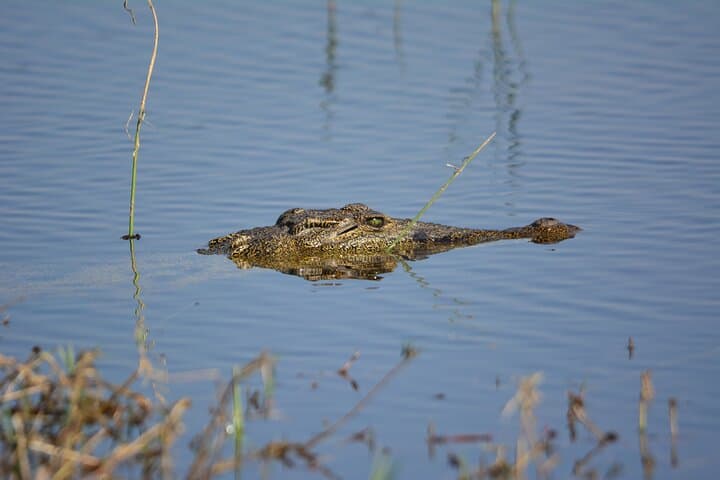
Large elephant herds are common along the river, especially in the dry season; you may also see buffalo, various antelope, hippos, crocodiles and, occasionally, predators like lions and hyenas.
The drive is suitable for most ages and fitness levels, but it’s not recommended for travelers with spinal injuries due to vehicle movement over uneven tracks.
Chobe has been protected since the 1930s; its riverine habitat has long supported both wildlife and riverine communities, becoming central to modern conservation efforts in northern Botswana.
Park management balances tourism and protection by limiting group sizes and promoting responsible viewing; visitors help by following guide instructions and avoiding littering.
Leon Safaris operates guided outdoor trips and adventures with an emphasis on safety, stewardship, and memorable experiences.

Dawn breaks over the Chobe River like a slow exhale — gold light sliding across waterlogged grass and the silhouettes of elephants knuckling through the shallows. You step into an open 4x4 and the vehicle becomes a negotiation between patience and possibility: will the herd be grazing at the bend, will a pride be lying low in the riverine shade? The riverfront is alive; it pushes the savannah’s animals toward its promise of water, and everything gathers to answer.
Dawn breaks over the Chobe River like a slow exhale — gold light sliding across waterlogged grass and the silhouettes of elephants knuckling through the shallows. You step into an open 4x4 and the vehicle becomes a negotiation between patience and possibility: will the herd be grazing at the bend, will a pride be lying low in the riverine shade? The riverfront is alive; it pushes the savannah’s animals toward its promise of water, and everything gathers to answer.
Chobe National Park, one of Botswana’s oldest parks, occupies a low-lying floodplain where seasonal rains and the perennial river shape behavior. The area’s geology is flat Kalahari sands overlying older formations, creating broad plains and dense riverine woodland that support large elephant congregations in the dry months. Culturally, communities in nearby Kasane have long depended on the river for transport and trade; today tourism helps support conservation and local livelihoods.
On a six-hour morning drive with Leon Safaris expect a measured pace: coffee and muffins to wake the eyes, slow scanning for trunks and tails, and a light bush lunch served amid the view. Wildlife sightings are the objective, but weather, water levels and animal movement dictate the score.
Practical: wear neutral clothing, bring binoculars and a camera with a telephoto lens, and prepare for dust on the roads. The drive is low-impact physically but can be long — hydrate and plan for sun and wind exposure. Respect ranger guidance: keep distance, silence devices during sightings, and follow vehicle instructions to minimize disturbance. This is a safari of observation and restraint — the best stories come from waiting well.