THE ADVENTURE COLLECTIVE® · Independent discovery and booking for outdoor travel

Three hours in an open-sided 4x4 on the Chobe floodplain puts you close to the planet's largest concentrations of elephants and a staggering diversity of birds. Read on for what to expect on a Kasane game drive, seasonal tips and practical gear advice.
Three hours in an open-sided 4x4 on the Chobe floodplain puts you close to the planet's largest concentrations of elephants and a staggering diversity of birds. Read on for what to expect on a Kasane game drive, seasonal tips and practical gear advice.
Early light cuts across the Chobe River and the safari vehicle rolls slowly toward a drift of elephants, trunks probing the water's edge. Dust lifts from the red track; bird calls thread the air as the guide scans the floodplain.
Verified experiences and guided adventures in the surrounding area.
Operated by Paramount Travel and Tours · Kasane, Chobe District
Early light cuts across the Chobe River and the safari vehicle rolls slowly toward a drift of elephants, trunks probing the water's edge. Dust lifts from the red track; bird calls thread the air as the guide scans the floodplain.
Chobe National Park, fed by the Chobe River, occupies a mosaic of floodplains, mopane woodlands and seasonal islands at Botswana's northern tip. The river has carved channels and islands over millennia, creating habitat that supports the world's densest elephant population and more than 460 bird species. Kasane, the small gateway town near Zimbabwe, Zambia and Namibia, has long been a meeting point for river trade and local Batswana communities whose livelihoods remain tied to the flood cycle.
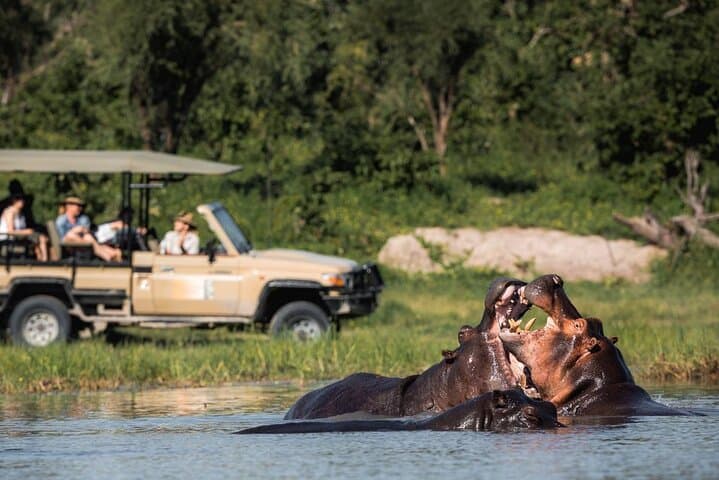
On a three-hour open-sided 4x4 game drive, visitors should expect slow, patient tracking rather than guaranteed sightings; elephants and hippos are common, while big cats are occasional prizes. Guides lecture through observation and local knowledge, pointing out spoor, feeding patterns and seasonal movement.
Practical details: most departures include park fees, soft drinks and hot beverages and pick up in or around Kasane. Wear neutral-colored layers, a sun hat and sturdy shoes for short walking stops. Bring binoculars and a camera with a zoom lens; pack water and insect repellent. Morning drives are cooler and best for active wildlife; late afternoon light is prime for photography.
Respect park rules: keep noise low, remain inside the vehicle unless directed, and follow your guide—doing so protects wildlife and preserves the experience for all. Enjoy responsible viewing.
easy.
3 hours.
Suitable for most fitness levels; mostly seated in vehicle with occasional short, flat exits for viewing
No—wildlife is wild, but elephants, hippos and many bird species are commonly seen near the river, especially in the dry season.
Pick up is offered in and around Kasane and the drive is approximately three hours, including time for stops and photography.
Most tours include national park fees as part of the package—confirm at booking if unsure.
Yes; open-sided 4x4s are designed for game viewing and are suitable for all fitness levels, but check with the operator for child seat or mobility needs.
Chobe's river system has long supported local Batswana communities and cross-border trade; the park was established to protect its rich riverine ecosystems and wildlife corridors.
High elephant densities make Chobe a conservation priority—visitors should follow guide instructions and avoid off-track driving to minimize disturbance.
Paramount Travel and Tours operates guided outdoor trips and adventures with an emphasis on safety, stewardship, and memorable experiences.
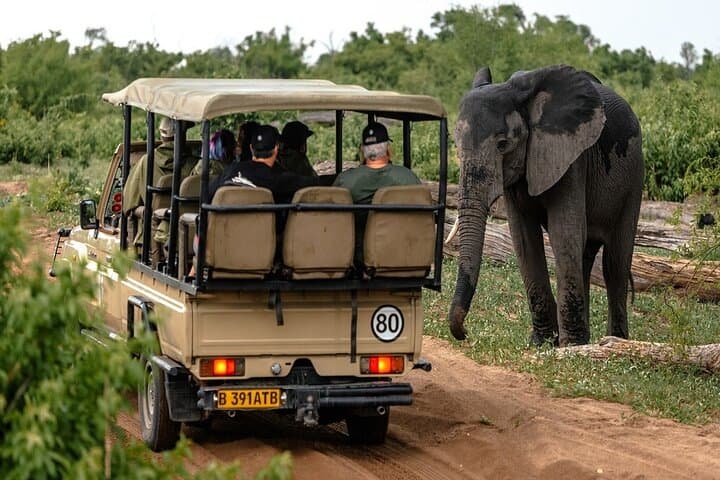
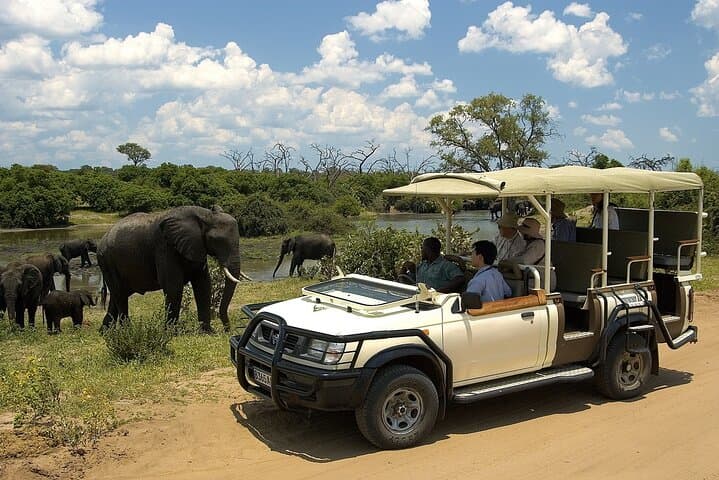
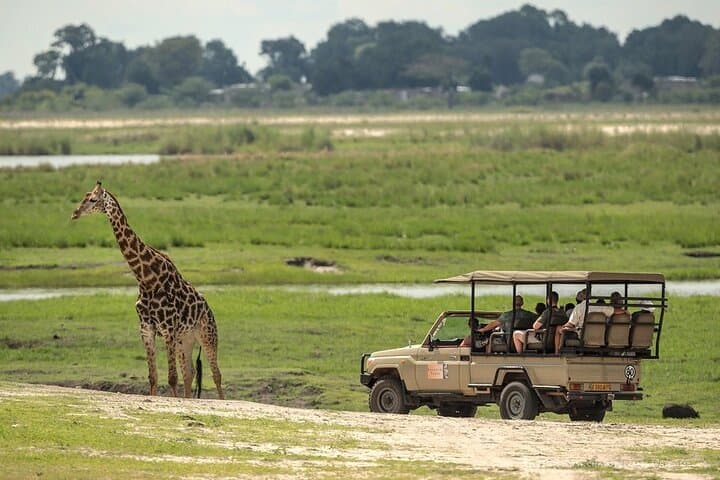
Early light cuts across the Chobe River and the safari vehicle rolls slowly toward a drift of elephants, trunks probing the water's edge. Dust lifts from the red track; bird calls thread the air as the guide scans the floodplain.
Early light cuts across the Chobe River and the safari vehicle rolls slowly toward a drift of elephants, trunks probing the water's edge. Dust lifts from the red track; bird calls thread the air as the guide scans the floodplain.
Chobe National Park, fed by the Chobe River, occupies a mosaic of floodplains, mopane woodlands and seasonal islands at Botswana's northern tip. The river has carved channels and islands over millennia, creating habitat that supports the world's densest elephant population and more than 460 bird species. Kasane, the small gateway town near Zimbabwe, Zambia and Namibia, has long been a meeting point for river trade and local Batswana communities whose livelihoods remain tied to the flood cycle.
On a three-hour open-sided 4x4 game drive, visitors should expect slow, patient tracking rather than guaranteed sightings; elephants and hippos are common, while big cats are occasional prizes. Guides lecture through observation and local knowledge, pointing out spoor, feeding patterns and seasonal movement.
Practical details: most departures include park fees, soft drinks and hot beverages and pick up in or around Kasane. Wear neutral-colored layers, a sun hat and sturdy shoes for short walking stops. Bring binoculars and a camera with a zoom lens; pack water and insect repellent. Morning drives are cooler and best for active wildlife; late afternoon light is prime for photography.
Respect park rules: keep noise low, remain inside the vehicle unless directed, and follow your guide—doing so protects wildlife and preserves the experience for all. Enjoy responsible viewing.