THE ADVENTURE COLLECTIVE® · Independent discovery and booking for outdoor travel

A brisk three-hour loop through Chobe National Park places you close to world-class elephant herds and rich riverine wildlife. Open-sided 4x4s and expert guides make this an efficient, high-return safari for photographers and first-time wildlife travelers.
A brisk three-hour loop through Chobe National Park places you close to world-class elephant herds and rich riverine wildlife. Open-sided 4x4s and expert guides make this an efficient, high-return safari for photographers and first-time wildlife travelers.
Dust lifts in slow curtains as a custom 4×4 slides onto a sandy game track, the Chobe River glinting like a low sun to the north. Open-sided vehicles give unobstructed sightlines; guides scan the floodplain with practiced calm, radios murmuring when a herd appears. Within minutes the landscape changes from mopane woodland to marshy reed beds where hippos exhale steam and waterbirds argue over perches.
Verified experiences and guided adventures in the surrounding area.
Operated by Southern Dynasty Safaris · Kasane, Chobe District
Dust lifts in slow curtains as a custom 4×4 slides onto a sandy game track, the Chobe River glinting like a low sun to the north. Open-sided vehicles give unobstructed sightlines; guides scan the floodplain with practiced calm, radios murmuring when a herd appears. Within minutes the landscape changes from mopane woodland to marshy reed beds where hippos exhale steam and waterbirds argue over perches.
Chobe National Park, carved from Caprivi floodplains and riverine terraces, is shaped by seasonal pulse flooding that feeds vast grasslands and the continent’s highest concentration of elephants. The area’s human history threads through the colonial cotton and cattle eras into a modern tourism economy centered in Kasane, where Tswana and riverine cultures meet visitors.
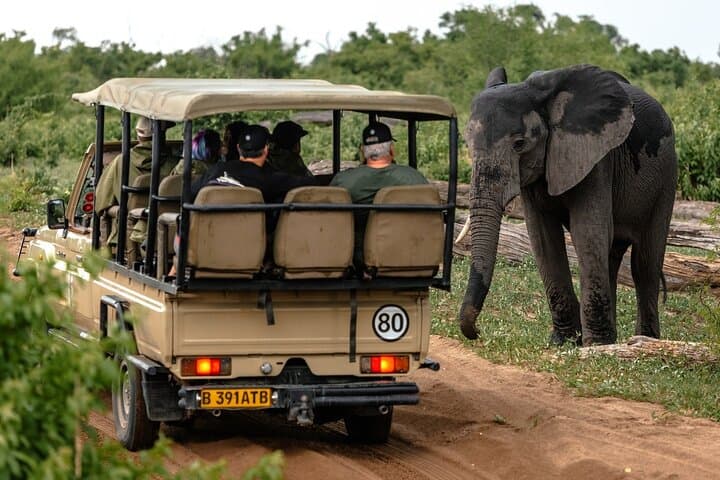
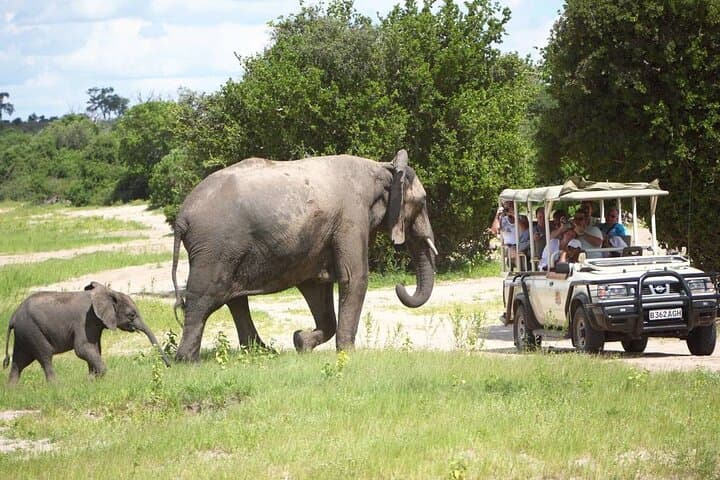
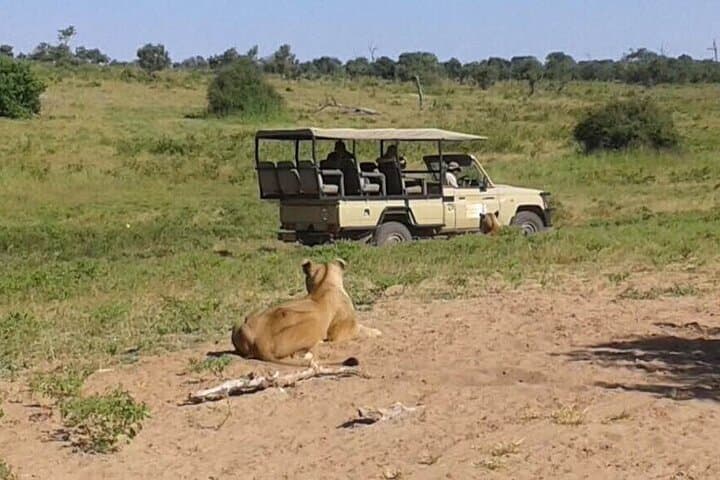
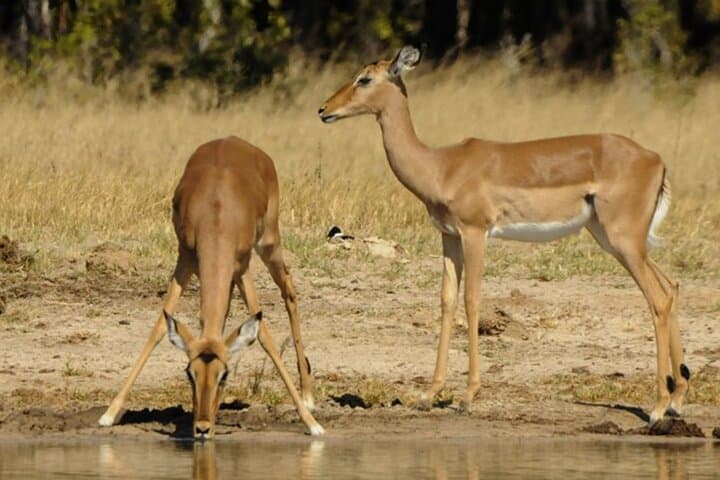
On a short game drive you’ll see family groups of elephant, herds of buffalo and zebra, often impala and the low-slung red lechwe near water. Predators like lion and leopard are present but more secretive; birdlife—storks, kingfishers and raptors—adds constant motion overhead.
Practical guidance: expect largely flat, uneven tracks and minimal walking; bring sun protection and a light wind layer for early mornings. Drives are three hours, typically mid-morning or late afternoon to match animal activity. Vehicles are open-sided—pack a hat with a chin strap and a camera with a zoom lens. Respect park regulations, keep noise low and windows up near elephants.
This short Chobe drive is designed for dramatic sightings with low exertion—ideal for photographers and first-time safari-goers who want an efficient, wildlife-rich introduction to Botswana’s floodplain ecology.
easy.
3 hours.
Minimal fitness required; most of the experience is seated in the vehicle with short, optional disembarkations.
Very likely—Chobe holds one of the highest elephant concentrations in Africa, so sightings are common on most drives.
Yes; vehicles are family-friendly but check operator age policies for seatbelt and safety restrictions before booking.
Consult your doctor—Kasane is in a malaria risk area and routine travel vaccinations may be recommended depending on your itinerary.
Yes; this tour includes national park fees and return transfers from Kasane hotels and lodges as listed in the itinerary.
Chobe’s floodplain ecology has supported human communities for centuries and became protected as a national park in 1968 to preserve its wildlife and river habitats.
Park management focuses on balancing tourism with wildlife protection; follow guide rules and avoid single-use plastics to minimize impact.
Southern Dynasty Safaris operates guided outdoor trips and adventures with an emphasis on safety, stewardship, and memorable experiences.
Dust lifts in slow curtains as a custom 4×4 slides onto a sandy game track, the Chobe River glinting like a low sun to the north. Open-sided vehicles give unobstructed sightlines; guides scan the floodplain with practiced calm, radios murmuring when a herd appears. Within minutes the landscape changes from mopane woodland to marshy reed beds where hippos exhale steam and waterbirds argue over perches.
Dust lifts in slow curtains as a custom 4×4 slides onto a sandy game track, the Chobe River glinting like a low sun to the north. Open-sided vehicles give unobstructed sightlines; guides scan the floodplain with practiced calm, radios murmuring when a herd appears. Within minutes the landscape changes from mopane woodland to marshy reed beds where hippos exhale steam and waterbirds argue over perches.
Chobe National Park, carved from Caprivi floodplains and riverine terraces, is shaped by seasonal pulse flooding that feeds vast grasslands and the continent’s highest concentration of elephants. The area’s human history threads through the colonial cotton and cattle eras into a modern tourism economy centered in Kasane, where Tswana and riverine cultures meet visitors.
On a short game drive you’ll see family groups of elephant, herds of buffalo and zebra, often impala and the low-slung red lechwe near water. Predators like lion and leopard are present but more secretive; birdlife—storks, kingfishers and raptors—adds constant motion overhead.
Practical guidance: expect largely flat, uneven tracks and minimal walking; bring sun protection and a light wind layer for early mornings. Drives are three hours, typically mid-morning or late afternoon to match animal activity. Vehicles are open-sided—pack a hat with a chin strap and a camera with a zoom lens. Respect park regulations, keep noise low and windows up near elephants.
This short Chobe drive is designed for dramatic sightings with low exertion—ideal for photographers and first-time safari-goers who want an efficient, wildlife-rich introduction to Botswana’s floodplain ecology.