THE ADVENTURE COLLECTIVE® · Independent discovery and booking for outdoor travel

Early pickup, a morning drive through the Zambezi and a full half-day in Chobe followed by a sunset river cruise—this extended day trip is designed to maximize sightings of elephants and big cats. Practical, long, and wildlife-rich, it’s ideal for travelers who want a full safari experience from Victoria Falls.
Early pickup, a morning drive through the Zambezi and a full half-day in Chobe followed by a sunset river cruise—this extended day trip is designed to maximize sightings of elephants and big cats. Practical, long, and wildlife-rich, it’s ideal for travelers who want a full safari experience from Victoria Falls.
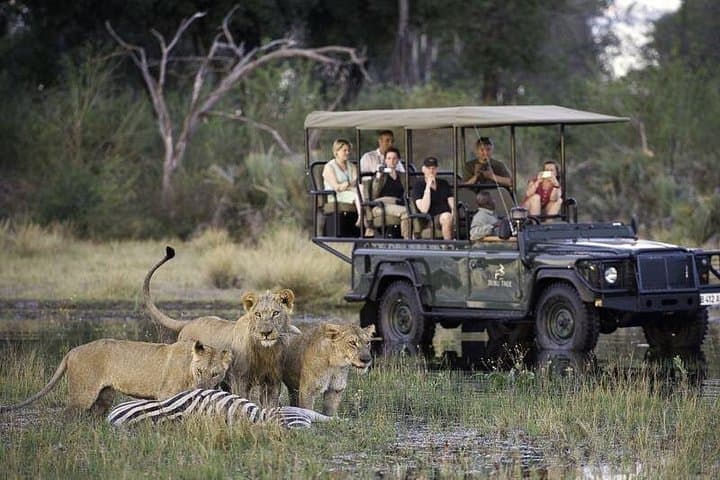
The minivan slips through predawn light and the Zambezi National Park opens like a living map—tall grass whispering and rivers that seem to dare you forward. You start before most tour buses, crossing quiet floodplain where lions and hyenas still circle the edges of sleep and elephants move with deliberate intent. By midmorning the Chobe gates open and the scrub gives way to wide plains lined with ancient riverine forest.
Verified experiences and guided adventures in the surrounding area.
Operated by DK Tours & Safaris · Victoria Falls, Matabeleland North
The minivan slips through predawn light and the Zambezi National Park opens like a living map—tall grass whispering and rivers that seem to dare you forward. You start before most tour buses, crossing quiet floodplain where lions and hyenas still circle the edges of sleep and elephants move with deliberate intent. By midmorning the Chobe gates open and the scrub gives way to wide plains lined with ancient riverine forest.
This landscape is shaped by two great rivers: the Zambezi carving basalt escarpments at Victoria Falls and the Chobe spreading into seasonal floodplains that sustain huge herds. Indigenous peoples have long read these rhythms—Mosi-oa-Tunya (the smoke that thunders) names the falls to the north—and colonial-era park designations set aside the Chobe basin to protect its iconic elephants and predators.
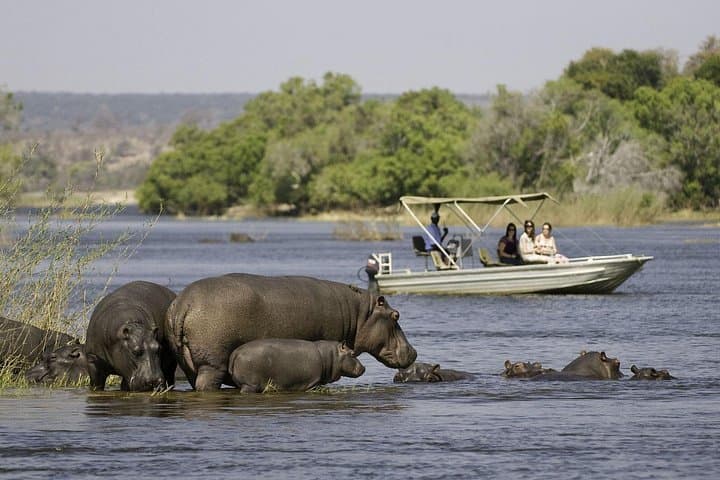
Practically, the day is engineered for sightings: an early half-day game drive when cats still hunt, a buffet lunch at Chobe Safari Lodge, then a three-hour afternoon boat cruise as birds gather and hippos wallow at the river’s edge. The river often takes the final bow, pushing golden light across the hull as you watch the sun slip behind mopane trees.
Expect a long but low-impact day: minimal walking, lots of sitting, and excellent photo ops. Bring binoculars, layered clothing for cool mornings and hot afternoons, strong sun protection and insect repellent. You’ll need a valid passport for the border transfer and patience—wildlife doesn’t run to schedule. Move quietly, keep windows closed near predators, and let the river and plain do the guiding.
easy.
10–15 hours.
Suitable for most fitness levels; mainly sitting with short boardwalk or lodge walks
Many nationalities require a visa to enter Botswana; check visa rules for your passport and carry your passport when crossing at the border.
Yes—national park fees are included in the tour price as noted, but have local currency ready for tips and extra purchases.
The tour is listed as suitable for most fitness levels; contact the operator about wheelchair access and child policies before booking.
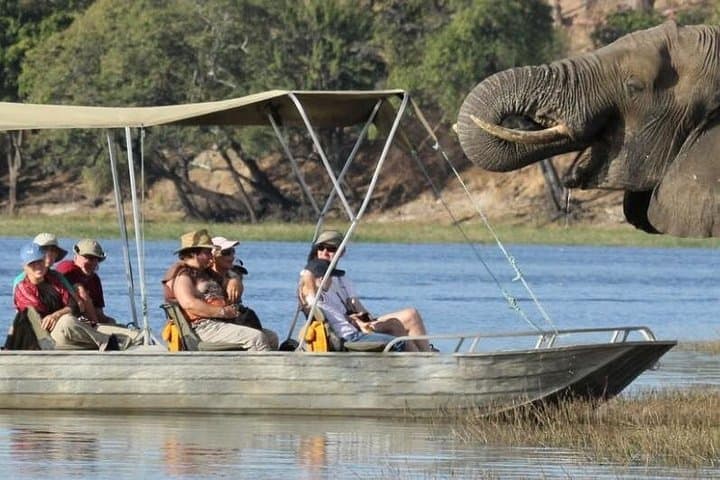
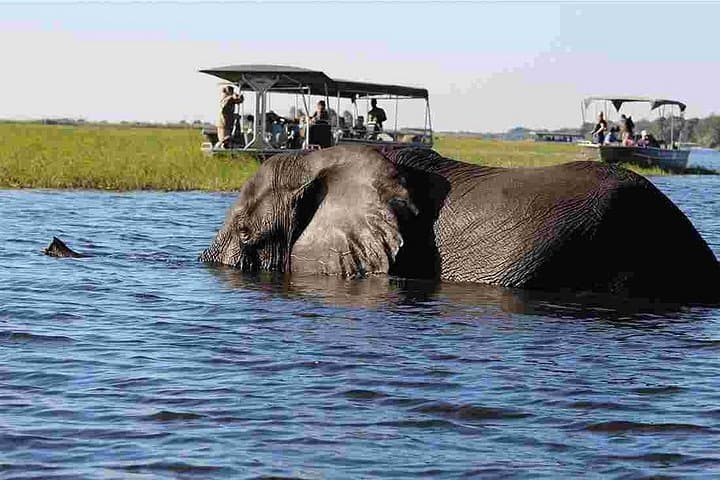
Typical sightings include elephants drinking at the riverbank, hippos and crocodiles in the water, and a wide variety of waterbirds; lions and leopards are more commonly seen on the morning drive.
The falls and rivers have long held cultural importance—Mosi-oa-Tunya (Victoria Falls) was a spiritual landmark for local peoples; Chobe was later protected to conserve its floodplain elephant populations as tourism and conservation grew in the 20th century.
Park fees support anti-poaching and habitat protection; follow guide rules, avoid single-use plastics, and keep a respectful distance from animals to minimize disturbance.
DK Tours & Safaris operates guided outdoor trips and adventures with an emphasis on safety, stewardship, and memorable experiences.
The minivan slips through predawn light and the Zambezi National Park opens like a living map—tall grass whispering and rivers that seem to dare you forward. You start before most tour buses, crossing quiet floodplain where lions and hyenas still circle the edges of sleep and elephants move with deliberate intent. By midmorning the Chobe gates open and the scrub gives way to wide plains lined with ancient riverine forest.
The minivan slips through predawn light and the Zambezi National Park opens like a living map—tall grass whispering and rivers that seem to dare you forward. You start before most tour buses, crossing quiet floodplain where lions and hyenas still circle the edges of sleep and elephants move with deliberate intent. By midmorning the Chobe gates open and the scrub gives way to wide plains lined with ancient riverine forest.
This landscape is shaped by two great rivers: the Zambezi carving basalt escarpments at Victoria Falls and the Chobe spreading into seasonal floodplains that sustain huge herds. Indigenous peoples have long read these rhythms—Mosi-oa-Tunya (the smoke that thunders) names the falls to the north—and colonial-era park designations set aside the Chobe basin to protect its iconic elephants and predators.
Practically, the day is engineered for sightings: an early half-day game drive when cats still hunt, a buffet lunch at Chobe Safari Lodge, then a three-hour afternoon boat cruise as birds gather and hippos wallow at the river’s edge. The river often takes the final bow, pushing golden light across the hull as you watch the sun slip behind mopane trees.
Expect a long but low-impact day: minimal walking, lots of sitting, and excellent photo ops. Bring binoculars, layered clothing for cool mornings and hot afternoons, strong sun protection and insect repellent. You’ll need a valid passport for the border transfer and patience—wildlife doesn’t run to schedule. Move quietly, keep windows closed near predators, and let the river and plain do the guiding.