THE ADVENTURE COLLECTIVE® · Independent discovery and booking for outdoor travel

Cross the Kazungula border for a compact, seven-hour loop that pairs a close-up river safari with an afternoon game drive in Chobe National Park. Expect hippos at the waterline, vast elephant herds on the plains, and a lodge lunch between the two experiences.
Cross the Kazungula border for a compact, seven-hour loop that pairs a close-up river safari with an afternoon game drive in Chobe National Park. Expect hippos at the waterline, vast elephant herds on the plains, and a lodge lunch between the two experiences.
Morning light lifts off the Zambezi and the river seems to push you forward—this is how the day begins when you cross from Livingstone into Chobe National Park. Boats slip along reed-lined channels while the river pulls at shadows; later a 4x4 eats up red dirt and opens onto plains where elephants assert their presence.
Verified experiences and guided adventures in the surrounding area.
Operated by Hopeaka Safari And Tours · Livingstone, Southern Province
Morning light lifts off the Zambezi and the river seems to push you forward—this is how the day begins when you cross from Livingstone into Chobe National Park. Boats slip along reed-lined channels while the river pulls at shadows; later a 4x4 eats up red dirt and opens onto plains where elephants assert their presence.
The route crosses the Kazungula border into a landscape shaped by the Zambezi and seasonal floods. Geologically the area is a flat river corridor carved by water and sediment, supporting grasslands, riverine forest and mopane thickets. Culturally, the region links Tonga and Lozi communities whose livelihoods have long rotated around fishing, floodplain grazing and seasonal trade.
Expect a morning river safari—close, low views of hippos and herds drinking at the river edge—then a riverside lunch at a lodge, followed by an afternoon game drive into Chobe’s floodplain country. The river dictates wildlife movements; in the dry months animals gather along its banks and in the green season they disperse across the park.
Practical guidance: bring photocopies of travel documents for the border crossing, carry binoculars and layered clothing for cool mornings and hot afternoons, and plan for a full 7-hour day including transfers. Park fees and boat fuel are typically included; guides brief on safe viewing distance and photography etiquette. Timing matters—late afternoon light sharpens contours and animal activity increases.
This trip is straightforward for first-time safari-goers and gives a compact, reliable sample of Chobe’s wildlife and river systems in a single day.
easy.
7 hours.
Suitable for most fitness levels; requires getting on/off boats and safari vehicles and standing for short photo periods
Visa requirements depend on your nationality—check both Zambia and Botswana entry rules in advance and carry your passport; the operator assists with border procedures but cannot alter visa policies.
Yes, this tour typically includes park fees, a riverside lunch, bottled water and snacks as listed in the itinerary, but confirm at booking for any recent changes.
Chobe is famous for large elephant and hippo populations, and sightings are very likely, but wildlife sightings cannot be guaranteed—animal movement varies with season and water availability.
The tour is family-friendly; infants must sit on an adult’s lap and operators will advise on safety for young children on boats and game drives.
The Chobe corridor has long been a transport and wildlife route shaped by riverine ecology and local fishing communities; it later became a protected area to conserve its large mammal populations.
Tour fees and park permits contribute to anti-poaching efforts and community programs—visitors should follow guide rules to minimize disturbance to wildlife and riverbanks.
Hopeaka Safari And Tours operates guided outdoor trips and adventures with an emphasis on safety, stewardship, and memorable experiences.
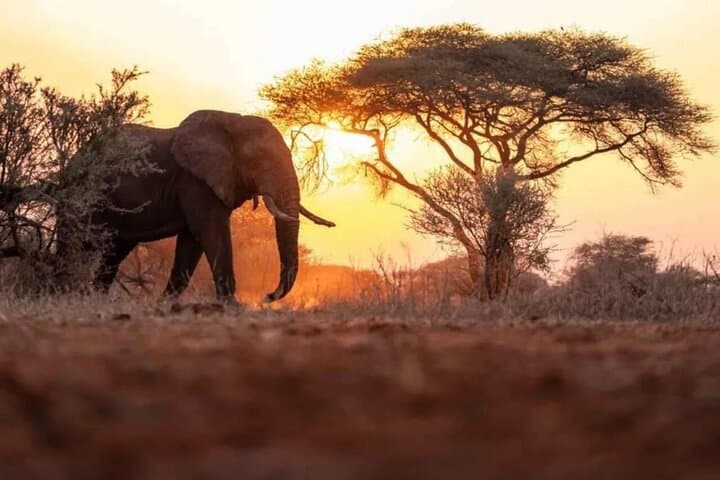
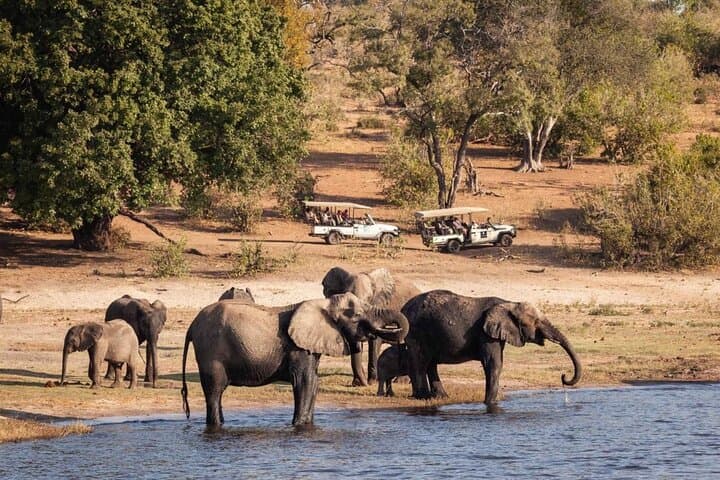
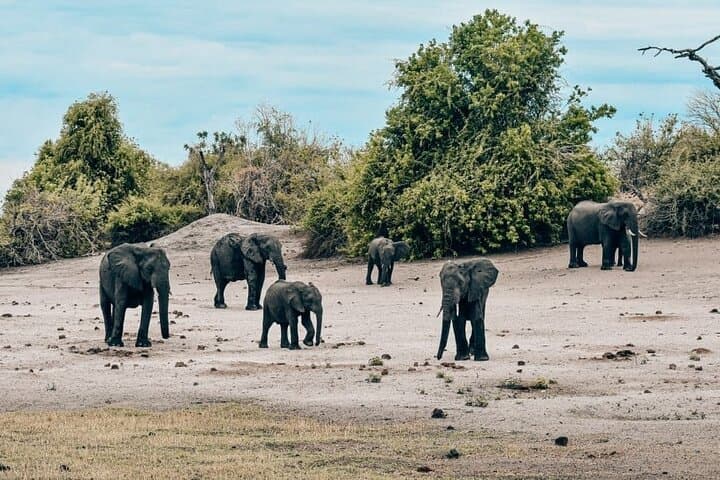
Morning light lifts off the Zambezi and the river seems to push you forward—this is how the day begins when you cross from Livingstone into Chobe National Park. Boats slip along reed-lined channels while the river pulls at shadows; later a 4x4 eats up red dirt and opens onto plains where elephants assert their presence.
Morning light lifts off the Zambezi and the river seems to push you forward—this is how the day begins when you cross from Livingstone into Chobe National Park. Boats slip along reed-lined channels while the river pulls at shadows; later a 4x4 eats up red dirt and opens onto plains where elephants assert their presence.
The route crosses the Kazungula border into a landscape shaped by the Zambezi and seasonal floods. Geologically the area is a flat river corridor carved by water and sediment, supporting grasslands, riverine forest and mopane thickets. Culturally, the region links Tonga and Lozi communities whose livelihoods have long rotated around fishing, floodplain grazing and seasonal trade.
Expect a morning river safari—close, low views of hippos and herds drinking at the river edge—then a riverside lunch at a lodge, followed by an afternoon game drive into Chobe’s floodplain country. The river dictates wildlife movements; in the dry months animals gather along its banks and in the green season they disperse across the park.
Practical guidance: bring photocopies of travel documents for the border crossing, carry binoculars and layered clothing for cool mornings and hot afternoons, and plan for a full 7-hour day including transfers. Park fees and boat fuel are typically included; guides brief on safe viewing distance and photography etiquette. Timing matters—late afternoon light sharpens contours and animal activity increases.
This trip is straightforward for first-time safari-goers and gives a compact, reliable sample of Chobe’s wildlife and river systems in a single day.