THE ADVENTURE COLLECTIVE® · Independent discovery and booking for outdoor travel

Cross the border by ferry for a full day of river cruising and open-vehicle game drives in Chobe National Park. Expect close-up elephant encounters, prolific birdlife, and sturdy logistical support for a long, wildlife-rich day.
Cross the border by ferry for a full day of river cruising and open-vehicle game drives in Chobe National Park. Expect close-up elephant encounters, prolific birdlife, and sturdy logistical support for a long, wildlife-rich day.
A morning ferry slips you across an international ribbon of water and the landscape changes: the Chobe River takes over, flat and bright, drawing great gray shapes—elephants moving like slow islands—to the shore. On this full-day excursion from Livingstone, travelers split time between a river cruise and an open-vehicle game drive, following the waterline where animals come to drink and birds stack like punctuation in the trees.
Verified experiences and guided adventures in the surrounding area.
Operated by Revival Safaris and Tours · Kasane, Chobe District
A morning ferry slips you across an international ribbon of water and the landscape changes: the Chobe River takes over, flat and bright, drawing great gray shapes—elephants moving like slow islands—to the shore. On this full-day excursion from Livingstone, travelers split time between a river cruise and an open-vehicle game drive, following the waterline where animals come to drink and birds stack like punctuation in the trees.
The Chobe floodplain is shaped by seasonal pulses of the Zambezi system; its riverfront channels and mopane woodlands tell a geological story of alluvial deposits and shifting courses. The park, established in the late 1960s, sits on ancestral lands long used by local communities for fishing and grazing, and today supports one of Africa’s largest elephant populations. Guides bring cultural context as they read spoor, point out bird migration routes, and explain how water dictates animal patterns.
Practical notes: the day runs about 9½ hours, including a short ferry border crossing (bring your passport), a guided boat cruise at the riverfront, lunch at a lodge, and an afternoon game drive in open vehicles. Wildlife viewing is most reliable in the dry season when animals concentrate at the river, though the wet months bring dramatic birdlife and lush scenery.
Expect dusty tracks, sudden splashes at a watering hole, and long, patient waits that reward you with close elephant encounters. Pack sun protection, a compact pair of binoculars and a camera with zoom, bring small bills for drinks or tips, and wear sturdy, closed shoes — the terrain is variable and the sun is direct. This is a practical safari day: immersive, efficient, and focused on wildlife at the river’s edge.
easy.
9–10 hours.
Suitable for travelers in basic walking fitness; most of the day is seated with short, gentle walks
Yes — the itinerary crosses the Zambia–Botswana border by ferry and you’ll need a valid passport for immigration formalities.
Chobe is famous for large herds of African elephant and a range of plains game; lions and buffalo are commonly seen on drives, and hippos are frequent in the river.
Children are generally welcome, but check operator age rules; the trip is not recommended for pregnant travelers or those with serious spinal or heart conditions.
Lunch is included, but drinks are usually not — bring cash or expect to purchase beverages at the lodge.
Chobe National Park was formalized in the late 1960s; the river corridor has long been central to local livelihoods and seasonal animal migrations.
Heavy elephant populations and tourism pressure require careful management — respect buffer distances, avoid feeding wildlife, and follow guide instructions to minimize disturbance.
Revival Safaris and Tours operates guided outdoor trips and adventures with an emphasis on safety, stewardship, and memorable experiences.

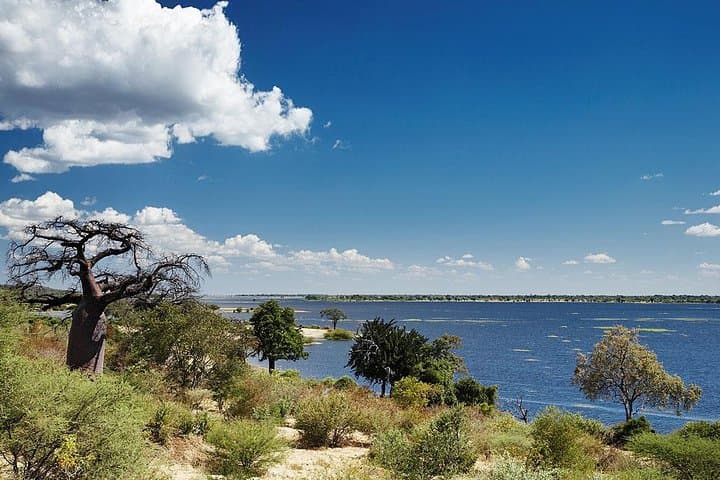


A morning ferry slips you across an international ribbon of water and the landscape changes: the Chobe River takes over, flat and bright, drawing great gray shapes—elephants moving like slow islands—to the shore. On this full-day excursion from Livingstone, travelers split time between a river cruise and an open-vehicle game drive, following the waterline where animals come to drink and birds stack like punctuation in the trees.
A morning ferry slips you across an international ribbon of water and the landscape changes: the Chobe River takes over, flat and bright, drawing great gray shapes—elephants moving like slow islands—to the shore. On this full-day excursion from Livingstone, travelers split time between a river cruise and an open-vehicle game drive, following the waterline where animals come to drink and birds stack like punctuation in the trees.
The Chobe floodplain is shaped by seasonal pulses of the Zambezi system; its riverfront channels and mopane woodlands tell a geological story of alluvial deposits and shifting courses. The park, established in the late 1960s, sits on ancestral lands long used by local communities for fishing and grazing, and today supports one of Africa’s largest elephant populations. Guides bring cultural context as they read spoor, point out bird migration routes, and explain how water dictates animal patterns.
Practical notes: the day runs about 9½ hours, including a short ferry border crossing (bring your passport), a guided boat cruise at the riverfront, lunch at a lodge, and an afternoon game drive in open vehicles. Wildlife viewing is most reliable in the dry season when animals concentrate at the river, though the wet months bring dramatic birdlife and lush scenery.
Expect dusty tracks, sudden splashes at a watering hole, and long, patient waits that reward you with close elephant encounters. Pack sun protection, a compact pair of binoculars and a camera with zoom, bring small bills for drinks or tips, and wear sturdy, closed shoes — the terrain is variable and the sun is direct. This is a practical safari day: immersive, efficient, and focused on wildlife at the river’s edge.