THE ADVENTURE COLLECTIVE® · Independent discovery and booking for outdoor travel

Skip an extra travel day by taking the midday Chivay–Puno bus: a 6–7 hour scenic transfer with four stops for volcano views, grazing camelids, highland lagoons and a glimpse into Andean life. Practical, comfortable and guided, it’s a straightforward way to continue on to Lake Titicaca.
Skip an extra travel day by taking the midday Chivay–Puno bus: a 6–7 hour scenic transfer with four stops for volcano views, grazing camelids, highland lagoons and a glimpse into Andean life. Practical, comfortable and guided, it’s a straightforward way to continue on to Lake Titicaca.
Midday light pools on the whitewashed church in Chivay as passengers gather by the plaza. The bus slips away around 1:15 p.m., windows framing a shifting highland portrait: volcanic ridgelines, grazing camelids, mirror-like lagoons and sky that feels alarmingly close.
Verified experiences and guided adventures in the surrounding area.
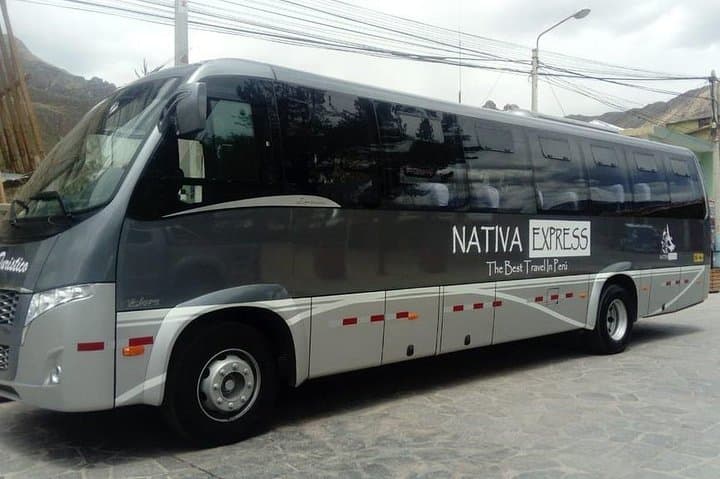
Operated by Nativa Express · Chivay, Arequipa
Midday light pools on the whitewashed church in Chivay as passengers gather by the plaza. The bus slips away around 1:15 p.m., windows framing a shifting highland portrait: volcanic ridgelines, grazing camelids, mirror-like lagoons and sky that feels alarmingly close.
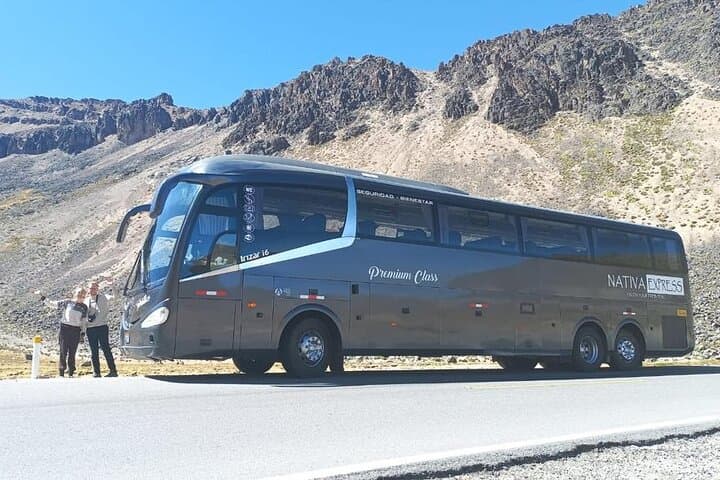
Geology and history announce themselves early — the road skirts the high Cordillera where peaks such as Ampato, Sabancaya, Hualca Hualca and Mismi (the glacier often cited as a source of the Amazon) rise from volcanic plateaus. Apachetas mark ancient Andean travel routes; local communities continue textile and herding traditions visible in roadside corrals and artisan stalls.
The service makes four short stops: Mirador de los Andes for volcano panoramas and stone offerings; Tocrapampa for llamas, alpacas and the occasional vicuña; Patahuasi within the Reserva Nacional Aguada Blanca to scan pampa habitat and enjoy hot herbal drinks like muña; and Lagunillas where small highland lakes attract Andean flamingos. Expect sharp light for photos and thin, dry air — elevation is high and temperatures drop quickly after sunset.
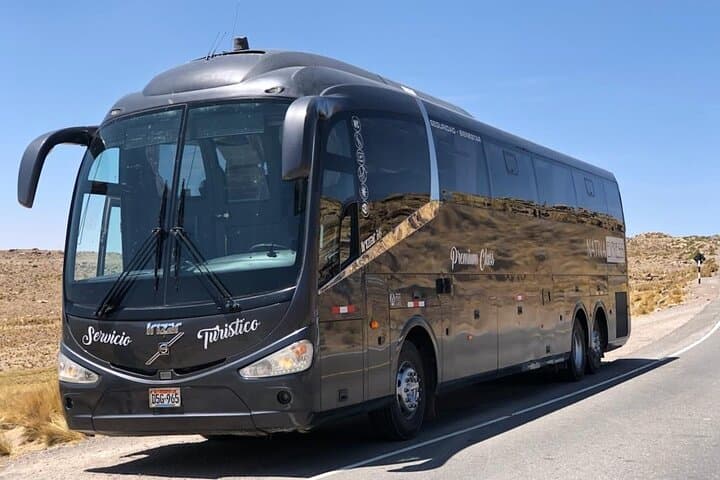
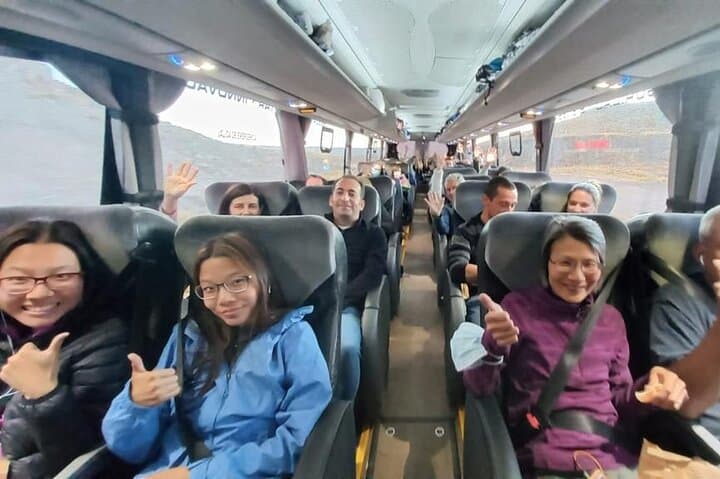
Practically, the trip is a convenient one-day gain if you’re moving from Colca to Lake Titicaca: plan on 6–7 hours total, bring layered clothing, cash for crafts and snacks, and altitude-aware pacing. Onboard comforts include A/C/heating, Wi‑Fi, a bilingual guide and a chemical toilet (availability varies by unit). Arrivals into Puno are typically between 7:00 and 7:30 p.m., making this an efficient, scenic transit that doubles as an introduction to southern Peru’s highland ecosystems and cultures.
easy.
6–7 hours.
Suitable for most fitness levels; primarily seated travel with short, easy stops
The operator waits at the office beside Chivay’s main plaza between 12:30 and 1:10 p.m., with departure around 1:15 p.m.
There is a chemical toilet on board depending on the vehicle; Patahuasi stop also provides restroom access.
A bottled water and basic onboard comforts are listed; plan to bring snacks or buy food at stops where available.
Yes—common sightings include llamas and alpacas, and at higher-elevation reserves you may see vicuñas and Andean flamingos, though wildlife is not guaranteed.
The Colca region has been home to highland communities for millennia; apachetas along the route reflect pre-Hispanic travel rituals and offerings to mountain deities.
Parts of the route cross protected areas like Reserva Nacional Aguada Blanca—practice leave-no-trace, avoid feeding wildlife and support local craft economies to benefit communities.
Nativa Express operates guided outdoor trips and adventures with an emphasis on safety, stewardship, and memorable experiences.
Midday light pools on the whitewashed church in Chivay as passengers gather by the plaza. The bus slips away around 1:15 p.m., windows framing a shifting highland portrait: volcanic ridgelines, grazing camelids, mirror-like lagoons and sky that feels alarmingly close.
Midday light pools on the whitewashed church in Chivay as passengers gather by the plaza. The bus slips away around 1:15 p.m., windows framing a shifting highland portrait: volcanic ridgelines, grazing camelids, mirror-like lagoons and sky that feels alarmingly close.
Geology and history announce themselves early — the road skirts the high Cordillera where peaks such as Ampato, Sabancaya, Hualca Hualca and Mismi (the glacier often cited as a source of the Amazon) rise from volcanic plateaus. Apachetas mark ancient Andean travel routes; local communities continue textile and herding traditions visible in roadside corrals and artisan stalls.
The service makes four short stops: Mirador de los Andes for volcano panoramas and stone offerings; Tocrapampa for llamas, alpacas and the occasional vicuña; Patahuasi within the Reserva Nacional Aguada Blanca to scan pampa habitat and enjoy hot herbal drinks like muña; and Lagunillas where small highland lakes attract Andean flamingos. Expect sharp light for photos and thin, dry air — elevation is high and temperatures drop quickly after sunset.
Practically, the trip is a convenient one-day gain if you’re moving from Colca to Lake Titicaca: plan on 6–7 hours total, bring layered clothing, cash for crafts and snacks, and altitude-aware pacing. Onboard comforts include A/C/heating, Wi‑Fi, a bilingual guide and a chemical toilet (availability varies by unit). Arrivals into Puno are typically between 7:00 and 7:30 p.m., making this an efficient, scenic transit that doubles as an introduction to southern Peru’s highland ecosystems and cultures.