THE ADVENTURE COLLECTIVE® · Independent discovery and booking for outdoor travel

Spend a night in the deep, hilly jungle off the Madi side of Chitwan National Park—campfires, guided night watches, and swims in three nearby waterfalls. Local guides, provided tents and sleeping bags, and an emphasis on safety make this an accessible way to experience tiger country.
Spend a night in the deep, hilly jungle off the Madi side of Chitwan National Park—campfires, guided night watches, and swims in three nearby waterfalls. Local guides, provided tents and sleeping bags, and an emphasis on safety make this an accessible way to experience tiger country.
The sun slips behind a band of sal and riverine forest as your jeep noses up a rocky track from Madi. Night arrives quickly in this part of Chitwan: shadows lengthen, insects call, and the guide builds a broad fire that throws heat across the campsite while the jungle keeps its distance but never its secrets.
Verified experiences and guided adventures in the surrounding area.
Operated by Shanta Ghar Resort · Madi, Bagmati Province
The sun slips behind a band of sal and riverine forest as your jeep noses up a rocky track from Madi. Night arrives quickly in this part of Chitwan: shadows lengthen, insects call, and the guide builds a broad fire that throws heat across the campsite while the jungle keeps its distance but never its secrets.
This overnight sits on hilly, rocky ground within the lesser-known Sansare pockets of Chitwan National Park — landscape formed by alluvial plains meeting ancient Siwalik foothills. Human presence here is recent: local Tharu communities and smallholder farmers have long used adjacent grasslands and river corridors while the park, established in 1973, protects tiger habitat and migratory bird routes. Culture is pragmatic and communal; guides are local and experienced in night watches and wildlife spoor interpretation.
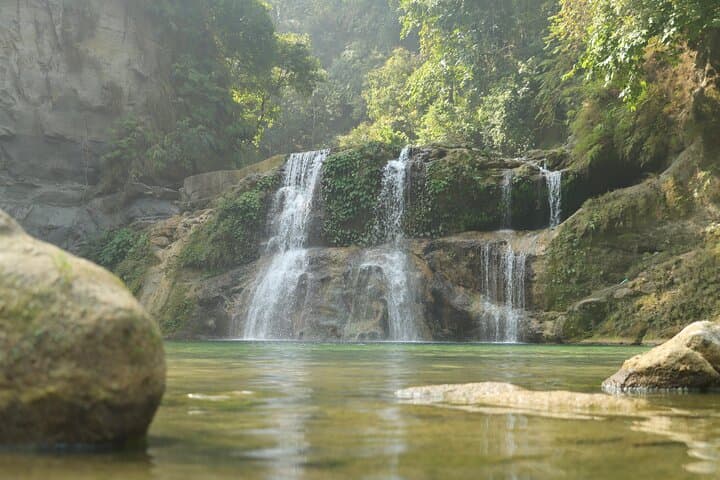
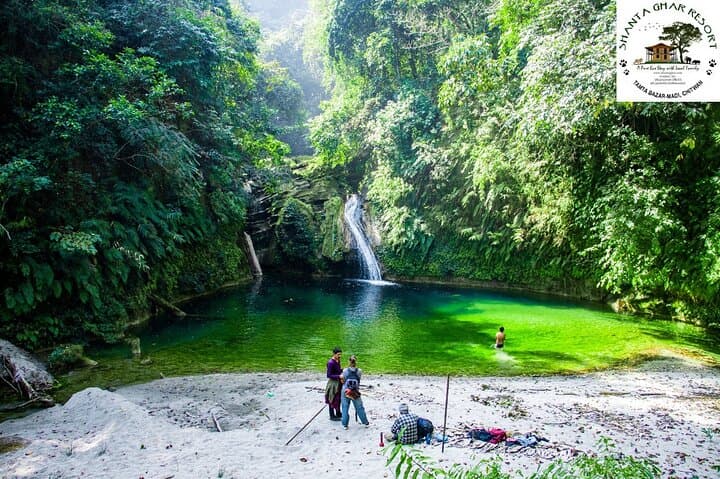
Expect forested trails, short bush scrambles to three nearby waterfalls, and clear pools safe for a cool swim in the dry season. Wildlife is mostly detected by tracks, calls, and occasional dawn sightings of deer, langur and sloth bear; Bengal tiger is present but elusive, the reason for guided night shifts.
Practically: camping runs from late August through late April. Bring sturdy boots for uneven, rocky terrain, a warm midlayer for night watches and a reliable headlamp. Hydrate before dusk and listen closely at dawn and dusk—those are the most active windows. The operator provides tents, mattresses, sleeping bags, meals, bottled water, and multiple guides; follow their instructions for night rotations and campfire safety to minimize risk and footprint.
moderate.
1–2 days.
Moderate fitness; able to handle uneven, rocky trails and short scrambles and stand nightly watch shifts.
Guided overnight stays use experienced local guides and night watches with a campfire; follow their directions and remain within the designated campsite for safety.
No—Bengal tigers are present but elusive; sightings are rare. The experience prioritizes track, call, and sign interpretation and safer wildlife viewing at dawn and dusk.
The operator describes the three waterfalls as safe for swimming during the dry season, but water levels and currents change—always follow guide advice before entering water.
Not recommended for pregnant travelers or those with serious heart or spinal conditions; moderate fitness is required for short hikes and uneven terrain.
Chitwan National Park was designated in 1973 to protect lowland Nepal’s grassland and riverine ecosystems and remains a core tiger conservation area.
Stay on established trails, avoid single-use plastics, and follow guides’ instructions—minimizing noise and light helps protect nocturnal wildlife and reduce human-wildlife conflict.
Shanta Ghar Resort operates guided outdoor trips and adventures with an emphasis on safety, stewardship, and memorable experiences.
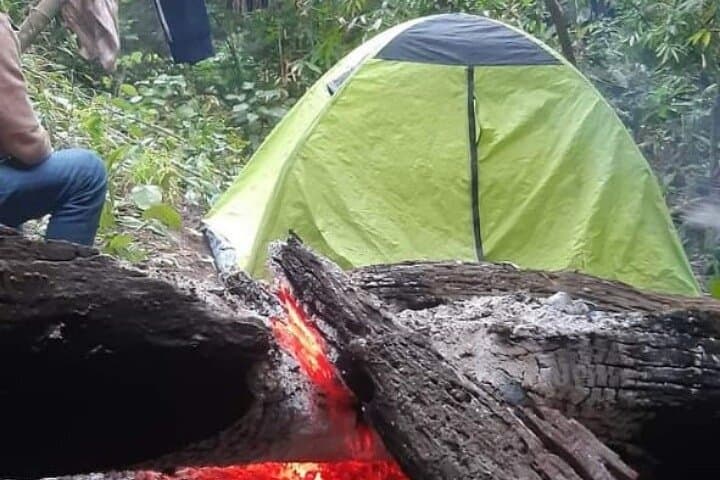
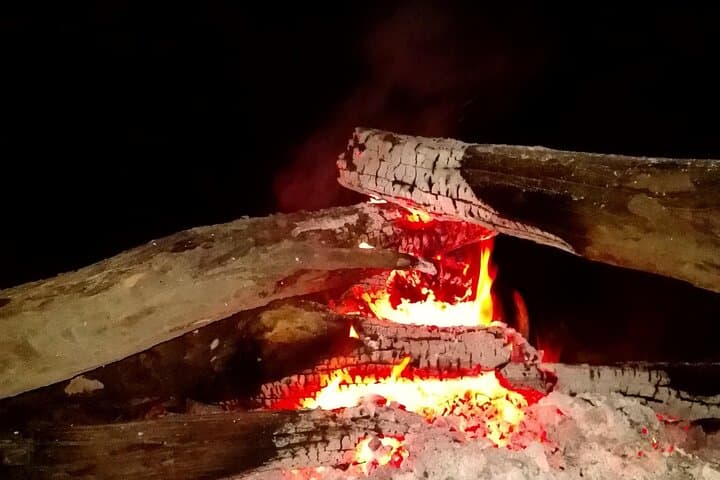
The sun slips behind a band of sal and riverine forest as your jeep noses up a rocky track from Madi. Night arrives quickly in this part of Chitwan: shadows lengthen, insects call, and the guide builds a broad fire that throws heat across the campsite while the jungle keeps its distance but never its secrets.
The sun slips behind a band of sal and riverine forest as your jeep noses up a rocky track from Madi. Night arrives quickly in this part of Chitwan: shadows lengthen, insects call, and the guide builds a broad fire that throws heat across the campsite while the jungle keeps its distance but never its secrets.
This overnight sits on hilly, rocky ground within the lesser-known Sansare pockets of Chitwan National Park — landscape formed by alluvial plains meeting ancient Siwalik foothills. Human presence here is recent: local Tharu communities and smallholder farmers have long used adjacent grasslands and river corridors while the park, established in 1973, protects tiger habitat and migratory bird routes. Culture is pragmatic and communal; guides are local and experienced in night watches and wildlife spoor interpretation.
Expect forested trails, short bush scrambles to three nearby waterfalls, and clear pools safe for a cool swim in the dry season. Wildlife is mostly detected by tracks, calls, and occasional dawn sightings of deer, langur and sloth bear; Bengal tiger is present but elusive, the reason for guided night shifts.
Practically: camping runs from late August through late April. Bring sturdy boots for uneven, rocky terrain, a warm midlayer for night watches and a reliable headlamp. Hydrate before dusk and listen closely at dawn and dusk—those are the most active windows. The operator provides tents, mattresses, sleeping bags, meals, bottled water, and multiple guides; follow their instructions for night rotations and campfire safety to minimize risk and footprint.