THE ADVENTURE COLLECTIVE® · Independent discovery and booking for outdoor travel

Travel from Pokhara to Sauraha for a compact 2-night, 3-day immersion in Chitwan National Park—jeep safaris, canoeing, guided jungle walks, and Tharu cultural evenings. Expect rhinos, crocodiles, and abundant birdlife framed by lowland sal forest.
Travel from Pokhara to Sauraha for a compact 2-night, 3-day immersion in Chitwan National Park—jeep safaris, canoeing, guided jungle walks, and Tharu cultural evenings. Expect rhinos, crocodiles, and abundant birdlife framed by lowland sal forest.
The morning bus eases down from the hills of Pokhara and the air grows warmer; the landscape flattens into the Terai and a ribbon of road leads you toward Sauraha and the mangled-salve green of Chitwan National Park.
Verified experiences and guided adventures in the surrounding area.
Operated by Pokhara Adventure Nepal (PAN) · Sauraha, Bagmati Province
The morning bus eases down from the hills of Pokhara and the air grows warmer; the landscape flattens into the Terai and a ribbon of road leads you toward Sauraha and the mangled-salve green of Chitwan National Park.
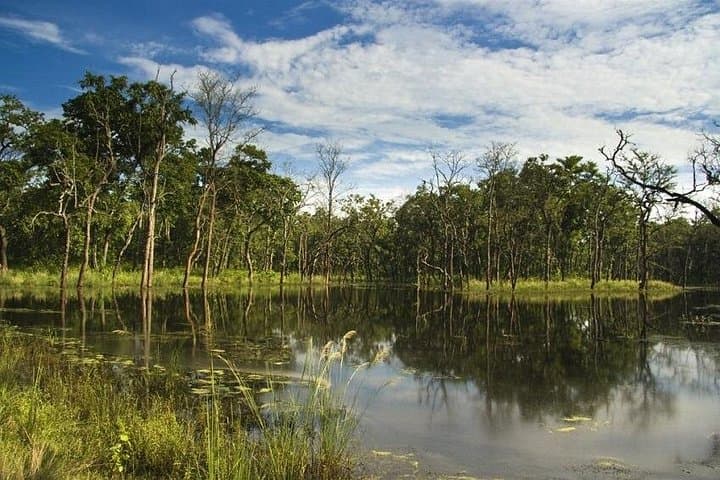
Chitwan sits at roughly 150 m elevation on alluvial plains carved by the Narayani–Rapti system; the park was established in 1973 as Nepal’s first national park and protects a mosaic of sal forest, tall grasslands, and oxbow lakes. Centuries-old Tharu communities live on the park’s edge; their dances and livelihoods remain intertwined with the floodplain’s rhythms.
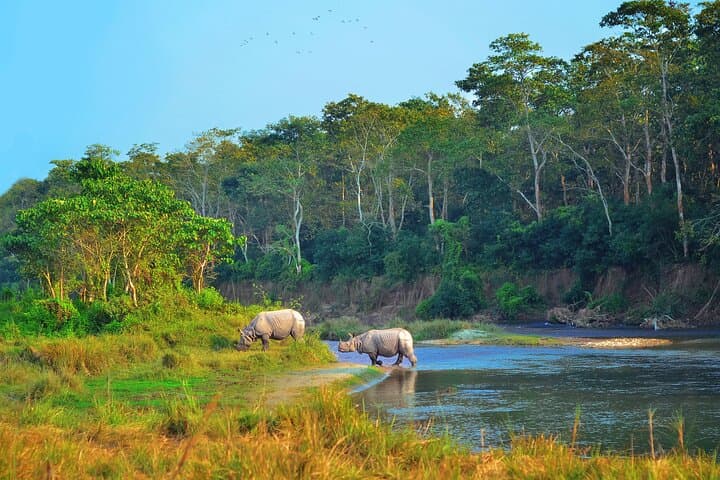
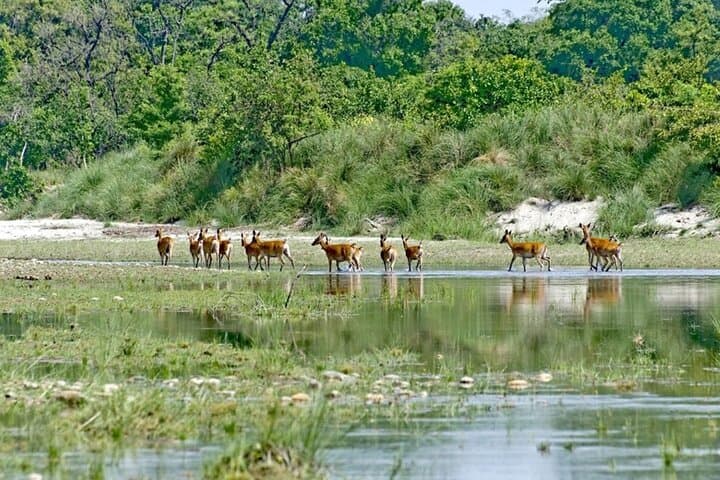
On this 2-night, 3-day itinerary expect a mix of jeep safari, guided jungle walks, and slow canoeing along quiet river channels. One-horned rhinos graze at the grassland margins, gharial crocodiles warm on sandbanks, and birds like hornbills and kingfishers populate the canopy and river. Guides focus on quiet observation—animals decide when they will appear.
Practical guidance: the drive from Pokhara is about 6–7 hours (roughly 150–170 km) over mixed highway and local roads; packing light and layering is wise. Wear sturdy, closed shoes for uneven trails, bring insect repellent, and carry water—heat and humidity can sap energy quickly. Dawn and late afternoon safaris offer the best wildlife windows; midday in the dry season is quieter and hotter.
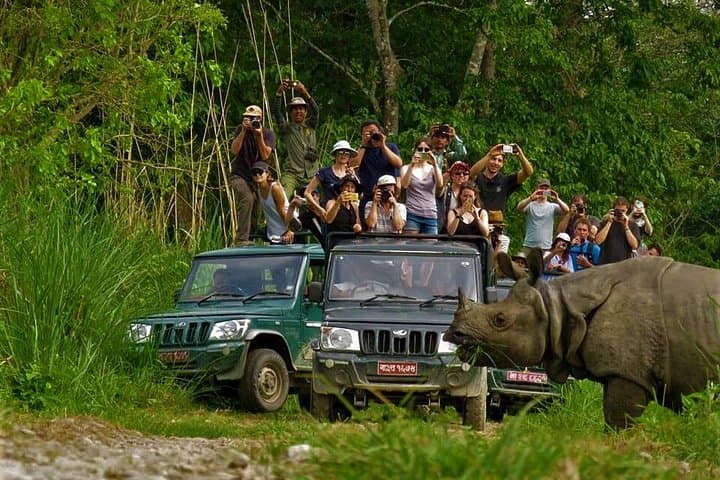
Respect park rules: keep distance from animals, avoid flash photography near wildlife, and listen to local guides. The trip pairs accessible comfort (2-star lodge accommodation and meals included) with focused, low-impact wildlife viewing—ideal for travelers wanting substantive nature time without rugged logistics.
moderate.
2–3 days.
Suitable for travelers with average fitness; must manage several hours of sitting during drives and moderate jungle walks.
Expect a 6–7 hour scenic drive covering roughly 150–170 km; road conditions and traffic can affect timing.
No wildlife sightings are guaranteed; one-horned rhinos are commonly seen, tigers are present but elusive—your guide maximizes the chance of sightings.
The itinerary is rated accessible for most ages, but people with spinal or serious heart issues are advised against jungle walks; check with providers about child policies.
Two nights at a 2-star level hotel in Sauraha with meals included (breakfast, lunch, dinner as specified) and hotel transfers are provided.
Chitwan National Park was designated Nepal’s first national park in 1973 to protect lowland Terai ecosystems and endangered megafauna.
Park management emphasizes regulated safaris, community-based conservation with Tharu involvement, and measures to limit disturbance—travelers should follow low-impact guidelines.
Pokhara Adventure Nepal (PAN) operates guided outdoor trips and adventures with an emphasis on safety, stewardship, and memorable experiences.
The morning bus eases down from the hills of Pokhara and the air grows warmer; the landscape flattens into the Terai and a ribbon of road leads you toward Sauraha and the mangled-salve green of Chitwan National Park.
The morning bus eases down from the hills of Pokhara and the air grows warmer; the landscape flattens into the Terai and a ribbon of road leads you toward Sauraha and the mangled-salve green of Chitwan National Park.
Chitwan sits at roughly 150 m elevation on alluvial plains carved by the Narayani–Rapti system; the park was established in 1973 as Nepal’s first national park and protects a mosaic of sal forest, tall grasslands, and oxbow lakes. Centuries-old Tharu communities live on the park’s edge; their dances and livelihoods remain intertwined with the floodplain’s rhythms.
On this 2-night, 3-day itinerary expect a mix of jeep safari, guided jungle walks, and slow canoeing along quiet river channels. One-horned rhinos graze at the grassland margins, gharial crocodiles warm on sandbanks, and birds like hornbills and kingfishers populate the canopy and river. Guides focus on quiet observation—animals decide when they will appear.
Practical guidance: the drive from Pokhara is about 6–7 hours (roughly 150–170 km) over mixed highway and local roads; packing light and layering is wise. Wear sturdy, closed shoes for uneven trails, bring insect repellent, and carry water—heat and humidity can sap energy quickly. Dawn and late afternoon safaris offer the best wildlife windows; midday in the dry season is quieter and hotter.
Respect park rules: keep distance from animals, avoid flash photography near wildlife, and listen to local guides. The trip pairs accessible comfort (2-star lodge accommodation and meals included) with focused, low-impact wildlife viewing—ideal for travelers wanting substantive nature time without rugged logistics.