THE ADVENTURE COLLECTIVE® · Independent discovery and booking for outdoor travel

Walk through terraced fields and shared kitchens on a four-day community homestay that connects hikers with Newar and Tamang village life. Expect light daily hikes, a goat-cheese visit, boat time on Indra Sarovar and evenings with local families.
Walk through terraced fields and shared kitchens on a four-day community homestay that connects hikers with Newar and Tamang village life. Expect light daily hikes, a goat-cheese visit, boat time on Indra Sarovar and evenings with local families.
You leave Kathmandu’s ring of traffic behind and the valley eases into slopes: terraced fields, scattered stone houses, and a wind that nudges the millet stalks as if counting the hours. By mid-morning you step off at Godam Chok, and the trail becomes a sequence of village lanes, forested gullies and the clean, mineral scent of Gurju Dhara spring pushing at your boots.
Verified experiences and guided adventures in the surrounding area.
Operated by Osho world Adventure · Chitlang, Bagmati Province
You leave Kathmandu’s ring of traffic behind and the valley eases into slopes: terraced fields, scattered stone houses, and a wind that nudges the millet stalks as if counting the hours. By mid-morning you step off at Godam Chok, and the trail becomes a sequence of village lanes, forested gullies and the clean, mineral scent of Gurju Dhara spring pushing at your boots.
Chitlang sits on the northern rim of the valley where Newar, Tamang and Khas communities have farmed the same slopes for generations. The geology is simple—soft sedimentary ridges that give way to fertile terraces and small karst-fed springs; culturally the area was a minor junction on routes linking Kathmandu to the plains, which explains the mix of festivals, folk songs and goat-farming techniques you’ll see.
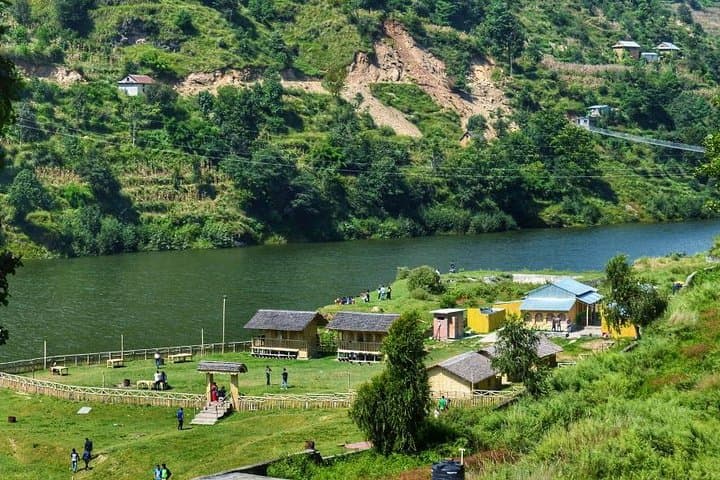
Days here are practical and tactile: morning walks to Satdhara springs, a visit to Nepal’s early goat cheese workshop, a quiet boat on Indra Sarovar and evenings in family homes where meals are shared and stories exchanged. Facilities are basic but clean—homestays provide a mattress, hot meals and local hospitality rather than luxury.
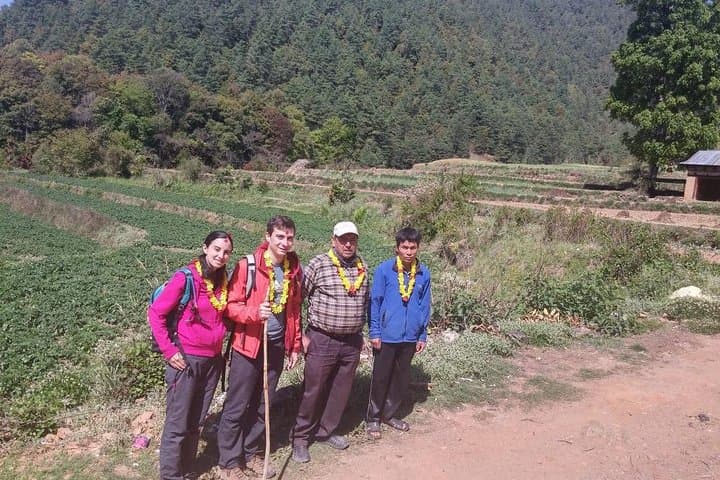
Practical guidance: plan for light hiking (30–90 minute sections), bring rain protection in monsoon season, and carry small-denomination cash for village purchases. Footwear with good grip is worth prioritizing; water purification and a sun hat will make each day easier. If you want a real connection to rural life, choose a homestay that practices low-impact tourism and ask about local customs before arrival.
easy.
4 days.
Suitable for people who can walk 2–3 hours a day at a steady pace; not strenuous but expect uneven paths and steps.
Expect 2–3 hours by local transport depending on traffic and road conditions; private transfers included in many packages can be faster.
Yes—homes are simple but comfortable; the itinerary is low-impact, though families with mobility issues should note some uneven paths and steps.
Local Nepali meals based on seasonal produce—rice, dal, seasonal vegetables, and regional specialties; hosts can often accommodate simple dietary needs with advance notice.
No—Chitlang is at low-to-moderate elevation compared with high Himalaya; altitude sickness is not a typical issue.
Chitlang’s communities (Newar, Tamang, Khas) grew around agricultural terraces and small trade routes on the southern rim of Kathmandu Valley, preserving distinct festivals and crafts.
Homestays support local incomes and low-impact tourism; visitors are encouraged to limit plastic, respect water use and follow local waste practices.
Osho world Adventure operates guided outdoor trips and adventures with an emphasis on safety, stewardship, and memorable experiences.
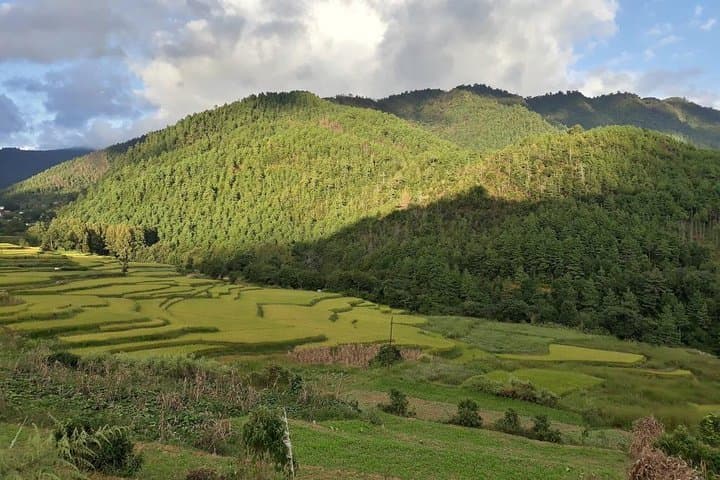
You leave Kathmandu’s ring of traffic behind and the valley eases into slopes: terraced fields, scattered stone houses, and a wind that nudges the millet stalks as if counting the hours. By mid-morning you step off at Godam Chok, and the trail becomes a sequence of village lanes, forested gullies and the clean, mineral scent of Gurju Dhara spring pushing at your boots.
You leave Kathmandu’s ring of traffic behind and the valley eases into slopes: terraced fields, scattered stone houses, and a wind that nudges the millet stalks as if counting the hours. By mid-morning you step off at Godam Chok, and the trail becomes a sequence of village lanes, forested gullies and the clean, mineral scent of Gurju Dhara spring pushing at your boots.
Chitlang sits on the northern rim of the valley where Newar, Tamang and Khas communities have farmed the same slopes for generations. The geology is simple—soft sedimentary ridges that give way to fertile terraces and small karst-fed springs; culturally the area was a minor junction on routes linking Kathmandu to the plains, which explains the mix of festivals, folk songs and goat-farming techniques you’ll see.
Days here are practical and tactile: morning walks to Satdhara springs, a visit to Nepal’s early goat cheese workshop, a quiet boat on Indra Sarovar and evenings in family homes where meals are shared and stories exchanged. Facilities are basic but clean—homestays provide a mattress, hot meals and local hospitality rather than luxury.
Practical guidance: plan for light hiking (30–90 minute sections), bring rain protection in monsoon season, and carry small-denomination cash for village purchases. Footwear with good grip is worth prioritizing; water purification and a sun hat will make each day easier. If you want a real connection to rural life, choose a homestay that practices low-impact tourism and ask about local customs before arrival.