THE ADVENTURE COLLECTIVE® · Independent discovery and booking for outdoor travel

Paddle straight into the Atlantic edge of the Eastern Shore: kayak rentals from Chincoteague put you within sight of Assateague’s wild ponies, broad salt marshes, and migrating shorebirds. This four-hour rental is ideal for paddlers who want flexible, unstructured access to the islands’ remotest corners.
Paddle straight into the Atlantic edge of the Eastern Shore: kayak rentals from Chincoteague put you within sight of Assateague’s wild ponies, broad salt marshes, and migrating shorebirds. This four-hour rental is ideal for paddlers who want flexible, unstructured access to the islands’ remotest corners.
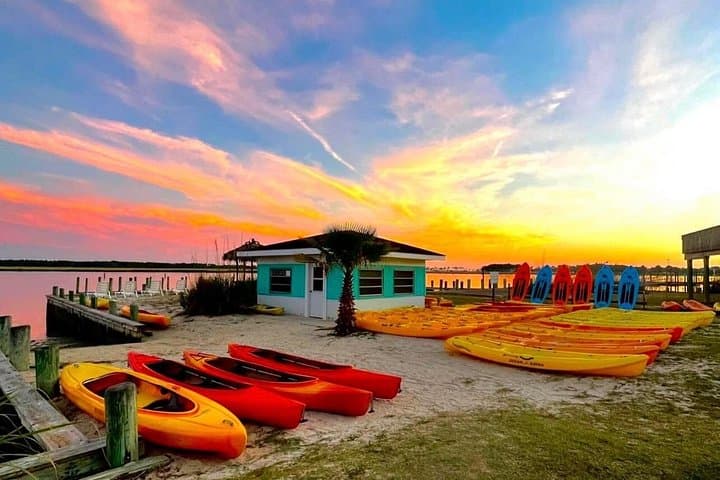
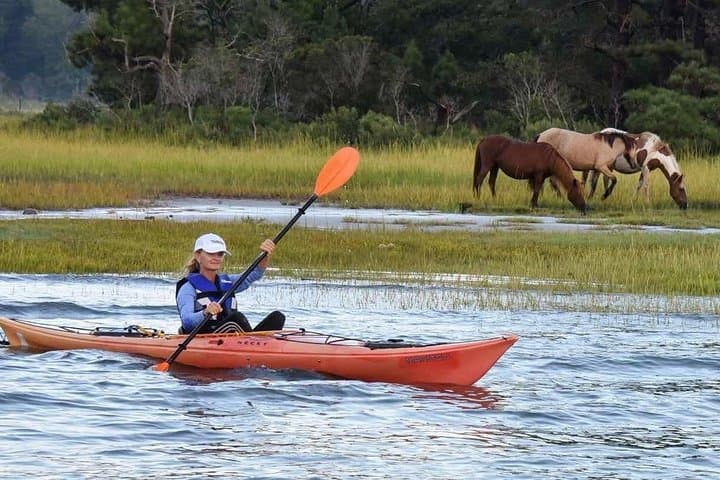
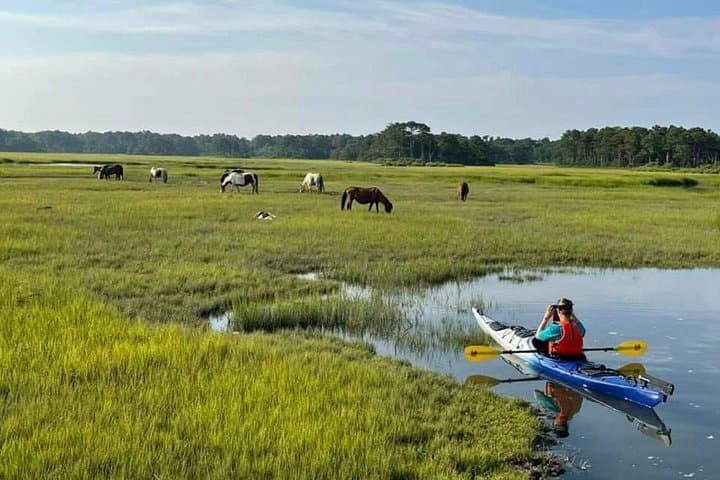
You push off from a low wooden dock, the channel glass-smooth before the sunrise and the marsh reeds whispering as the tide comes in. Paddles slice, salt air moves through the cockpit, and the barrier islands of Chincoteague and Assateague open like a map of sand, marsh, and shallow channels. Ahead, a dark shape grazes the shoreline — the famous Chincoteague ponies, distant but unmistakable.
Verified experiences and guided adventures in the surrounding area.
Operated by Assateague Tours · Chincoteague, Virginia
You push off from a low wooden dock, the channel glass-smooth before the sunrise and the marsh reeds whispering as the tide comes in. Paddles slice, salt air moves through the cockpit, and the barrier islands of Chincoteague and Assateague open like a map of sand, marsh, and shallow channels. Ahead, a dark shape grazes the shoreline — the famous Chincoteague ponies, distant but unmistakable.
This stretch of Virginia coast is a classic barrier-island system: low dunes, broad salt marshes, and a shifting shoreline shaped by Atlantic storms and tidal flow. The area’s human history runs from the Algonquian peoples to colonial watermen, and the local culture still revolves around fishing, boatbuilding, and the annual Pony Penning that puts Chincoteague on the map.
On the water you’ll encounter flats, narrow tidal creeks, and open lagoon paddling. Wildlife drives the day — migratory shorebirds, ospreys, and the occasional seal will cross your path. The National Wildlife Refuge on Assateague keeps parts of this place protected; paddling here is low-impact but requires attention to tides and closed areas.
Practical guide: a typical 4-hour rental lets you cover 4–8 miles depending on tide and wind. Time trips around slack tide to avoid strong cross-currents; bring a coast-guard approved PFD, dry bag, and sun protection. Launch early for calm water and bird activity, and always give wildlife plenty of space. Local outfitters provide local charts and advice — use them. With basic paddling skills and respect for tides, this is a safe, unforgettable way to meet the Atlantic coast’s wild side.
easy.
4 hours.
Light to moderate fitness; you should be comfortable paddling 4–8 miles over a few hours and re-entering a kayak from shallow water.
No formal certification is required; basic paddling and comfort in a sit-on-top or sit-inside kayak is sufficient and the outfitter will cover simple safety and re-entry procedures.
Yes—ponies are often visible from water-side channels and shoreline flats, but sightings aren’t guaranteed; maintain distance and follow refuge rules.
Tide direction and height change current speed in channels; plan launches near slack tide to reduce effort and consult the outfitter or local tide tables before heading out.
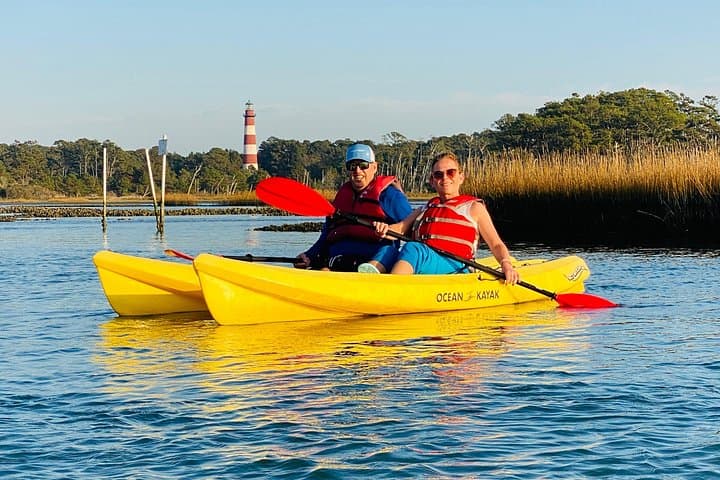
Many outfitters allow children in tandem kayaks or with appropriate child-size PFDs; check age and weight limits with the provider when booking.
The islands were used by indigenous peoples and later by colonial watermen; Chincoteague’s Pony Penning dates back over a century and helped the islands gain national attention.
Assateague Island is largely protected as a National Seashore and Wildlife Refuge—observe posted closures, avoid trampling dune vegetation, and pack out all trash to reduce disturbance.
Assateague Tours operates guided outdoor trips and adventures with an emphasis on safety, stewardship, and memorable experiences.
You push off from a low wooden dock, the channel glass-smooth before the sunrise and the marsh reeds whispering as the tide comes in. Paddles slice, salt air moves through the cockpit, and the barrier islands of Chincoteague and Assateague open like a map of sand, marsh, and shallow channels. Ahead, a dark shape grazes the shoreline — the famous Chincoteague ponies, distant but unmistakable.
You push off from a low wooden dock, the channel glass-smooth before the sunrise and the marsh reeds whispering as the tide comes in. Paddles slice, salt air moves through the cockpit, and the barrier islands of Chincoteague and Assateague open like a map of sand, marsh, and shallow channels. Ahead, a dark shape grazes the shoreline — the famous Chincoteague ponies, distant but unmistakable.
This stretch of Virginia coast is a classic barrier-island system: low dunes, broad salt marshes, and a shifting shoreline shaped by Atlantic storms and tidal flow. The area’s human history runs from the Algonquian peoples to colonial watermen, and the local culture still revolves around fishing, boatbuilding, and the annual Pony Penning that puts Chincoteague on the map.
On the water you’ll encounter flats, narrow tidal creeks, and open lagoon paddling. Wildlife drives the day — migratory shorebirds, ospreys, and the occasional seal will cross your path. The National Wildlife Refuge on Assateague keeps parts of this place protected; paddling here is low-impact but requires attention to tides and closed areas.
Practical guide: a typical 4-hour rental lets you cover 4–8 miles depending on tide and wind. Time trips around slack tide to avoid strong cross-currents; bring a coast-guard approved PFD, dry bag, and sun protection. Launch early for calm water and bird activity, and always give wildlife plenty of space. Local outfitters provide local charts and advice — use them. With basic paddling skills and respect for tides, this is a safe, unforgettable way to meet the Atlantic coast’s wild side.