THE ADVENTURE COLLECTIVE® · Independent discovery and booking for outdoor travel

Spend a brisk half‑day from Cusco exploring Chinchero’s living weaving tradition and the dazzling Salineras de Maras. This cultural route combines Inca stonework, colonial architecture, and millennia‑old salt pans for an efficient, unforgettable Sacred Valley experience.
Spend a brisk half‑day from Cusco exploring Chinchero’s living weaving tradition and the dazzling Salineras de Maras. This cultural route combines Inca stonework, colonial architecture, and millennia‑old salt pans for an efficient, unforgettable Sacred Valley experience.
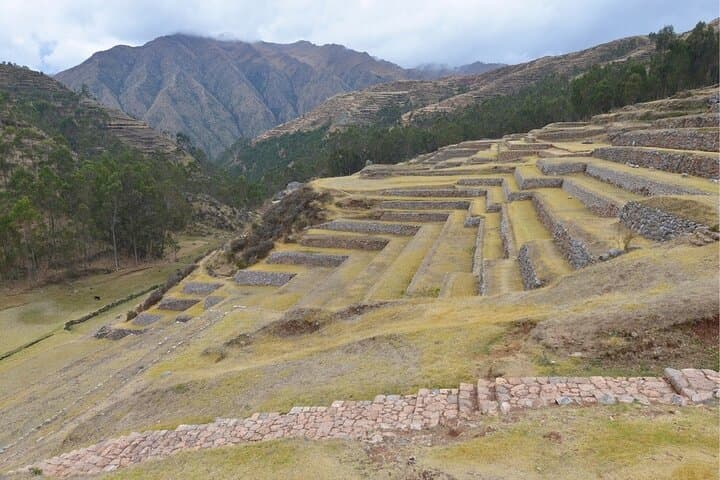
You step out of Cusco’s thin air before sunrise and the highland light hits the terraces of Chinchero like a carved relief—stone walls and cobbled lanes that hold centuries of labor. In Chinchero the land speaks through textiles: alpaca fibers hum with the bright acid of cochineal red and the deep greens coaxed from native grasses as artisans spin and dye in open-air workshops.
Verified experiences and guided adventures in the surrounding area.
Operated by BARCELONA LANDS · Cusco, Cusco
You step out of Cusco’s thin air before sunrise and the highland light hits the terraces of Chinchero like a carved relief—stone walls and cobbled lanes that hold centuries of labor. In Chinchero the land speaks through textiles: alpaca fibers hum with the bright acid of cochineal red and the deep greens coaxed from native grasses as artisans spin and dye in open-air workshops.
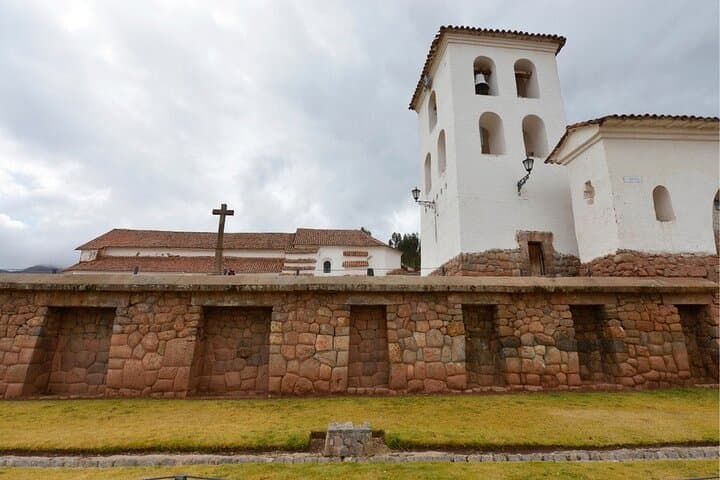
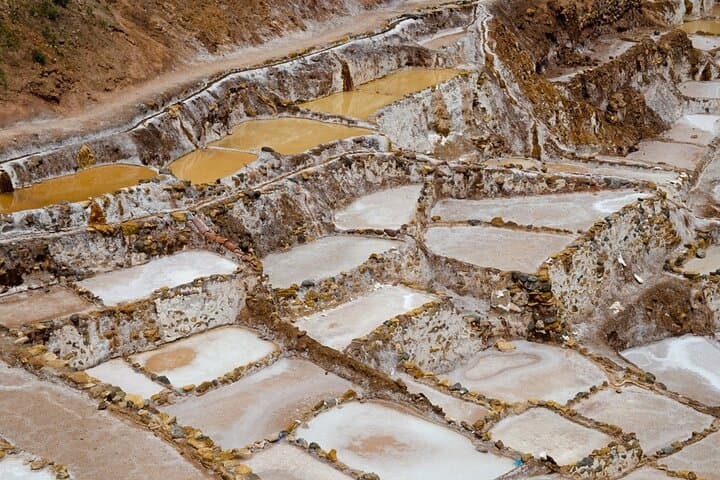
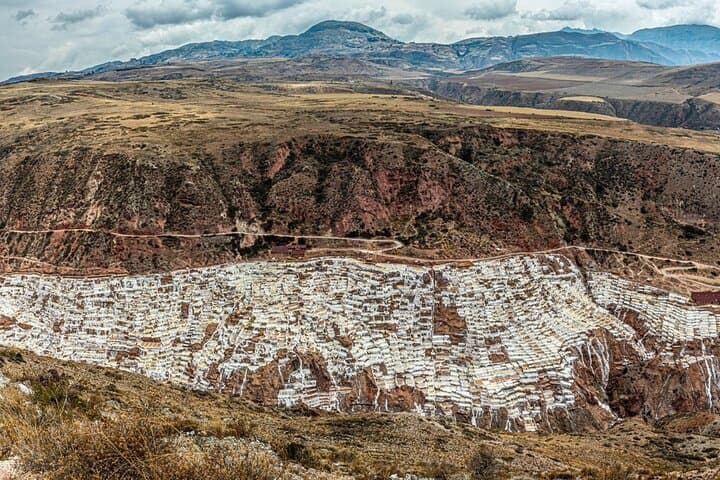
This half-day route threads Inca foundations, a 17th‑century colonial church, and the living market culture of an Andean village where techniques have traveled unbroken through generations. Geologically, you move from the valley benches of Chinchero (over 3,700 m/12,100 ft) toward the patchwork salt pans of Maras, carved into a mountainside and fed by a naturally saline spring; evaporation and manual harvesting have produced its distinctive white terraces since pre‑Inca times.
Expect close-up encounters with working terraces and market stalls rather than long hikes: the tour’s emphasis is cultural observation and short walks across uneven stone. The sky in the highlands is decisive—sun and wind shape how colors read and how quickly salt crystallizes—so timing matters. Bring layers for cold mornings, sun protection for mid‑day exposure, and small local currency for market purchases and tips.
Practicalities: departures run early and return in about four hours; transport is private and suited for all fitness levels. Plan for altitude adjustment in Cusco before the tour, drink water, and move at a steady pace when visiting terraces and narrow paths. The payoff is immediate: tactile craft demonstrations and one of Peru’s most photogenic, human‑made landscapes.
easy.
3–4 hours.
Suitable for people in average physical condition; involves short walks on uneven surfaces and steps at high elevation.
The private half‑day tour runs about four hours with departures early morning (typically between 6:30–9:00 AM) to maximize light and avoid crowds.
Short walks are required on uneven stone streets and terraces; strollers can be used in parts of Chinchero, but some areas have steps—check accessibility needs with the operator in advance.
Many private tours provide Spanish and English explanations; craft demonstrations are visual and tactile, though translation availability should be confirmed when booking.
Yes—local cooperatives sell both artisanal textiles and small quantities of harvested salt; bring small change and allow time for bargaining if you plan to buy.
Chinchero sits on Inca foundations where a colonial church was built in the 17th century, illustrating the layered fusion of pre‑Hispanic and Spanish influences; the Maras salt pans have been managed by local communities since pre‑Inca times.
Local communities manage the salt pans as a shared resource; visitors are asked to stay on paths and avoid disturbing channels to protect fragile terraces and ongoing artisanal production.
BARCELONA LANDS operates guided outdoor trips and adventures with an emphasis on safety, stewardship, and memorable experiences.
You step out of Cusco’s thin air before sunrise and the highland light hits the terraces of Chinchero like a carved relief—stone walls and cobbled lanes that hold centuries of labor. In Chinchero the land speaks through textiles: alpaca fibers hum with the bright acid of cochineal red and the deep greens coaxed from native grasses as artisans spin and dye in open-air workshops.
You step out of Cusco’s thin air before sunrise and the highland light hits the terraces of Chinchero like a carved relief—stone walls and cobbled lanes that hold centuries of labor. In Chinchero the land speaks through textiles: alpaca fibers hum with the bright acid of cochineal red and the deep greens coaxed from native grasses as artisans spin and dye in open-air workshops.
This half-day route threads Inca foundations, a 17th‑century colonial church, and the living market culture of an Andean village where techniques have traveled unbroken through generations. Geologically, you move from the valley benches of Chinchero (over 3,700 m/12,100 ft) toward the patchwork salt pans of Maras, carved into a mountainside and fed by a naturally saline spring; evaporation and manual harvesting have produced its distinctive white terraces since pre‑Inca times.
Expect close-up encounters with working terraces and market stalls rather than long hikes: the tour’s emphasis is cultural observation and short walks across uneven stone. The sky in the highlands is decisive—sun and wind shape how colors read and how quickly salt crystallizes—so timing matters. Bring layers for cold mornings, sun protection for mid‑day exposure, and small local currency for market purchases and tips.
Practicalities: departures run early and return in about four hours; transport is private and suited for all fitness levels. Plan for altitude adjustment in Cusco before the tour, drink water, and move at a steady pace when visiting terraces and narrow paths. The payoff is immediate: tactile craft demonstrations and one of Peru’s most photogenic, human‑made landscapes.