THE ADVENTURE COLLECTIVE® · Independent discovery and booking for outdoor travel

A full-day drive-and-hike from Quito brings you into the thin air of Chimborazo National Reserve, where a non-technical but high-altitude trek reaches Cóndor Cocha at about 5,100 m. Expect commanding views, wildlife sightings, and a demanding day shaped by elevation more than technical difficulty.
A full-day drive-and-hike from Quito brings you into the thin air of Chimborazo National Reserve, where a non-technical but high-altitude trek reaches Cóndor Cocha at about 5,100 m. Expect commanding views, wildlife sightings, and a demanding day shaped by elevation more than technical difficulty.
Dawn breaks over the Andean plateau and the road carves through a sea of páramo, every switchback climbing closer to Chimborazo’s flanks. Travelers boarding in Quito trade city air for thin, mineral-scented wind; the massif grows from the horizon until the glacier-creased summit dominates the sky.
Verified experiences and guided adventures in the surrounding area.
Operated by Real Dreams Tour · Riobamba, Chimborazo
Dawn breaks over the Andean plateau and the road carves through a sea of páramo, every switchback climbing closer to Chimborazo’s flanks. Travelers boarding in Quito trade city air for thin, mineral-scented wind; the massif grows from the horizon until the glacier-creased summit dominates the sky.
Chimborazo is a collapsed stratovolcano whose summit, because of Earth’s equatorial bulge, is the point on the planet farthest from the center. Its ice fields and rocky ridges have fed highland communities for centuries; the reserve protects water sources and grazing lands used by nearby villages.
Geology here is straightforward and dramatic: volcanic rock under a layer of persistent snow and ice, shaped by freeze-thaw and glacial recession. Culturally, the route passes grazing altiplano where llamas and vicuñas move like living tools of the landscape, and local guides share Kichwa place names and practical mountain lore.
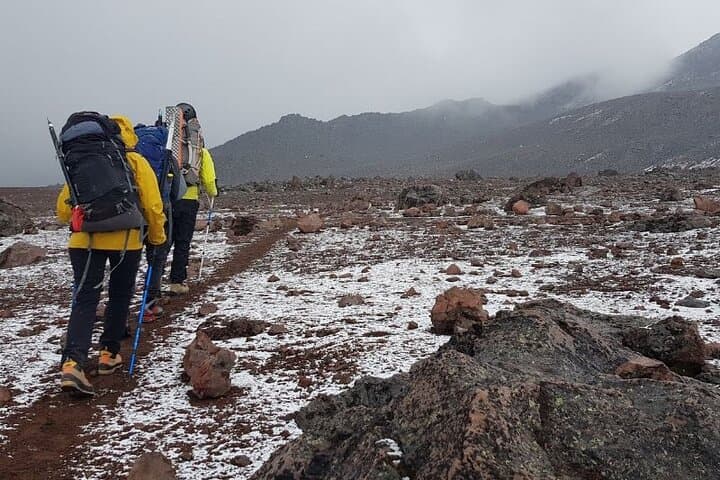
The tour’s tempo is deliberate: a drive from Quito to the Casahuala access, a stop at Refugio Hermanos Carrel (~4,845 m), then a high-altitude trek toward Whymper Refuge and Cóndor Cocha (≈5,100 m). The trail is non-technical but steep and thin-air hard; views sweep across volcanoes and intermontane valleys, and condors sometimes wheel above the lagoon.
Practical edge: plan for acute-altitude risk—acclimatize in Quito or Riobamba, start early, bring layered insulation, and expect a full 10–11 hour outing with a mix of vehicle time and high-altitude hiking. The operator typically provides private transport, bilingual guide, entrance to the reserve, and pickup from Quito, but lunch is arranged locally. Respect marked trails and glacier-fed waterways; they’re lifelines for the valley below.
challenging.
10–11 hours.
Good aerobic fitness and prior high-altitude experience recommended; be able to hike uphill for several hours at reduced oxygen.
The trail is non-technical but strenuous due to altitude—expect steep sections and thin air; moderate-to-good fitness is required.
Yes—spending at least a day in Quito or Riobamba before the tour reduces the risk of altitude sickness and improves enjoyment.
Private transport and entrance to the reserve are included, plus a bilingual guide; lunch is arranged locally and typically not included in the base fare.
For the Cóndor Cocha hike and the refuges visit, no technical gear is required; glaciated technical climbs to the summit need specialized equipment and experience.
Chimborazo has long cultural significance to Andean communities and was a focal point for early geographic study; its summit was first reached in the 19th century by Edward Whymper.
Glacial retreat has reduced ice cover—stay on marked trails, avoid disturbing water sources, and follow guide instructions to limit erosion and wildlife disturbance.
Real Dreams Tour operates guided outdoor trips and adventures with an emphasis on safety, stewardship, and memorable experiences.
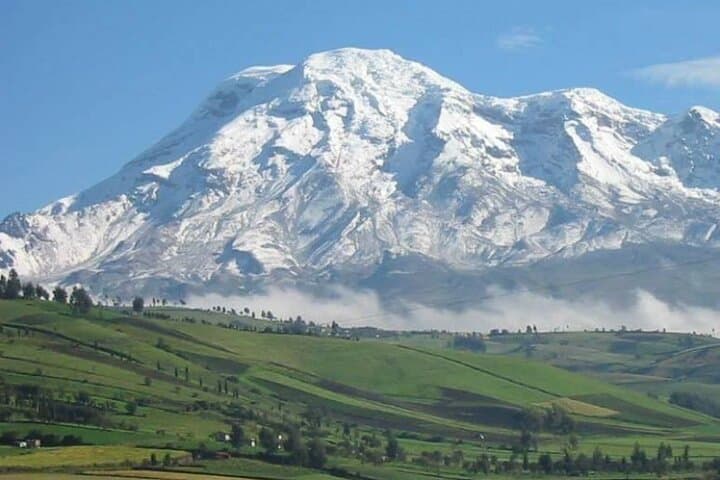
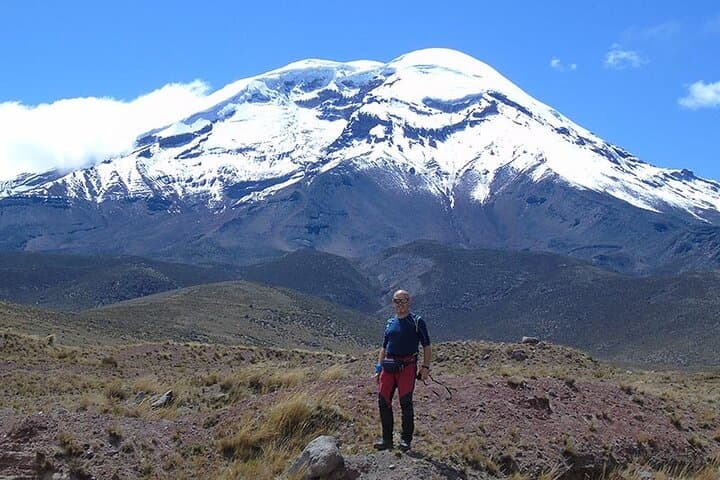
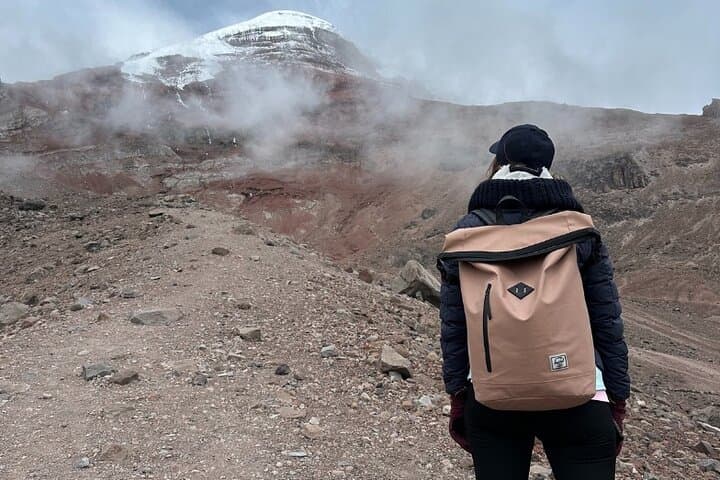
Dawn breaks over the Andean plateau and the road carves through a sea of páramo, every switchback climbing closer to Chimborazo’s flanks. Travelers boarding in Quito trade city air for thin, mineral-scented wind; the massif grows from the horizon until the glacier-creased summit dominates the sky.
Dawn breaks over the Andean plateau and the road carves through a sea of páramo, every switchback climbing closer to Chimborazo’s flanks. Travelers boarding in Quito trade city air for thin, mineral-scented wind; the massif grows from the horizon until the glacier-creased summit dominates the sky.
Chimborazo is a collapsed stratovolcano whose summit, because of Earth’s equatorial bulge, is the point on the planet farthest from the center. Its ice fields and rocky ridges have fed highland communities for centuries; the reserve protects water sources and grazing lands used by nearby villages.
Geology here is straightforward and dramatic: volcanic rock under a layer of persistent snow and ice, shaped by freeze-thaw and glacial recession. Culturally, the route passes grazing altiplano where llamas and vicuñas move like living tools of the landscape, and local guides share Kichwa place names and practical mountain lore.
The tour’s tempo is deliberate: a drive from Quito to the Casahuala access, a stop at Refugio Hermanos Carrel (~4,845 m), then a high-altitude trek toward Whymper Refuge and Cóndor Cocha (≈5,100 m). The trail is non-technical but steep and thin-air hard; views sweep across volcanoes and intermontane valleys, and condors sometimes wheel above the lagoon.
Practical edge: plan for acute-altitude risk—acclimatize in Quito or Riobamba, start early, bring layered insulation, and expect a full 10–11 hour outing with a mix of vehicle time and high-altitude hiking. The operator typically provides private transport, bilingual guide, entrance to the reserve, and pickup from Quito, but lunch is arranged locally. Respect marked trails and glacier-fed waterways; they’re lifelines for the valley below.