THE ADVENTURE COLLECTIVE® · Independent discovery and booking for outdoor travel

Drive coastal roads through quiet bays to visit three UNESCO-listed wooden churches, then cross to Aucar — the "Island of Navigating Souls." This seven-hour heritage tour pairs architecture, shipbuilding culture and serene coastal walks with practical, on-the-ground interpretation.
Drive coastal roads through quiet bays to visit three UNESCO-listed wooden churches, then cross to Aucar — the "Island of Navigating Souls." This seven-hour heritage tour pairs architecture, shipbuilding culture and serene coastal walks with practical, on-the-ground interpretation.
A wet wind off the inland sea pushes against the windows of the van as you leave Castro, and the island opens—boardwalks, church steeples and low farmland slipping by like pages in a field guide. This full-day circuit follows quiet coastal roads to San Juan, Tenaún and Colo, each anchored by a distinctive wooden church where centuries of island craft and faith meet the horizon.
Verified experiences and guided adventures in the surrounding area.
Operated by Tangol · Castro, Los Lagos
A wet wind off the inland sea pushes against the windows of the van as you leave Castro, and the island opens—boardwalks, church steeples and low farmland slipping by like pages in a field guide. This full-day circuit follows quiet coastal roads to San Juan, Tenaún and Colo, each anchored by a distinctive wooden church where centuries of island craft and faith meet the horizon.
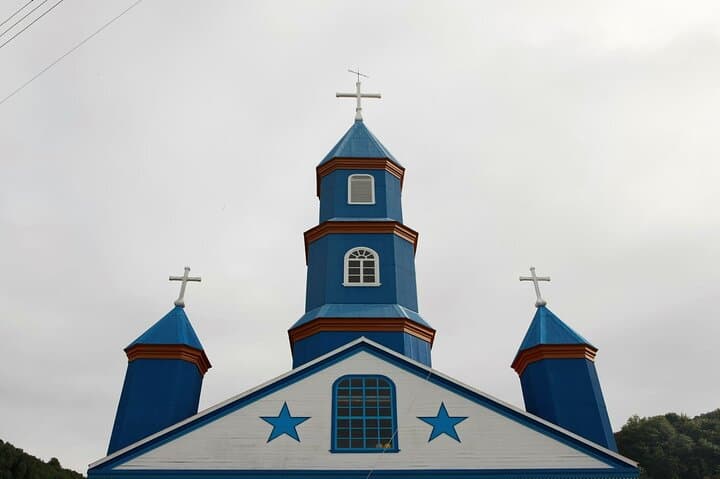
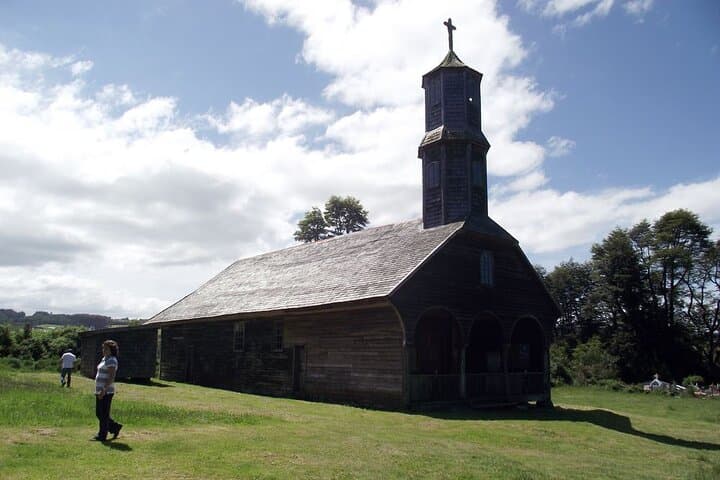
The churches of Chiloé are living architecture: timber framed, shingled and raised on stone foundations, they blend Catholic mission building methods with local carpentry. UNESCO recognized these sites for their hybrid techniques and communal construction—the result of Spanish missionaries and Chilote shipwrights shaping wood to withstand ocean weather.
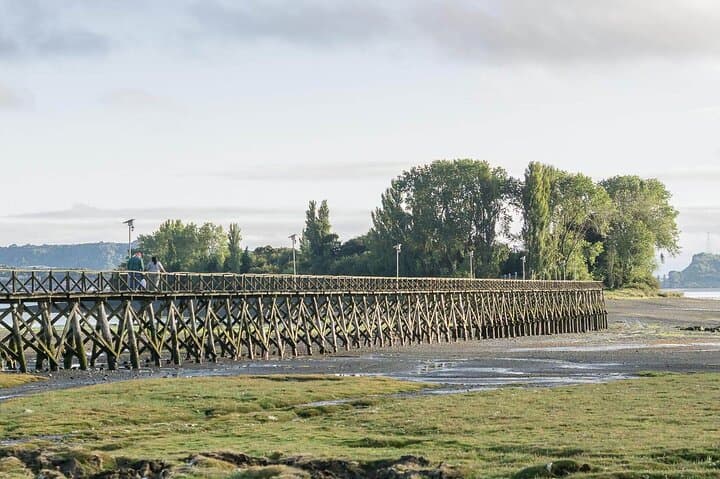
Geology here is simple and honest—glacially scoured lowlands, peat-rich wetlands and rocky shorelines that funnel wind and sea life into sheltered bays. Culture is material: boatbuilding yards in San Juan, tidal salt marshes that feed local fisheries, and Aucar’s wooden bridge, a quiet place for reflection where the island earned its name, the “Island of Navigating Souls.”
Practically, expect short guided walks from the vehicle to each church, some uneven boardwalks and coastal trails, and a few steps up into historic interiors. Bring layers for changeable coastal weather, waterproof shoes for muddy spots and a respectful tone when visiting active parish sites. The tour runs roughly seven hours with hotel pickup in Castro, making it a compact but comprehensive primer on Chilote heritage and shore-side nature—ideal for travelers who want context as much as scenery.
easy.
7 hours.
Suitable for all fitness levels; expect brief walks of up to 30 minutes at each stop on uneven ground.
The excursion is approximately seven hours and includes hotel pickup/drop-off (central hotels), an air-conditioned vehicle, a professional guide and donations to churches as listed by the operator.
Yes — several churches on the route allow interior visits; please be respectful, follow the guide’s instructions and avoid photography during services.
This specific service is not valid for cruise passengers due to special operation and rates—check with the operator for alternative options timed with cruise schedules.
Summer (December–February) has the most daylight and calmer seas, but spring and fall offer quieter visits and good bird activity; expect rain any season.
The Churches of Chiloé reflect a unique fusion of indigenous carpentry and European mission church design; several sites were inscribed as UNESCO World Heritage in 2000.
Chiloé’s coastal wetlands and native forests are ecologically sensitive; stay on paths, avoid disturbing bird colonies and support local conservation-minded guides.
Tangol operates guided outdoor trips and adventures with an emphasis on safety, stewardship, and memorable experiences.
A wet wind off the inland sea pushes against the windows of the van as you leave Castro, and the island opens—boardwalks, church steeples and low farmland slipping by like pages in a field guide. This full-day circuit follows quiet coastal roads to San Juan, Tenaún and Colo, each anchored by a distinctive wooden church where centuries of island craft and faith meet the horizon.
A wet wind off the inland sea pushes against the windows of the van as you leave Castro, and the island opens—boardwalks, church steeples and low farmland slipping by like pages in a field guide. This full-day circuit follows quiet coastal roads to San Juan, Tenaún and Colo, each anchored by a distinctive wooden church where centuries of island craft and faith meet the horizon.
The churches of Chiloé are living architecture: timber framed, shingled and raised on stone foundations, they blend Catholic mission building methods with local carpentry. UNESCO recognized these sites for their hybrid techniques and communal construction—the result of Spanish missionaries and Chilote shipwrights shaping wood to withstand ocean weather.
Geology here is simple and honest—glacially scoured lowlands, peat-rich wetlands and rocky shorelines that funnel wind and sea life into sheltered bays. Culture is material: boatbuilding yards in San Juan, tidal salt marshes that feed local fisheries, and Aucar’s wooden bridge, a quiet place for reflection where the island earned its name, the “Island of Navigating Souls.”
Practically, expect short guided walks from the vehicle to each church, some uneven boardwalks and coastal trails, and a few steps up into historic interiors. Bring layers for changeable coastal weather, waterproof shoes for muddy spots and a respectful tone when visiting active parish sites. The tour runs roughly seven hours with hotel pickup in Castro, making it a compact but comprehensive primer on Chilote heritage and shore-side nature—ideal for travelers who want context as much as scenery.