THE ADVENTURE COLLECTIVE® · Independent discovery and booking for outdoor travel

Step across Chillon’s drawbridge and into a fortified island where medieval life, sharp limestone cliffs, and Lake Geneva views meet. This practical guide explains how to plan a 1–2 hour visit, access options, accessibility notes, and what to expect inside the castle.
Step across Chillon’s drawbridge and into a fortified island where medieval life, sharp limestone cliffs, and Lake Geneva views meet. This practical guide explains how to plan a 1–2 hour visit, access options, accessibility notes, and what to expect inside the castle.
The drawbridge clangs, water laps against ancient stone, and a narrow causeway leads from the lakeshore onto a compact island fortress — Chillon presents itself with the blunt clarity of a defended site shaped by centuries of reason and weather.
Verified experiences and guided adventures in the surrounding area.
Operated by Fondation du chateau de Chillon · Montreux, Vaud
The drawbridge clangs, water laps against ancient stone, and a narrow causeway leads from the lakeshore onto a compact island fortress — Chillon presents itself with the blunt clarity of a defended site shaped by centuries of reason and weather.
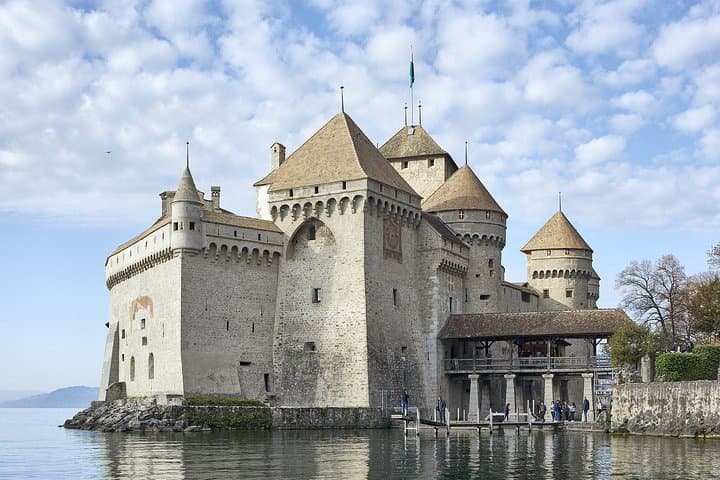
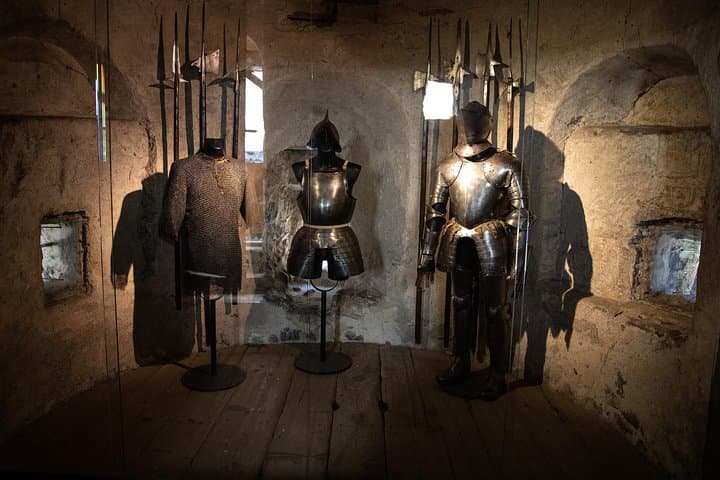
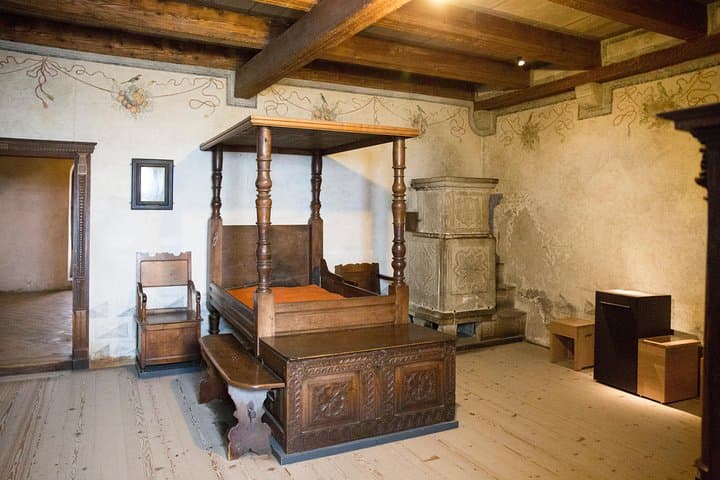
Perched on a limestone outcrop at the eastern end of Lake Geneva, the castle’s low towers and curtain walls reflect light off the Rhône-influenced waters. Visitors step into rooms that grew around strategic needs: dungeons and armories, vaulted halls and a chapel that reveal life under the Dukes of Savoy and later custodians. Lord Byron’s poem and 19th-century travelers helped cement Chillon’s image in European culture; today exhibitions and audiovisual terminals trace medieval governance, armament, and daily routines.
Geology is visible in the bedrock — hard limestone that held a defensive advantage and still shapes the shoreline path. Local culture is present in periodic concerts and temporary exhibitions that animate chambers otherwise quiet with age.
Practical guidance: allow 1–2 hours for a self-paced visit or audio-tour; guided and costumed options are offered. The site is close to Montreux and reachable by train, lakeside promenade, or small boat (berths limited). Note the castle is not wheelchair-adapted; audiovisual terminals in the cafeteria provide alternative access. Wear non-slip shoes for uneven stone surfaces and carry a light jacket — winds off the lake can be sharp. Café Byron sits roughly 50 m away for a quick break. Tickets are mobile- or paper-friendly; cancel at least 24 hours ahead for a full refund. For photographers, early morning or late afternoon light yields the cleanest reflections on the lake.
easy.
1–2 hours.
Suitable for most fitness levels — involves short stairs and walking on uneven stone floors.
Yes — the castle accepts mobile and paper tickets; bring your booking confirmation for entry.
No — the historic interiors and stairs are not adapted for wheelchairs, though audiovisual terminals in the cafeteria provide alternate access to the castle’s history.
Yes — there are limited berths for private boats and regular boat services on Lake Geneva; berthing space is shallow and limited, so public boats are recommended.
Plan 60–120 minutes for a self-guided visit with time for exhibitions and the ramparts; guided or themed visits can take longer.
Chillon developed from a 12th-century stronghold guarding the Rhone passage; it later became associated with the Dukes of Savoy and inspired 19th-century writers and painters.
Visitor numbers are managed in parts of the site and some areas are restricted to protect fragile masonry and exhibits; stick to marked paths and avoid touching artifacts.
Fondation du chateau de Chillon operates guided outdoor trips and adventures with an emphasis on safety, stewardship, and memorable experiences.
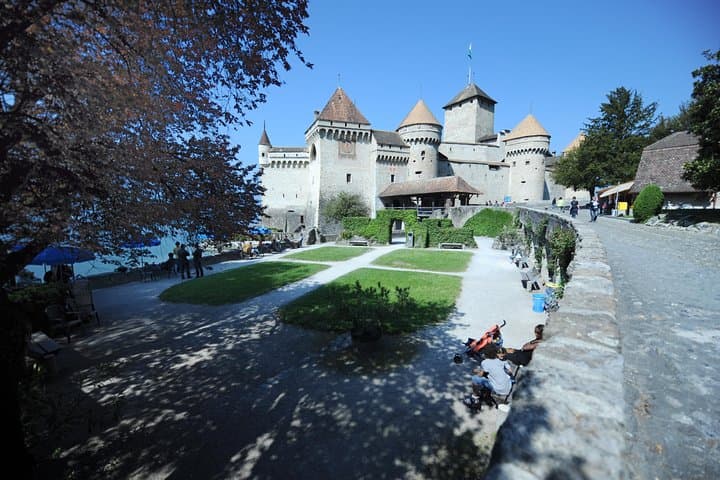
The drawbridge clangs, water laps against ancient stone, and a narrow causeway leads from the lakeshore onto a compact island fortress — Chillon presents itself with the blunt clarity of a defended site shaped by centuries of reason and weather.
The drawbridge clangs, water laps against ancient stone, and a narrow causeway leads from the lakeshore onto a compact island fortress — Chillon presents itself with the blunt clarity of a defended site shaped by centuries of reason and weather.
Perched on a limestone outcrop at the eastern end of Lake Geneva, the castle’s low towers and curtain walls reflect light off the Rhône-influenced waters. Visitors step into rooms that grew around strategic needs: dungeons and armories, vaulted halls and a chapel that reveal life under the Dukes of Savoy and later custodians. Lord Byron’s poem and 19th-century travelers helped cement Chillon’s image in European culture; today exhibitions and audiovisual terminals trace medieval governance, armament, and daily routines.
Geology is visible in the bedrock — hard limestone that held a defensive advantage and still shapes the shoreline path. Local culture is present in periodic concerts and temporary exhibitions that animate chambers otherwise quiet with age.
Practical guidance: allow 1–2 hours for a self-paced visit or audio-tour; guided and costumed options are offered. The site is close to Montreux and reachable by train, lakeside promenade, or small boat (berths limited). Note the castle is not wheelchair-adapted; audiovisual terminals in the cafeteria provide alternative access. Wear non-slip shoes for uneven stone surfaces and carry a light jacket — winds off the lake can be sharp. Café Byron sits roughly 50 m away for a quick break. Tickets are mobile- or paper-friendly; cancel at least 24 hours ahead for a full refund. For photographers, early morning or late afternoon light yields the cleanest reflections on the lake.