THE ADVENTURE COLLECTIVE® · Independent discovery and booking for outdoor travel

Just 20 minutes from Arequipa's Plaza de Armas, the Chili River runs 6 km of class II–IV rapids beneath Misti and Chachani. This half-day rafting trip pairs volcanic scenery with accessible whitewater for beginners and adrenaline seekers.
Just 20 minutes from Arequipa's Plaza de Armas, the Chili River runs 6 km of class II–IV rapids beneath Misti and Chachani. This half-day rafting trip pairs volcanic scenery with accessible whitewater for beginners and adrenaline seekers.
A morning in Arequipa begins with stone and steam: the plaza's cathedral bakes in high sun while the volcanic shoulders of Misti and Chachani sit watchful beyond the city. Twenty minutes from that square a different sound arrives — the river's low rumble growing into a nervous chatter as guides unload dry bags and inflate rafts. You step into a wetsuit that smells faintly of neoprene and diesel, and the Chili River, which has been carving its path since the ice retreated from these slopes, dares you to lean in.
Verified experiences and guided adventures in the surrounding area.
Operated by Turismo Liberty Perú · Arequipa, Arequipa
A morning in Arequipa begins with stone and steam: the plaza's cathedral bakes in high sun while the volcanic shoulders of Misti and Chachani sit watchful beyond the city. Twenty minutes from that square a different sound arrives — the river's low rumble growing into a nervous chatter as guides unload dry bags and inflate rafts. You step into a wetsuit that smells faintly of neoprene and diesel, and the Chili River, which has been carving its path since the ice retreated from these slopes, dares you to lean in.
Geology and history are audible here. The valley walls are cut from Pleistocene lava and sillar — the white volcanic tuff that built Arequipa's colonial facades — and the river's channels expose strata that predate the Spanish plazas. Pre-Columbian communities long managed these waters with terraces and canals; today those irrigation lines thread farmland below volcanic scree. Rafting along six kilometers of water between class II and IV rapids feels like moving through a geological cross-section while framed by the white city and snow-frosted peaks.
Culturally, the trip is a short, kinetic answer to Arequipa’s slow-food reputation. In the space between the launch and the final eddy you glimpse small farmsteads, shepherds with llamas at the edge of scrub, and the occasional adobe chapel where villagers still hold festivals tied to the agricultural calendar. Local operators hire guides from nearby communities, blending safety protocols with practical river knowledge passed down through seasonal experience.
The practical side is simple and thorough: the tour lasts about three hours including transfers from Plaza de Armas, and the on-water stretch runs roughly 6 km. Rafts handle class II–IV features, meaning beginners are welcome but should be prepared for active paddling and strong splashes on the bigger waves. The outfitter supplies wetsuit, helmet, life jacket and paddle; bring closed-toe shoes that can get wet, sun protection, and a small dry bag for a camera.
Timing matters: the dry season (May–October) offers clearer skies and stable flows; the austral summer rains swell the river and can increase rapid intensity or cause cancellations. Altitude is an underappreciated factor — Arequipa sits near 2,300 m — so hydrate and take it easy the first day.
For travelers wanting a compact blast of adrenaline with volcanic scenery and a dose of local life, Chili River rafting delivers: quick to reach, expertly guided, and with enough whitewater to keep your pulse honest while the Andes stand silent above.
moderate.
3 hours (including transfer).
Moderate fitness: able to paddle for short bursts, climb in/out of raft, and handle cold splashes.
The run accepts beginners and families; participants should have a moderate fitness level and no serious heart or back conditions.
On-water time covers roughly 6 kilometers and is part of a 3-hour excursion including transfers from Plaza de Armas.
Guides supply a wetsuit, helmet, life jacket, paddle and river shoes if requested; professional briefing and rescue protocols are included.
Yes — the operator may cancel for heavy rain or unsafe river levels, particularly during the austral summer months (Jan–Mar).
No. The rapids range II–IV and guides coach paddling technique—experienced rafters will still find action on the bigger drops.
Yes, pickup is offered from hotels near Arequipa’s historic center; meeting at the cathedral is also an option.
The Chili River has supported agriculture and settlements for centuries; sillar, the volcanic stone quarried nearby, built much of Arequipa’s colonial core.
Operators encourage leave-no-trace practices and use local guides to support community economies; avoid single-use plastics and follow guide instructions to reduce riverbank erosion.
Turismo Liberty Perú operates guided outdoor trips and adventures with an emphasis on safety, stewardship, and memorable experiences.
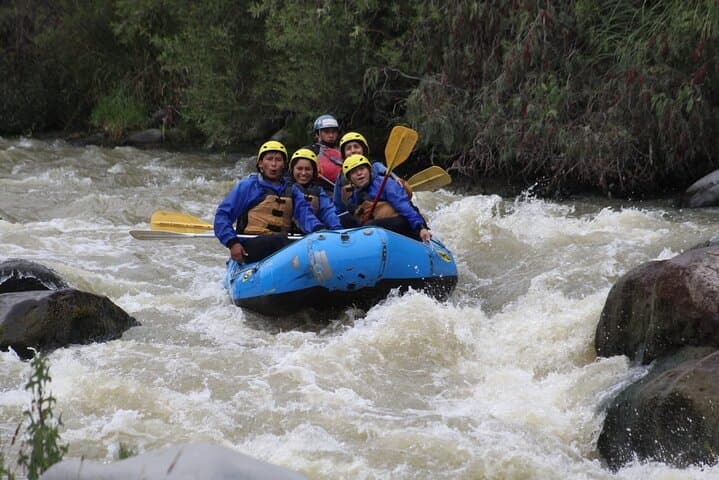
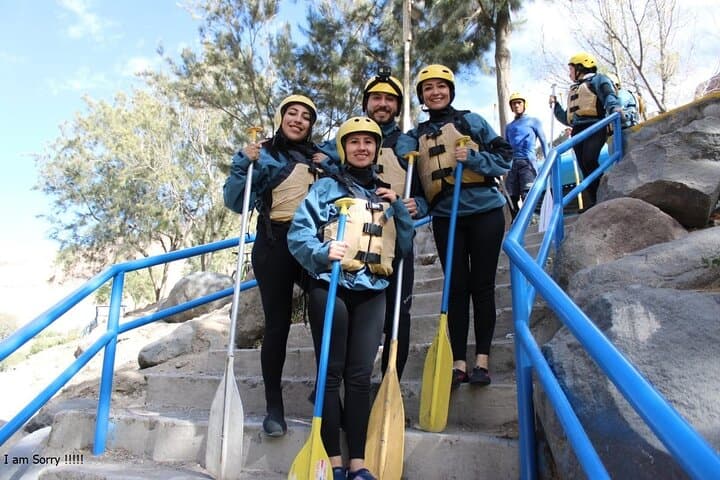
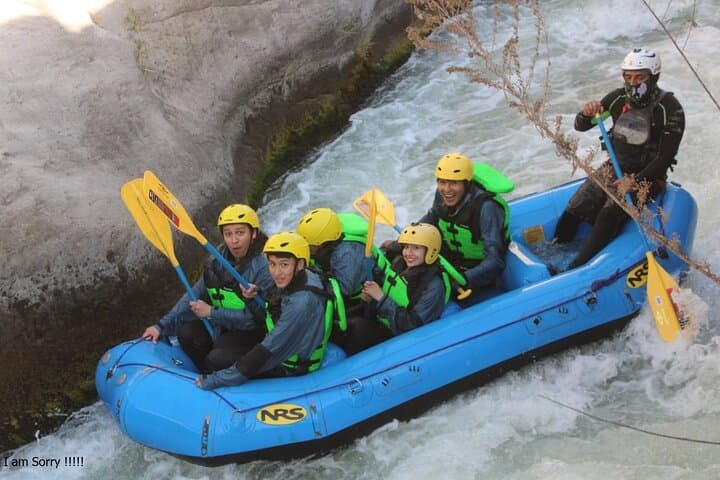
A morning in Arequipa begins with stone and steam: the plaza's cathedral bakes in high sun while the volcanic shoulders of Misti and Chachani sit watchful beyond the city. Twenty minutes from that square a different sound arrives — the river's low rumble growing into a nervous chatter as guides unload dry bags and inflate rafts. You step into a wetsuit that smells faintly of neoprene and diesel, and the Chili River, which has been carving its path since the ice retreated from these slopes, dares you to lean in.
A morning in Arequipa begins with stone and steam: the plaza's cathedral bakes in high sun while the volcanic shoulders of Misti and Chachani sit watchful beyond the city. Twenty minutes from that square a different sound arrives — the river's low rumble growing into a nervous chatter as guides unload dry bags and inflate rafts. You step into a wetsuit that smells faintly of neoprene and diesel, and the Chili River, which has been carving its path since the ice retreated from these slopes, dares you to lean in.
Geology and history are audible here. The valley walls are cut from Pleistocene lava and sillar — the white volcanic tuff that built Arequipa's colonial facades — and the river's channels expose strata that predate the Spanish plazas. Pre-Columbian communities long managed these waters with terraces and canals; today those irrigation lines thread farmland below volcanic scree. Rafting along six kilometers of water between class II and IV rapids feels like moving through a geological cross-section while framed by the white city and snow-frosted peaks.
Culturally, the trip is a short, kinetic answer to Arequipa’s slow-food reputation. In the space between the launch and the final eddy you glimpse small farmsteads, shepherds with llamas at the edge of scrub, and the occasional adobe chapel where villagers still hold festivals tied to the agricultural calendar. Local operators hire guides from nearby communities, blending safety protocols with practical river knowledge passed down through seasonal experience.
The practical side is simple and thorough: the tour lasts about three hours including transfers from Plaza de Armas, and the on-water stretch runs roughly 6 km. Rafts handle class II–IV features, meaning beginners are welcome but should be prepared for active paddling and strong splashes on the bigger waves. The outfitter supplies wetsuit, helmet, life jacket and paddle; bring closed-toe shoes that can get wet, sun protection, and a small dry bag for a camera.
Timing matters: the dry season (May–October) offers clearer skies and stable flows; the austral summer rains swell the river and can increase rapid intensity or cause cancellations. Altitude is an underappreciated factor — Arequipa sits near 2,300 m — so hydrate and take it easy the first day.
For travelers wanting a compact blast of adrenaline with volcanic scenery and a dose of local life, Chili River rafting delivers: quick to reach, expertly guided, and with enough whitewater to keep your pulse honest while the Andes stand silent above.