THE ADVENTURE COLLECTIVE® · Independent discovery and booking for outdoor travel

Spend a long day moving between Maya monuments and crystalline cenotes — guided time at Chichen Itza, swims at Ik Kil and Hubiku, and a walk through colonial Valladolid. This deluxe tour pairs archaeological context with refreshing waters and regional cuisine.
Spend a long day moving between Maya monuments and crystalline cenotes — guided time at Chichen Itza, swims at Ik Kil and Hubiku, and a walk through colonial Valladolid. This deluxe tour pairs archaeological context with refreshing waters and regional cuisine.
Morning light slants across the stepped faces of Kukulcán as a coach pulls up to the wide esplanade and the day’s rhythm switches from highway hum to the hush of stone and story.
Verified experiences and guided adventures in the surrounding area.
Operated by Altustours · Valladolid, Yucatán
Morning light slants across the stepped faces of Kukulcán as a coach pulls up to the wide esplanade and the day’s rhythm switches from highway hum to the hush of stone and story.
Visitors walk the main plaza beneath the pyramid, pass the Temple of the Warriors and stand at the edge of the Sacred Cenote—sites where the Maya measured time, aligned architecture with the sun, and staged public life. Later the group slips into the cool, clear pools of Cenote Ik Kil and the sheltered caverns of Hubiku, where water cuts into limestone and a shaft of sunlight turns suspended droplets to glitter. Valladolid provides an easy close: colonial streets, a shady park and Yucatecan flavors at market stalls.
Geology here is karst limestone—underground rivers have collapsed to form cenotes that were both water sources and sacred portals for the Maya. Chichen Itza itself rose to prominence between AD 600–900 and carries astronomical markers still readable today. Local culture blends Indigenous Maya roots with Spanish colonial influences visible in cuisine and town architecture.
Practical note: the full itinerary runs about 10–12 hours with guided time at ruins and scheduled swims; plan for lots of walking on packed earth and stone plus stairs at cenote platforms. Bring biodegradable sunscreen, a swimsuit and towel, cash for the preservation tax, and sturdy shoes that can get wet. Expect a long day, accessible for most fitness levels, with powerful history and cool water to balance the heat.
easy.
10–12 hours.
Suitable for most people who can handle moderate walking and stairs; not strenuous but involves a full day on your feet.
No — climbing the Kukulcán pyramid has been restricted for years; visitors can walk the esplanade and photograph the structure from the ground.
Yes — life vests are typically mandatory and staff monitor swim areas, but basic swimming comfort is recommended for the best experience.
Guides often speak English and Spanish; check the operator’s listing for confirmed language availability on your departure date.
No — the preservation (entrance) tax is usually collected at the site and is paid separately in cash (amounts may vary by age and nationality).
Chichen Itza grew into a major regional capital between roughly AD 600–900; the Kukulcán pyramid encodes solar and calendrical events that marked key ritual days.
The region collects a preservation fee to support maintenance; avoid chemical sunscreens in cenotes and stick to marked paths to reduce erosion and protect fragile cave systems.
Altustours operates guided outdoor trips and adventures with an emphasis on safety, stewardship, and memorable experiences.

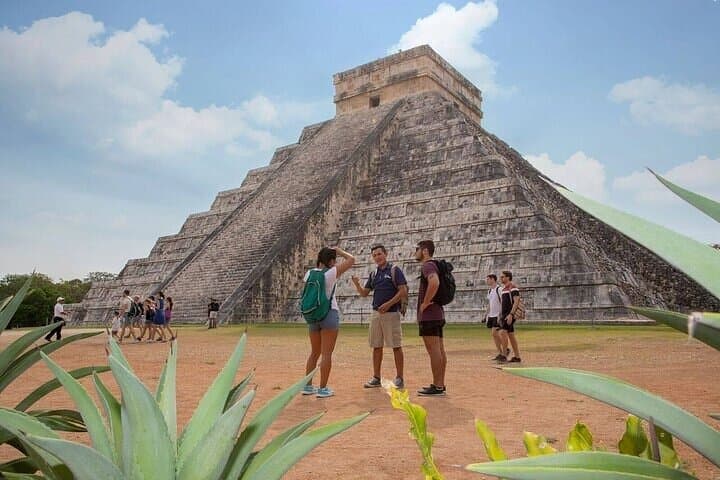


Morning light slants across the stepped faces of Kukulcán as a coach pulls up to the wide esplanade and the day’s rhythm switches from highway hum to the hush of stone and story.
Morning light slants across the stepped faces of Kukulcán as a coach pulls up to the wide esplanade and the day’s rhythm switches from highway hum to the hush of stone and story.
Visitors walk the main plaza beneath the pyramid, pass the Temple of the Warriors and stand at the edge of the Sacred Cenote—sites where the Maya measured time, aligned architecture with the sun, and staged public life. Later the group slips into the cool, clear pools of Cenote Ik Kil and the sheltered caverns of Hubiku, where water cuts into limestone and a shaft of sunlight turns suspended droplets to glitter. Valladolid provides an easy close: colonial streets, a shady park and Yucatecan flavors at market stalls.
Geology here is karst limestone—underground rivers have collapsed to form cenotes that were both water sources and sacred portals for the Maya. Chichen Itza itself rose to prominence between AD 600–900 and carries astronomical markers still readable today. Local culture blends Indigenous Maya roots with Spanish colonial influences visible in cuisine and town architecture.
Practical note: the full itinerary runs about 10–12 hours with guided time at ruins and scheduled swims; plan for lots of walking on packed earth and stone plus stairs at cenote platforms. Bring biodegradable sunscreen, a swimsuit and towel, cash for the preservation tax, and sturdy shoes that can get wet. Expect a long day, accessible for most fitness levels, with powerful history and cool water to balance the heat.