THE ADVENTURE COLLECTIVE® · Independent discovery and booking for outdoor travel

Spend a full day exploring Chichén Itzá with an expert guide, swim in the dramatic Ik Kil cenote, and stroll colonial Valladolid. Ideal for travelers who want extended time at each stop and a balanced mix of history, nature, and local culture.
Spend a full day exploring Chichén Itzá with an expert guide, swim in the dramatic Ik Kil cenote, and stroll colonial Valladolid. Ideal for travelers who want extended time at each stop and a balanced mix of history, nature, and local culture.
You arrive before the heat peaks, stepping onto the worn stone plaza where the shadow of El Castillo slices across packed earth. Guide in hand, a small group fans out—camera clicks, boots whisper on ancient paths—and the pyramid’s proportions demand a pause. The air smells of limestone dust and distant vegetation; somewhere below, a cenote waits with water that seems to hold its own gravity.
Verified experiences and guided adventures in the surrounding area.
Operated by OlMar Travel Mexico · Pisté, Yucatán
You arrive before the heat peaks, stepping onto the worn stone plaza where the shadow of El Castillo slices across packed earth. Guide in hand, a small group fans out—camera clicks, boots whisper on ancient paths—and the pyramid’s proportions demand a pause. The air smells of limestone dust and distant vegetation; somewhere below, a cenote waits with water that seems to hold its own gravity.
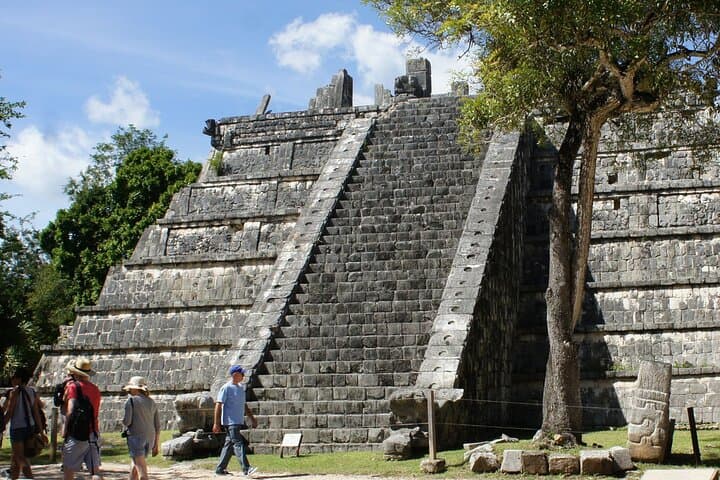
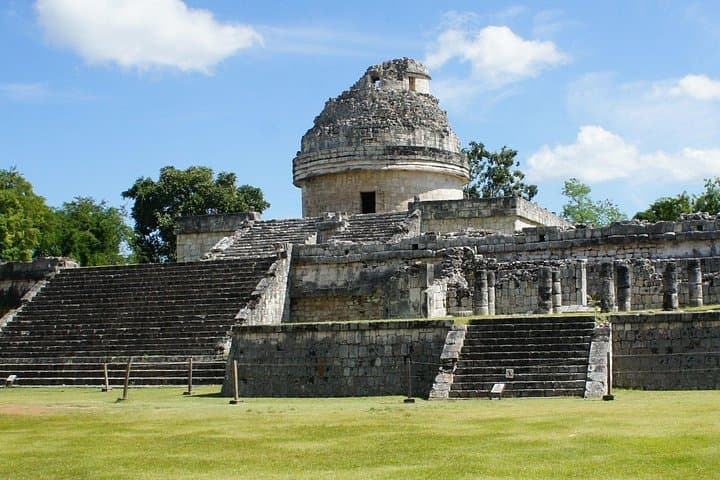
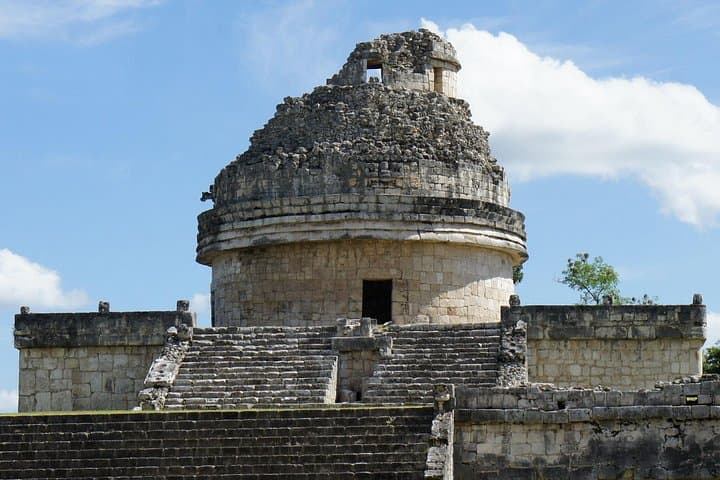
Chichén Itzá stands at the crossroads of Maya astronomy and colonial history: a ceremonial center built between the 7th and 10th centuries, later reframed by Spanish-era towns like Valladolid. The limestone karst that created the Yucatán’s cenotes also preserves glyphs and ballcourts—stone that records both ritual and daily life.
From the plateau to the sinkhole, the day trades stone for water. Cenote Ik Kil cuts into the earth, a circular well with vines draping the walls and water that dares you to dive in. Valladolid offers a gentler pace: pastel façades, tile roofs, and a central zócalo where local life unfolds.
Practical side: plan for a long day—pickups from Cancun, about 12 hours total. Wear sturdy shoes for uneven ruins, bring biodegradable sunscreen for the cenote, and a change of clothes and towel for swimming. Cameras are welcome but tripods are not allowed inside the archaeological site; carry small cash for market purchases in Valladolid.
This is a full, sensory day that combines archaeology, geology, and a cooling dip—designed for travelers who want depth rather than a quick photo stop.
easy.
Approximately 12 hours (full day).
Suitable for most fitness levels; requires standing and walking on uneven surfaces for several hours and climbing steps.
This is a full-day (about 12-hour) small-group tour that includes transport, licensed guide, entrance fees, lunch, bottled water, and time at Chichén Itzá, Cenote Ik Kil, and Valladolid.
Yes—there is a two-hour window to swim at Ik Kil and life vests are provided by the operator.
Tripods are not permitted inside the archaeological zone; drones are restricted and generally require special permits from INAH (Mexico’s National Institute of Anthropology and History).
Bring small cash for souvenirs, snacks, or tips; most major establishments may accept cards in Valladolid but local vendors often prefer pesos.
Chichén Itzá was a major Maya urban center with ceremonial, astronomical and political importance between the Classic and Postclassic periods; nearby colonial towns like Valladolid were established after the Spanish conquest.
Visitors are asked to use biodegradable sunscreen, avoid single-use plastics, and respect designated swim areas to protect fragile cenote ecosystems and archaeological sites.
OlMar Travel Mexico operates guided outdoor trips and adventures with an emphasis on safety, stewardship, and memorable experiences.
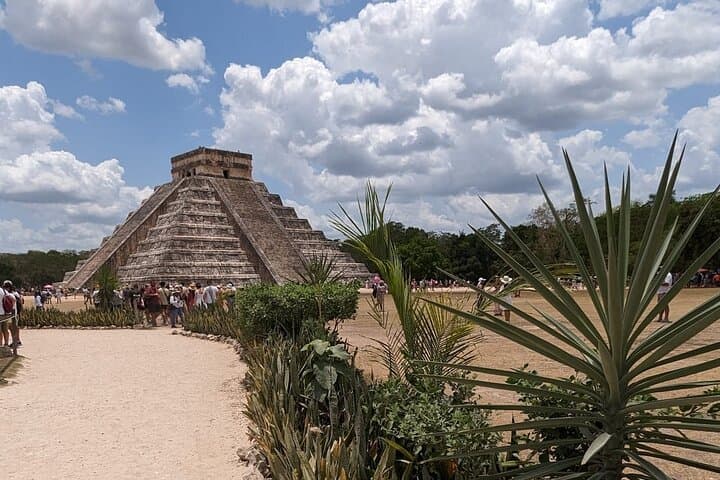
You arrive before the heat peaks, stepping onto the worn stone plaza where the shadow of El Castillo slices across packed earth. Guide in hand, a small group fans out—camera clicks, boots whisper on ancient paths—and the pyramid’s proportions demand a pause. The air smells of limestone dust and distant vegetation; somewhere below, a cenote waits with water that seems to hold its own gravity.
You arrive before the heat peaks, stepping onto the worn stone plaza where the shadow of El Castillo slices across packed earth. Guide in hand, a small group fans out—camera clicks, boots whisper on ancient paths—and the pyramid’s proportions demand a pause. The air smells of limestone dust and distant vegetation; somewhere below, a cenote waits with water that seems to hold its own gravity.
Chichén Itzá stands at the crossroads of Maya astronomy and colonial history: a ceremonial center built between the 7th and 10th centuries, later reframed by Spanish-era towns like Valladolid. The limestone karst that created the Yucatán’s cenotes also preserves glyphs and ballcourts—stone that records both ritual and daily life.
From the plateau to the sinkhole, the day trades stone for water. Cenote Ik Kil cuts into the earth, a circular well with vines draping the walls and water that dares you to dive in. Valladolid offers a gentler pace: pastel façades, tile roofs, and a central zócalo where local life unfolds.
Practical side: plan for a long day—pickups from Cancun, about 12 hours total. Wear sturdy shoes for uneven ruins, bring biodegradable sunscreen for the cenote, and a change of clothes and towel for swimming. Cameras are welcome but tripods are not allowed inside the archaeological site; carry small cash for market purchases in Valladolid.
This is a full, sensory day that combines archaeology, geology, and a cooling dip—designed for travelers who want depth rather than a quick photo stop.