THE ADVENTURE COLLECTIVE® · Independent discovery and booking for outdoor travel

See Kukulkán before the crowds, cool off in Hubiku cenote and climb Ek Balam’s Acropolis—one long day that pairs two iconic Maya sites with a refreshing cenote swim. Practical tips for timing, gear and what to expect inside.
See Kukulkán before the crowds, cool off in Hubiku cenote and climb Ek Balam’s Acropolis—one long day that pairs two iconic Maya sites with a refreshing cenote swim. Practical tips for timing, gear and what to expect inside.
You begin before sunrise in Valladolid, climbing into an air‑conditioned van as the town exhales morning heat. The road hums south; the limestone plain flattens into scrub and low jungle until the silhouette of Kukulkán rises at the edge of the clearing — a stairway of stone that still calls to the eye.
Verified experiences and guided adventures in the surrounding area.
Operated by Experiencias LakinTours · Valladolid, Yucatán
You begin before sunrise in Valladolid, climbing into an air‑conditioned van as the town exhales morning heat. The road hums south; the limestone plain flattens into scrub and low jungle until the silhouette of Kukulkán rises at the edge of the clearing — a stairway of stone that still calls to the eye.
Chichen Itza is architectural clarity: the Kukulkán pyramid, the Great Ball Court and the Temple of Warriors illustrate Classic and Post‑Classic Maya engineering and ritual life. Nearby, Hubiku cenote offers a sudden cool: a semi‑open sink where groundwater filters through ancient karst, inviting you to float in clear, spring‑fed water and shake off the noon sun before the buffet of Yucatecan dishes.
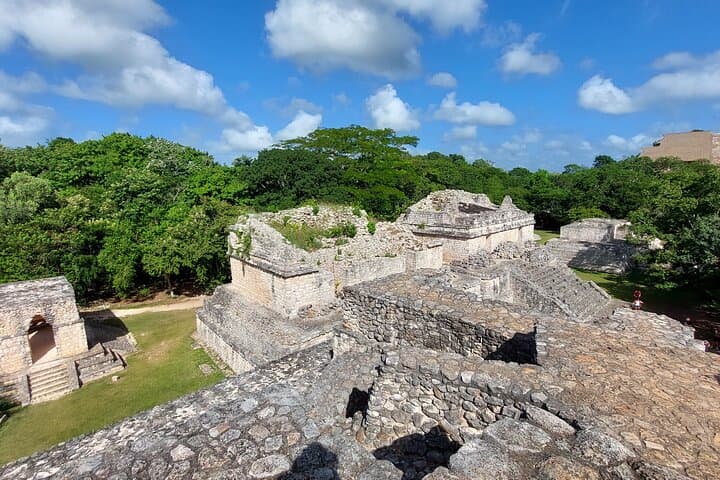
Ek Balam adds a different flavor — a fortified city with surviving stucco sculptures and walls that enclose courtyards, palace rooms and a climbable Acropolis that rewards effort with panoramic lowland views. Together the three stops tell a layered story of trade, ceremony and landscape on the Yucatán Peninsula.
Practical notes: start early to beat crowds and heat; expect uneven stone, short stair climbs (Ek Balam’s Acropolis is climbable), and slippery steps at the cenote. Bring swimwear, quick‑dry towel, sunscreen and cash for small purchases. The tour runs 8–9 hours with guided time in each site, and is suitable for most fitness levels, though it’s not recommended for people with serious back or heart issues. Hydrate, pace your visits, and leave no trace — the ruins and cenotes depend on low impact from visitors to remain vivid for the next generation.
easy.
8–9 hours.
Light to moderate — you should be comfortable walking 1–3 miles on uneven ground and climbing several flights of stone steps.
Confirm with your operator — this itinerary lists admission as not included on site descriptions; bring pesos or verify at booking.
Expect an 8–9 hour day with hotel pickup in Valladolid; exact pickup point is provided when you book.
The tour includes time at Hubiku cenote; basic facilities and changing areas are common, but check locally about locker availability and life jacket rules.
Ek Balam typically allows climbing the Acropolis; climbing Kukulkán at Chichen Itza is generally restricted — follow current site regulations and guides’ instructions.
The Yucatán’s limestone plateau preserves thousands of Maya settlements; Chichen Itza grew as a political and ceremonial hub while Ek Balam functioned as a fortified regional center with unique facade sculpture.
Cenotes are fragile aquifers—avoid sunscreen or oils in the water unless local rules allow rinsing first, and stick to marked paths to protect fragile limestone and vegetation.
Experiencias LakinTours operates guided outdoor trips and adventures with an emphasis on safety, stewardship, and memorable experiences.


You begin before sunrise in Valladolid, climbing into an air‑conditioned van as the town exhales morning heat. The road hums south; the limestone plain flattens into scrub and low jungle until the silhouette of Kukulkán rises at the edge of the clearing — a stairway of stone that still calls to the eye.
You begin before sunrise in Valladolid, climbing into an air‑conditioned van as the town exhales morning heat. The road hums south; the limestone plain flattens into scrub and low jungle until the silhouette of Kukulkán rises at the edge of the clearing — a stairway of stone that still calls to the eye.
Chichen Itza is architectural clarity: the Kukulkán pyramid, the Great Ball Court and the Temple of Warriors illustrate Classic and Post‑Classic Maya engineering and ritual life. Nearby, Hubiku cenote offers a sudden cool: a semi‑open sink where groundwater filters through ancient karst, inviting you to float in clear, spring‑fed water and shake off the noon sun before the buffet of Yucatecan dishes.
Ek Balam adds a different flavor — a fortified city with surviving stucco sculptures and walls that enclose courtyards, palace rooms and a climbable Acropolis that rewards effort with panoramic lowland views. Together the three stops tell a layered story of trade, ceremony and landscape on the Yucatán Peninsula.
Practical notes: start early to beat crowds and heat; expect uneven stone, short stair climbs (Ek Balam’s Acropolis is climbable), and slippery steps at the cenote. Bring swimwear, quick‑dry towel, sunscreen and cash for small purchases. The tour runs 8–9 hours with guided time in each site, and is suitable for most fitness levels, though it’s not recommended for people with serious back or heart issues. Hydrate, pace your visits, and leave no trace — the ruins and cenotes depend on low impact from visitors to remain vivid for the next generation.