THE ADVENTURE COLLECTIVE® · Independent discovery and booking for outdoor travel

A full-day run from Cancun that pairs the monumental pyramid of Chichen Itza with swims in two dramatic cenotes, Ik-Kil and Suytun, plus a photo stop in Valladolid. Expect long drives, cool water, and a deep dive into Mayan landscape and history.
A full-day run from Cancun that pairs the monumental pyramid of Chichen Itza with swims in two dramatic cenotes, Ik-Kil and Suytun, plus a photo stop in Valladolid. Expect long drives, cool water, and a deep dive into Mayan landscape and history.
You step off an air-conditioned van into a sunlit clearing and the mass of Kukulcán rises before you — a stepped pyramid that organizes shadow and light like a clockwork of stone. The day moves from that open plaza into cool, caverns of water: two cenotes whose shafts of light and clear depths rewrite the idea of swimming in a sinkhole.
Verified experiences and guided adventures in the surrounding area.
Operated by GLOBAL TOP EXPERIENCE · Pisté, Yucatán
You step off an air-conditioned van into a sunlit clearing and the mass of Kukulcán rises before you — a stepped pyramid that organizes shadow and light like a clockwork of stone. The day moves from that open plaza into cool, caverns of water: two cenotes whose shafts of light and clear depths rewrite the idea of swimming in a sinkhole.
Chichen Itza is a major Postclassic Maya site, with the Temple of Kukulcán aligned to equinox shadows and ballcourts echoing ceremony and politics. The cenotes are part of the Yucatán’s porous limestone crust: collapsed chambers that expose the underground aquifer carved over millions of years. Suytun’s narrow platform and single skylight produce a cathedral-like beam; Ik-Kil opens wider — roughly 60 meters across and plunging toward aquifer water near 40 meters deep — surrounded by trailing vines and humid forest.
Valladolid adds a colonial stop: the church of San Servasio, street life, and quick local fare. Expect a long day — roughly 13–14 hours with transit — that mixes guided archaeology, timed swimming, and a buffet Mayan lunch.
Practical guidance: bring swimsuit under clothing, quick-dry towel, reef-friendly sunscreen, and cash for lockers and tips. Life jackets are provided for cenote swims but water shoes and a camera with a dry bag improve comfort and photos. Pace yourself on the three-hour drive from Cancun and plan for early starts to avoid afternoon heat and crowds.
easy.
13–14 hours.
Suitable for people in average fitness; involves walking on uneven stone and short swims.
Policies vary by operator—confirm on booking; the cenotes listed often include admission, but Chichen Itza fees may be charged separately depending on the tour.
Yes—swimming is permitted at Ik-Kil and Suytun and life jackets are provided; follow guide instructions and avoid diving into shallow areas.
Approximately three hours each way to Chichen Itza, making this a full-day excursion of about 13–14 hours including stops and transfers.
Not recommended for travelers with spinal injuries or severe mobility issues due to stairs, uneven ground, and extended time traveling.
Chichen Itza grew into a major Maya ceremonial and commercial center; the Kukulcán pyramid aligns with astronomical events and was central to civic ritual.
Cenotes and archaeological zones are protected; follow local rules—no sunscreen in some cenotes, and avoid touching fragile stone work to minimize erosion.
GLOBAL TOP EXPERIENCE operates guided outdoor trips and adventures with an emphasis on safety, stewardship, and memorable experiences.


You step off an air-conditioned van into a sunlit clearing and the mass of Kukulcán rises before you — a stepped pyramid that organizes shadow and light like a clockwork of stone. The day moves from that open plaza into cool, caverns of water: two cenotes whose shafts of light and clear depths rewrite the idea of swimming in a sinkhole.
You step off an air-conditioned van into a sunlit clearing and the mass of Kukulcán rises before you — a stepped pyramid that organizes shadow and light like a clockwork of stone. The day moves from that open plaza into cool, caverns of water: two cenotes whose shafts of light and clear depths rewrite the idea of swimming in a sinkhole.
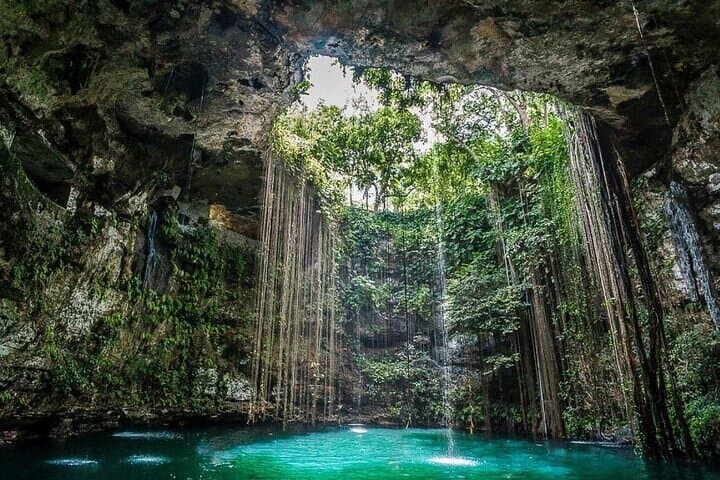
Chichen Itza is a major Postclassic Maya site, with the Temple of Kukulcán aligned to equinox shadows and ballcourts echoing ceremony and politics. The cenotes are part of the Yucatán’s porous limestone crust: collapsed chambers that expose the underground aquifer carved over millions of years. Suytun’s narrow platform and single skylight produce a cathedral-like beam; Ik-Kil opens wider — roughly 60 meters across and plunging toward aquifer water near 40 meters deep — surrounded by trailing vines and humid forest.
Valladolid adds a colonial stop: the church of San Servasio, street life, and quick local fare. Expect a long day — roughly 13–14 hours with transit — that mixes guided archaeology, timed swimming, and a buffet Mayan lunch.
Practical guidance: bring swimsuit under clothing, quick-dry towel, reef-friendly sunscreen, and cash for lockers and tips. Life jackets are provided for cenote swims but water shoes and a camera with a dry bag improve comfort and photos. Pace yourself on the three-hour drive from Cancun and plan for early starts to avoid afternoon heat and crowds.