THE ADVENTURE COLLECTIVE® · Independent discovery and booking for outdoor travel

Spend a full day exploring Chichén Itzá’s pyramids, cool off in Cenote Saamal and stroll colonial Valladolid on a guided tour from Playa del Carmen. This practical guide covers what to expect, what to bring and local insights to make the most of the outing.
Spend a full day exploring Chichén Itzá’s pyramids, cool off in Cenote Saamal and stroll colonial Valladolid on a guided tour from Playa del Carmen. This practical guide covers what to expect, what to bring and local insights to make the most of the outing.
You arrive before midday under a flat Yucatán sky; wind moves through the dry forest and the stone faces of Chichén Itzá loom with patient geometry. Guided steps bring the plaza to life—shadows crawling down the flanks of El Castillo, the stair edges humming with the preserved trick of sound that turns applause into a bird-call.
Verified experiences and guided adventures in the surrounding area.
Operated by Cancun Tours Market · Pisté, Yucatán
You arrive before midday under a flat Yucatán sky; wind moves through the dry forest and the stone faces of Chichén Itzá loom with patient geometry. Guided steps bring the plaza to life—shadows crawling down the flanks of El Castillo, the stair edges humming with the preserved trick of sound that turns applause into a bird-call.
Built over centuries, Chichén Itzá mixes Classic Maya foundations and later Postclassic Toltec influence: the stepped pyramid of Kukulcán, the Great Ball Court, and the Observatory each mark shifts in power, astronomy and ritual. The limestone bedrock of the peninsula dissolved into sinkholes long before the Maya carved plazas around them; nearby cenotes like Saamal are natural wells where fresh groundwater gathers, offering sudden blue calm.
Valladolid’s colonial grid and the white stone convent of San Bernardino remind visitors that conquest, faith and trade layered new identities onto ancient places. Local vendors sell handwoven hammocks and slow-cooked cochinita; the region still breathes traditional crafts and rhythms.
Practical notes: expect a full day—roughly 11–12 hours door-to-door from Playa del Carmen—bring sun protection, a refillable water bottle and swimwear for a 45-minute cenote stop. The guided portion of Chichén Itzá typically lasts about two hours; wear sturdy, comfortable shoes and carry cash for the preservation fee and small purchases. Photography is allowed but avoid climbing monuments and follow the guide’s route. Timed correctly, the return leg happens as the light softens—an exhausted, satisfied reentry into coastal hotels after a day spent between stone, water and history.
easy.
11–12 hours.
Suitable for travelers in average physical condition; involves walking on uneven ground for up to two hours and short stair climbs.
Guided time at the archaeological zone is typically about two hours, covering major structures like El Castillo, the Ball Court and the Observatory.
Yes—this tour includes entrance and a 45-minute swim stop at Cenote Saamal; bring swimwear and a towel.
A preservation tax is usually collected at site check-in—bring local currency for this and for small purchases in Valladolid.
No—climbing monuments at Chichén Itzá is prohibited to protect the structures; you can photograph and walk the designated paths.
Chichén Itzá grew into a major ceremonial center between the Classic and Postclassic periods, blending Maya design with later central Mexican influences; Kukulcán pyramid aligns with solar events.
Visitor limits, a preservation fee and strict no-climbing rules help protect fragile stonework; avoid sunscreen and lotions before entering cenotes to reduce chemical impact.
Cancun Tours Market operates guided outdoor trips and adventures with an emphasis on safety, stewardship, and memorable experiences.


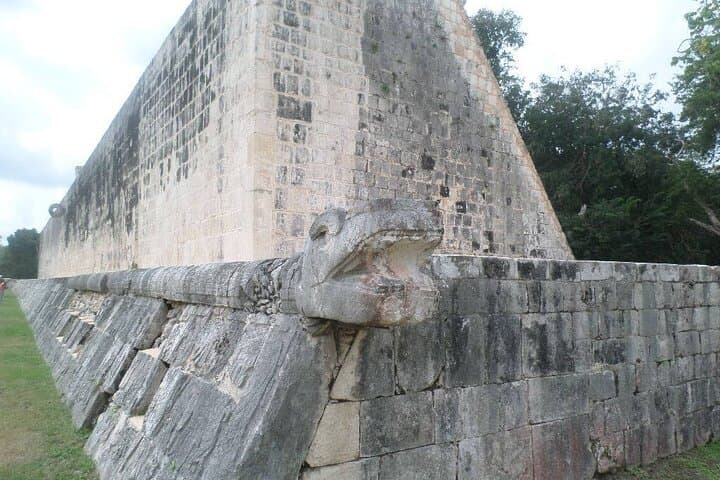

You arrive before midday under a flat Yucatán sky; wind moves through the dry forest and the stone faces of Chichén Itzá loom with patient geometry. Guided steps bring the plaza to life—shadows crawling down the flanks of El Castillo, the stair edges humming with the preserved trick of sound that turns applause into a bird-call.
You arrive before midday under a flat Yucatán sky; wind moves through the dry forest and the stone faces of Chichén Itzá loom with patient geometry. Guided steps bring the plaza to life—shadows crawling down the flanks of El Castillo, the stair edges humming with the preserved trick of sound that turns applause into a bird-call.
Built over centuries, Chichén Itzá mixes Classic Maya foundations and later Postclassic Toltec influence: the stepped pyramid of Kukulcán, the Great Ball Court, and the Observatory each mark shifts in power, astronomy and ritual. The limestone bedrock of the peninsula dissolved into sinkholes long before the Maya carved plazas around them; nearby cenotes like Saamal are natural wells where fresh groundwater gathers, offering sudden blue calm.
Valladolid’s colonial grid and the white stone convent of San Bernardino remind visitors that conquest, faith and trade layered new identities onto ancient places. Local vendors sell handwoven hammocks and slow-cooked cochinita; the region still breathes traditional crafts and rhythms.
Practical notes: expect a full day—roughly 11–12 hours door-to-door from Playa del Carmen—bring sun protection, a refillable water bottle and swimwear for a 45-minute cenote stop. The guided portion of Chichén Itzá typically lasts about two hours; wear sturdy, comfortable shoes and carry cash for the preservation fee and small purchases. Photography is allowed but avoid climbing monuments and follow the guide’s route. Timed correctly, the return leg happens as the light softens—an exhausted, satisfied reentry into coastal hotels after a day spent between stone, water and history.