THE ADVENTURE COLLECTIVE® · Independent discovery and booking for outdoor travel

Experience Chichén Itzá, swim in a nearby cenote, and stroll a colonial town on a full-day guided tour from Cancún. This long, interpretive day pairs archaeology with geology and local flavor—bring water and biodegradable sunscreen.
Experience Chichén Itzá, swim in a nearby cenote, and stroll a colonial town on a full-day guided tour from Cancún. This long, interpretive day pairs archaeology with geology and local flavor—bring water and biodegradable sunscreen.
You step out of the air-conditioned van into a plaza where stone geometry still measures the sun. The Kukulkan pyramid rises ahead, its stepped faces throwing sharp light and shadow; tourists cluster at the base while a breeze threads through the dry scrub and limestone outcrops. The day moves from archaeological drama to quiet water — a cenote’s blue opening offers cool relief from the Yucatán heat — and finishes with the painted facades and market chatter of a colonial town.
Verified experiences and guided adventures in the surrounding area.
Operated by Coba Tulum Tour Operator · Valladolid, Yucatán
You step out of the air-conditioned van into a plaza where stone geometry still measures the sun. The Kukulkan pyramid rises ahead, its stepped faces throwing sharp light and shadow; tourists cluster at the base while a breeze threads through the dry scrub and limestone outcrops. The day moves from archaeological drama to quiet water — a cenote’s blue opening offers cool relief from the Yucatán heat — and finishes with the painted facades and market chatter of a colonial town.
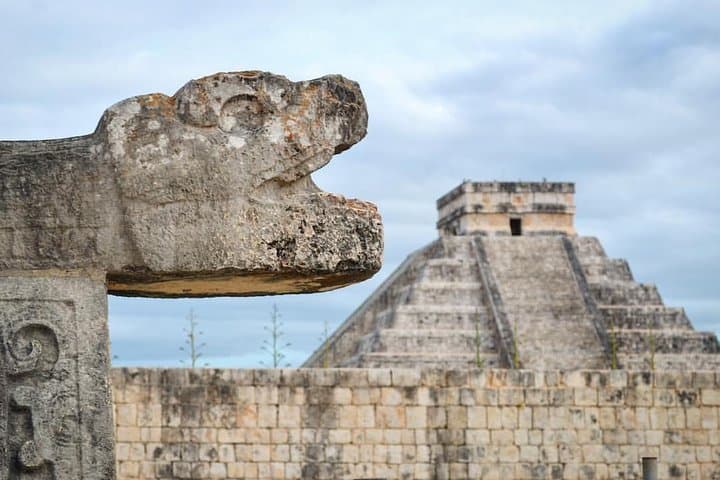
Chichén Itzá was a major Late Classic–Early Postclassic Maya city whose architecture encodes astronomy and ritual: the feathered serpent descends the pyramid at equinox, and the Ball Court walls recount ceremonial life. Geologically the region is porous limestone — the karst beneath the surface contains the cenotes that sustained Maya settlements for centuries and now invite swimmers into clear, mineral-rich pools.
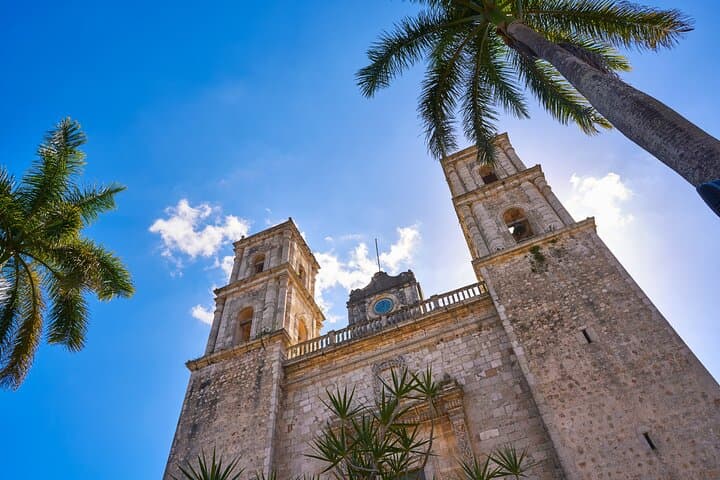
Culturally, expect a mix of living Mayan traditions and Spanish-colonial influences, visible in Valladolid’s convent and local markets. Guides explain iconography, chronology and daily life while certified guides and an included regional buffet lunch round out the logistics.
Practical guidance: this is a long day (about 10–12 hours) with mostly flat walking but exposed sun. Bring biodegradable sunscreen, plenty of water, sturdy shoes for uneven stone, and a swimsuit and towel for the cenote. Morning departures are best to beat midday heat and crowds; follow signage and staff instructions—climbing the main pyramid is prohibited. The tour suits travelers comfortable with a full-day pace who want a compact, interpreted look at Maya history and Yucatán’s karst landscapes.
moderate.
10–12 hours.
Suitable for travelers who can walk several hours and tolerate heat; low technical demand but long day.
Yes — the tour includes admission to Chichén Itzá and to the designated cenote (Noolha or Chichikan), per availability.
The full-day tour runs about 10–12 hours with roughly 2 hours at Chichén Itzá and additional walking at the cenote and Valladolid; expect several kilometers of walking on flat but uneven surfaces.
Yes — the tour includes a regional buffet lunch and transportation in an air-conditioned vehicle with hotel pickup available as part of the booking process.
The tour is labeled easy to moderate but is not recommended for guests with serious spinal, heart conditions, or pregnant travelers due to long travel and some uneven walking; check provider details when booking.
Chichén Itzá was a major Maya city; its architecture aligns with astronomical events and reflects Late Classic to Early Postclassic developments in Yucatán.
Visitors are asked to use biodegradable products and avoid touching formations; guided groups help manage wear on sensitive ruins and cenote ecosystems.
Coba Tulum Tour Operator operates guided outdoor trips and adventures with an emphasis on safety, stewardship, and memorable experiences.
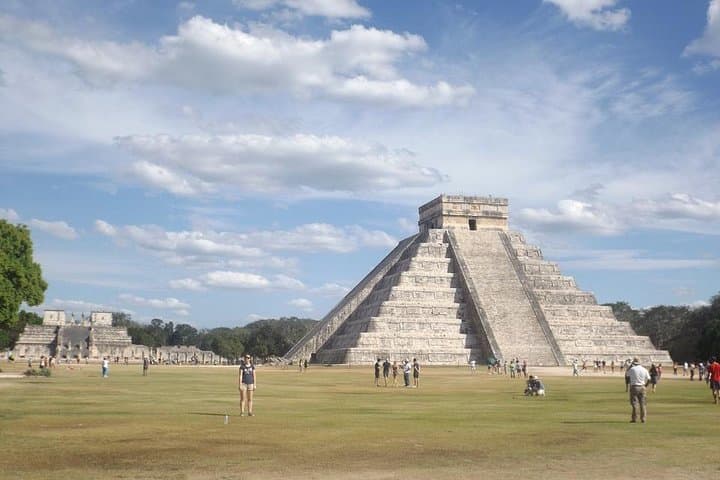
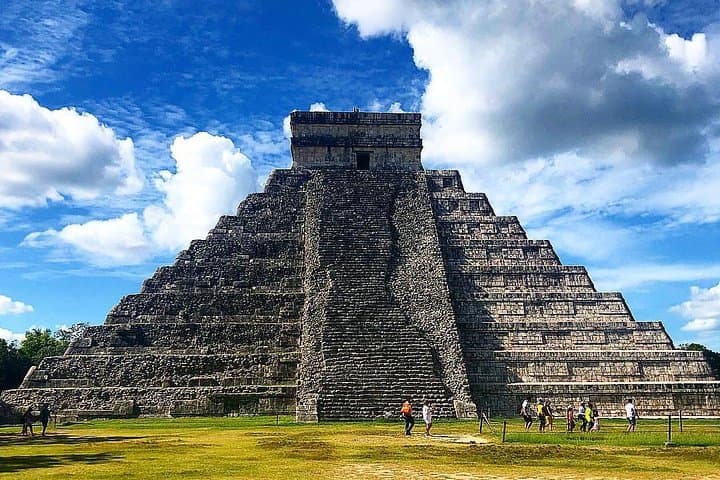
You step out of the air-conditioned van into a plaza where stone geometry still measures the sun. The Kukulkan pyramid rises ahead, its stepped faces throwing sharp light and shadow; tourists cluster at the base while a breeze threads through the dry scrub and limestone outcrops. The day moves from archaeological drama to quiet water — a cenote’s blue opening offers cool relief from the Yucatán heat — and finishes with the painted facades and market chatter of a colonial town.
You step out of the air-conditioned van into a plaza where stone geometry still measures the sun. The Kukulkan pyramid rises ahead, its stepped faces throwing sharp light and shadow; tourists cluster at the base while a breeze threads through the dry scrub and limestone outcrops. The day moves from archaeological drama to quiet water — a cenote’s blue opening offers cool relief from the Yucatán heat — and finishes with the painted facades and market chatter of a colonial town.
Chichén Itzá was a major Late Classic–Early Postclassic Maya city whose architecture encodes astronomy and ritual: the feathered serpent descends the pyramid at equinox, and the Ball Court walls recount ceremonial life. Geologically the region is porous limestone — the karst beneath the surface contains the cenotes that sustained Maya settlements for centuries and now invite swimmers into clear, mineral-rich pools.
Culturally, expect a mix of living Mayan traditions and Spanish-colonial influences, visible in Valladolid’s convent and local markets. Guides explain iconography, chronology and daily life while certified guides and an included regional buffet lunch round out the logistics.
Practical guidance: this is a long day (about 10–12 hours) with mostly flat walking but exposed sun. Bring biodegradable sunscreen, plenty of water, sturdy shoes for uneven stone, and a swimsuit and towel for the cenote. Morning departures are best to beat midday heat and crowds; follow signage and staff instructions—climbing the main pyramid is prohibited. The tour suits travelers comfortable with a full-day pace who want a compact, interpreted look at Maya history and Yucatán’s karst landscapes.