THE ADVENTURE COLLECTIVE® · Independent discovery and booking for outdoor travel

See a New Seven Wonder, float in a jungle-fed cenote and walk Valladolid’s colonial plaza in one long, satisfying day from Cancun. This guided trip blends Mayan architecture, karst geology and regional flavors for travelers seeking history and a cool swim.
See a New Seven Wonder, float in a jungle-fed cenote and walk Valladolid’s colonial plaza in one long, satisfying day from Cancun. This guided trip blends Mayan architecture, karst geology and regional flavors for travelers seeking history and a cool swim.
The morning light hits El Castillo with a low, hard angle; the limestone faces throw sharp shadows and the plaza hums as guides point out stone carvings that still line ancient causeways.
Verified experiences and guided adventures in the surrounding area.
Operated by TrevoTour Travels · Chichén Itzá, Yucatán
The morning light hits El Castillo with a low, hard angle; the limestone faces throw sharp shadows and the plaza hums as guides point out stone carvings that still line ancient causeways.
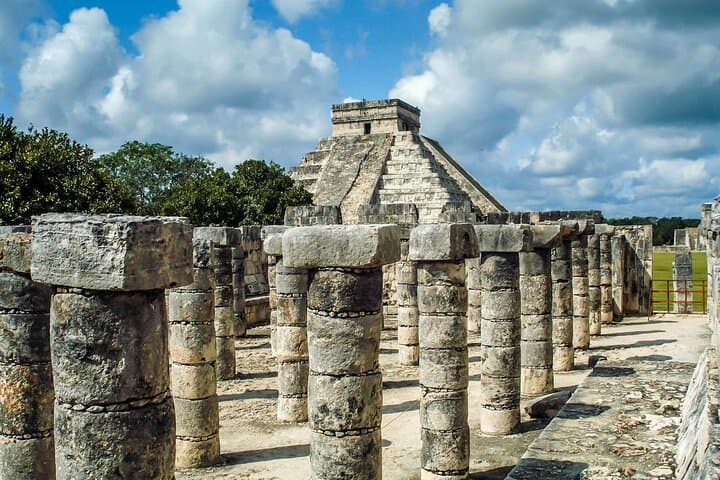
This full-day loop pairs the scale of Chichén Itzá — the Maya center famed for the Kukulcán pyramid, the Great Ball Court and astronomical alignments — with the intimate geology of a cenote and the colonial pulse of Valladolid. Geologically the Yucatán is a flat karst plain; sinkholes expose an underworld of freshwater that people have used for millennia. Culturally, the route threads pre-Columbian engineering with Spanish-era town planning: Valladolid’s Plaza Francisco Cantón and the Templo de San Servacio show 16th-century influence beside living markets and regional cuisine.
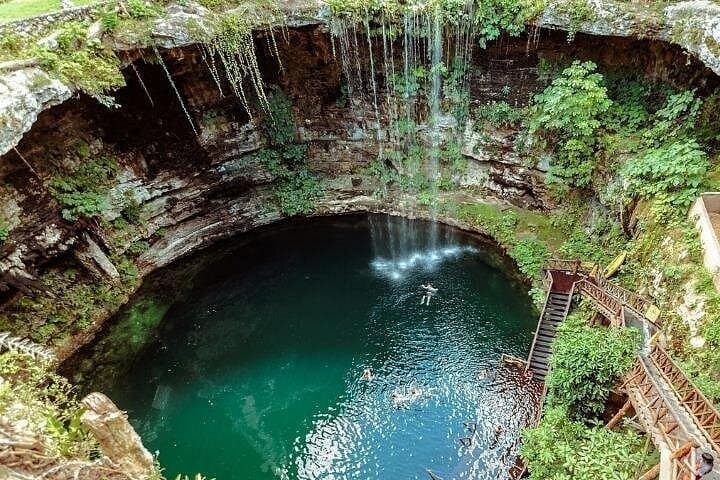
Expect guided history stops at major monuments, a refreshing swim at Cenote Chichikán in clear, cool water, and a short stroll through Valladolid’s pastel streets with a tequila tasting that highlights local agave traditions. Transportation from Cancun adds 2–3 hours round trip; the day runs about 11–12 hours total with moderate walking on uneven surfaces and many stairs.
Practical edge: start early to beat the heat and crowds, bring reef-safe sunscreen, a refillable water bottle, light layers and a towel for the cenote. Cash helps for small vendors and restroom fees. The tour suits travelers who want a compact cultural-and-nature day that balances archaeology, geology and small-town flavors without backcountry skills.
easy.
11–12 hours.
Moderate stamina for walking and stairs across archaeological sites and short town strolls; not strenuous but expect a full day.
Cenote admission is listed as included; confirm with the operator whether Chichén Itzá entry and any museum fees are covered when you book.
Expect roughly 2–2.5 hours each way depending on traffic and pick-up location, making this an 11–12 hour day tour.
The tour is family-friendly for most children, but infants must sit on laps; it is not recommended for pregnant travelers per operator guidance.
Yes — many cenotes have shallow ledges for wading; bring a life vest if concerned and ask staff about safety options.
Chichén Itzá was a major Lowland Maya city (circa 600–1200 CE) whose architecture encodes astronomical and calendrical knowledge; Valladolid preserves colonial-era urban planning after Spanish settlement in the 16th century.
Cenote ecosystems are sensitive; use biodegradable sunscreen, avoid soaps in the water, and follow paths to limit erosion and protect freshwater resources.
TrevoTour Travels operates guided outdoor trips and adventures with an emphasis on safety, stewardship, and memorable experiences.
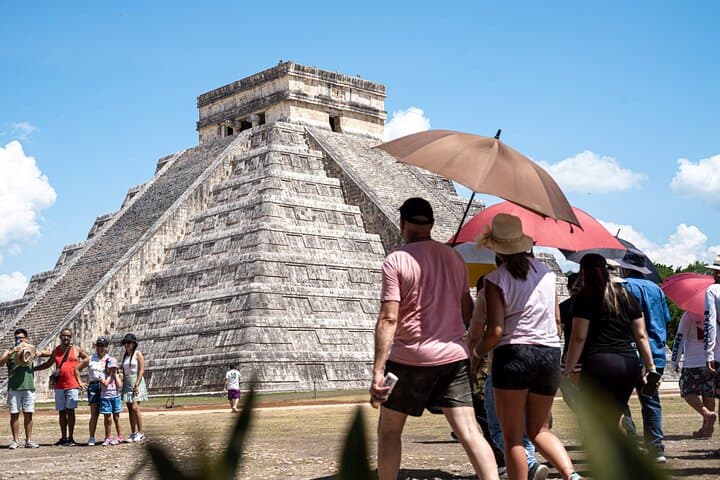
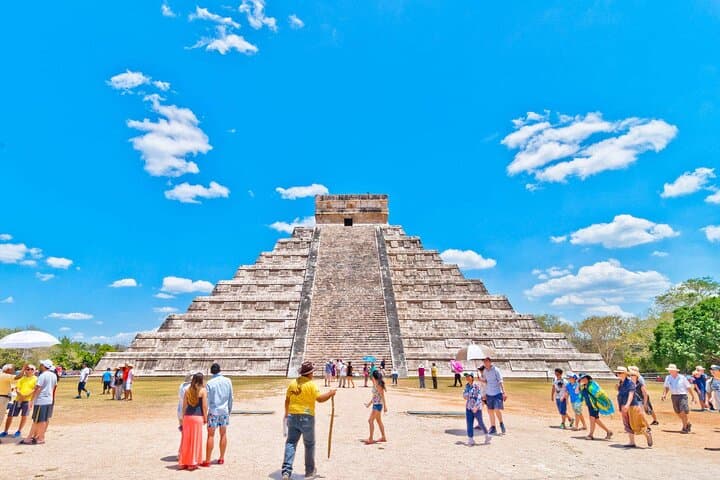
The morning light hits El Castillo with a low, hard angle; the limestone faces throw sharp shadows and the plaza hums as guides point out stone carvings that still line ancient causeways.
The morning light hits El Castillo with a low, hard angle; the limestone faces throw sharp shadows and the plaza hums as guides point out stone carvings that still line ancient causeways.
This full-day loop pairs the scale of Chichén Itzá — the Maya center famed for the Kukulcán pyramid, the Great Ball Court and astronomical alignments — with the intimate geology of a cenote and the colonial pulse of Valladolid. Geologically the Yucatán is a flat karst plain; sinkholes expose an underworld of freshwater that people have used for millennia. Culturally, the route threads pre-Columbian engineering with Spanish-era town planning: Valladolid’s Plaza Francisco Cantón and the Templo de San Servacio show 16th-century influence beside living markets and regional cuisine.
Expect guided history stops at major monuments, a refreshing swim at Cenote Chichikán in clear, cool water, and a short stroll through Valladolid’s pastel streets with a tequila tasting that highlights local agave traditions. Transportation from Cancun adds 2–3 hours round trip; the day runs about 11–12 hours total with moderate walking on uneven surfaces and many stairs.
Practical edge: start early to beat the heat and crowds, bring reef-safe sunscreen, a refillable water bottle, light layers and a towel for the cenote. Cash helps for small vendors and restroom fees. The tour suits travelers who want a compact cultural-and-nature day that balances archaeology, geology and small-town flavors without backcountry skills.