THE ADVENTURE COLLECTIVE® · Independent discovery and booking for outdoor travel

A full-day cultural and nature outing that pairs a guided visit to Chichén Itzá with a refreshing cenote swim and lunch in Valladolid. Expect a long but accessible day: archaeological explanations, a swim window, buffet lunch and time to explore.
A full-day cultural and nature outing that pairs a guided visit to Chichén Itzá with a refreshing cenote swim and lunch in Valladolid. Expect a long but accessible day: archaeological explanations, a swim window, buffet lunch and time to explore.
You step off the air-conditioned van into a sweep of sun and stone: the shadowed steps of El Castillo rise like a calendar in three dimensions, the wind carrying the dry scent of low scrub and the distant chatter of tourists. The pyramid seems to watch the sky, its angles tuned to equinox light, while nearby a cenote holds water so blue it appears to be holding the horizon.
Verified experiences and guided adventures in the surrounding area.
Operated by Encuentro T · Chichen Itza, Yucatán
You step off the air-conditioned van into a sweep of sun and stone: the shadowed steps of El Castillo rise like a calendar in three dimensions, the wind carrying the dry scent of low scrub and the distant chatter of tourists. The pyramid seems to watch the sky, its angles tuned to equinox light, while nearby a cenote holds water so blue it appears to be holding the horizon.
This is the Yucatán’s core—Maya cities built on limestone karst where cenotes formed when the bedrock collapsed and rainwater carved underground rivers. Chichén Itzá grew here as a political and astronomical hub: the Kukulcán pyramid marks solar events; the Great Ball Court echoes ritual sport and power. Valladolid adds colonial-era color—its pastel facades and convents reflect Spanish-era reorganization of indigenous landscapes.
On a full-day tour travelers typically pair a guided visit of Chichén Itzá with a swim in a nearby open cenote and a buffet lunch featuring regional staples such as cochinita pibil. Expect guided interpretations at major structures, a one-hour unguided window for photography and exploration, and a timed swim (often 25–40 minutes) at a cenote that may vary by availability.
Practicalities: this is a long day (often 14–15 hours) with significant sun exposure—bring sun protection, comfortable walking shoes, and a refillable water bottle. Bathrooms and shade are limited at the archaeological site; plan timing for photos in the softer light of morning or late afternoon. Respect site rules, avoid climbing ruins, and budget extra cash for tips and local handicrafts.
easy.
14–15 hours.
Suitable for most fitness levels but requires stamina for a long day on your feet and some short uneven walking sections
Tours usually last about 14–15 hours; exact pickup times vary by operator and pickup point, typically early morning from Cancún or hotel zones.
A cenote swim is included; time at the cenote is typically 25–40 minutes though the exact cenote can change due to availability.
Yes—entrance fees are included with this ticket; the itinerary also includes a certified guide at the archaeological site.
Children are welcome but must be accompanied by an adult; the site has uneven terrain and many steps, so it’s not ideal for travelers with serious mobility or spinal issues.
Chichén Itzá was a major Maya city known for astronomical architecture; El Castillo functions as a solar calendar aligning with equinox light and shadow patterns.
Visitor impact is managed through restricted access to many structures and limits on climbing; respect signage, avoid single-use plastics, and use established paths to reduce erosion and cenote contamination.
Encuentro T operates guided outdoor trips and adventures with an emphasis on safety, stewardship, and memorable experiences.
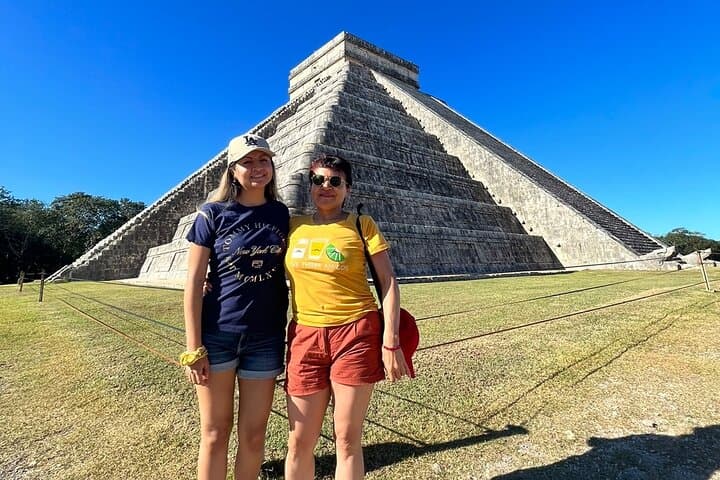
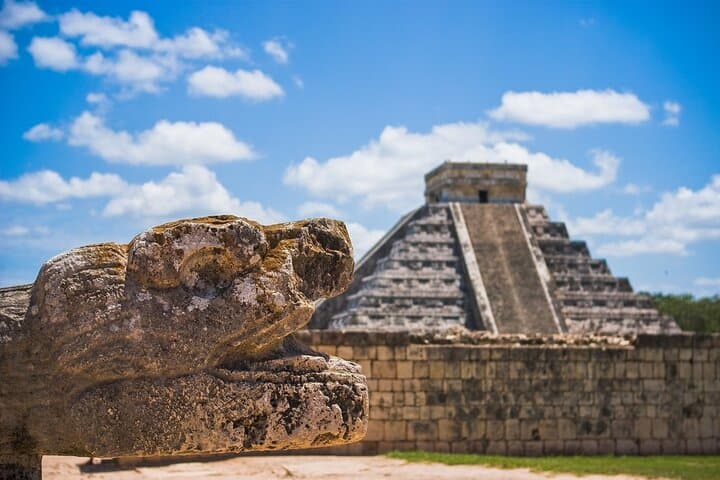
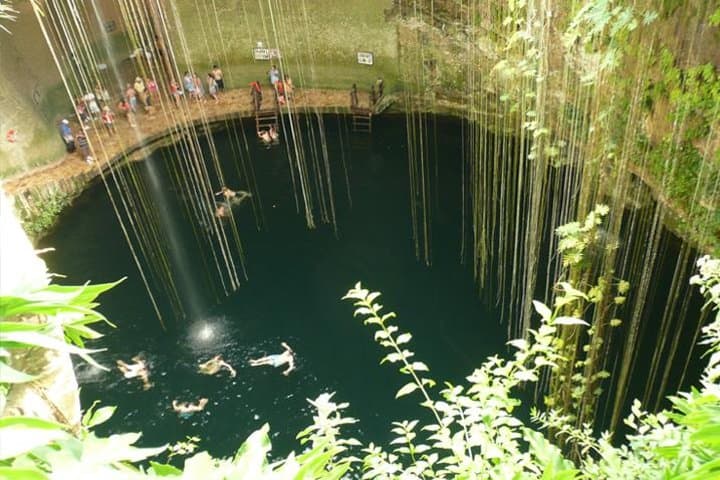

You step off the air-conditioned van into a sweep of sun and stone: the shadowed steps of El Castillo rise like a calendar in three dimensions, the wind carrying the dry scent of low scrub and the distant chatter of tourists. The pyramid seems to watch the sky, its angles tuned to equinox light, while nearby a cenote holds water so blue it appears to be holding the horizon.
You step off the air-conditioned van into a sweep of sun and stone: the shadowed steps of El Castillo rise like a calendar in three dimensions, the wind carrying the dry scent of low scrub and the distant chatter of tourists. The pyramid seems to watch the sky, its angles tuned to equinox light, while nearby a cenote holds water so blue it appears to be holding the horizon.
This is the Yucatán’s core—Maya cities built on limestone karst where cenotes formed when the bedrock collapsed and rainwater carved underground rivers. Chichén Itzá grew here as a political and astronomical hub: the Kukulcán pyramid marks solar events; the Great Ball Court echoes ritual sport and power. Valladolid adds colonial-era color—its pastel facades and convents reflect Spanish-era reorganization of indigenous landscapes.
On a full-day tour travelers typically pair a guided visit of Chichén Itzá with a swim in a nearby open cenote and a buffet lunch featuring regional staples such as cochinita pibil. Expect guided interpretations at major structures, a one-hour unguided window for photography and exploration, and a timed swim (often 25–40 minutes) at a cenote that may vary by availability.
Practicalities: this is a long day (often 14–15 hours) with significant sun exposure—bring sun protection, comfortable walking shoes, and a refillable water bottle. Bathrooms and shade are limited at the archaeological site; plan timing for photos in the softer light of morning or late afternoon. Respect site rules, avoid climbing ruins, and budget extra cash for tips and local handicrafts.