THE ADVENTURE COLLECTIVE® · Independent discovery and booking for outdoor travel

Spend a long day from Tulum exploring Chichén Itzá’s pyramids, swimming in clear cenotes, and wandering colonial Valladolid. This guided tour pairs archaeological insight with hands-on time at two iconic sinkholes.
Spend a long day from Tulum exploring Chichén Itzá’s pyramids, swimming in clear cenotes, and wandering colonial Valladolid. This guided tour pairs archaeological insight with hands-on time at two iconic sinkholes.
You step onto the air-conditioned bus in Tulum before dawn, the highway unspooling through low limestone scrub as the driver pushes inland toward one of the Yucatán’s most recognizable skylines: El Castillo rising sharp against a cobalt morning.
Verified experiences and guided adventures in the surrounding area.
Operated by Only Vacations & Tours · Pisté, Yucatán
You step onto the air-conditioned bus in Tulum before dawn, the highway unspooling through low limestone scrub as the driver pushes inland toward one of the Yucatán’s most recognizable skylines: El Castillo rising sharp against a cobalt morning.
At Chichén Itzá the guide moves with practiced cadence — pointing out the angular shadow-play on the pyramid, the acoustics of the Great Ball Court, and the carved columns of the Temple of the Warriors. The site’s stones hold layers of Maya politics, astronomical practice, and ritual life; the layout matches cycles of the sun and seasons, and the plaza still hums faintly with that legacy.
Geology and water are part of the story here: cenotes like Ik Kil and Suytun are collapse sinkholes in porous limestone that expose groundwater — cold, clear, and culturally sacred to generations of Maya people. You’ll have time to swim under light shafts or float with a life jacket, aware that these pools are both geological windows and fragile ecosystems.
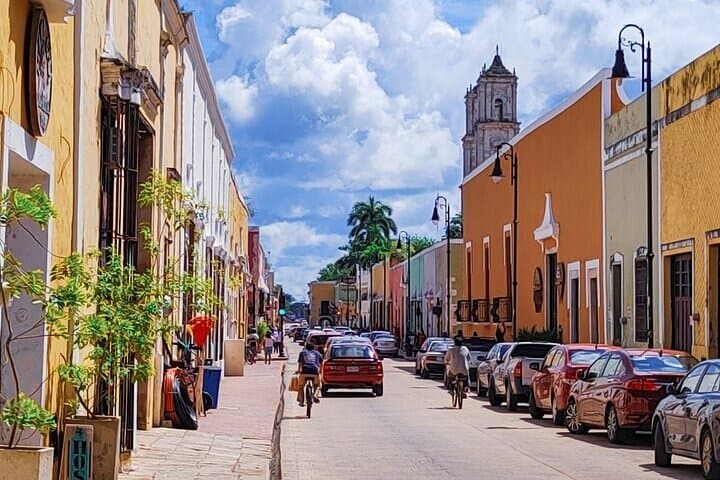
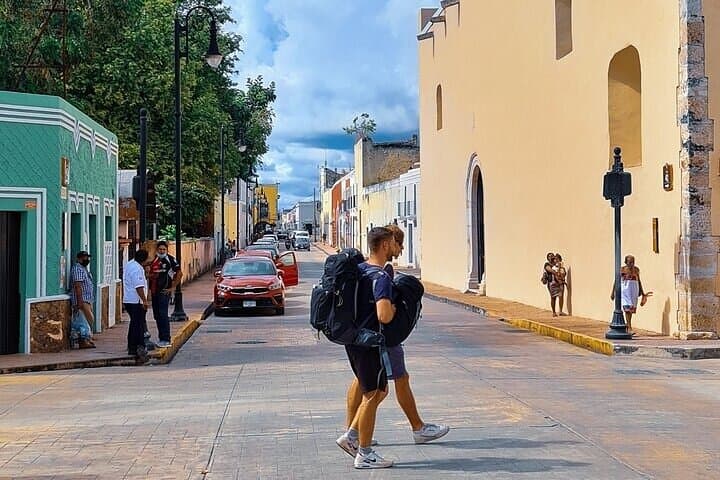
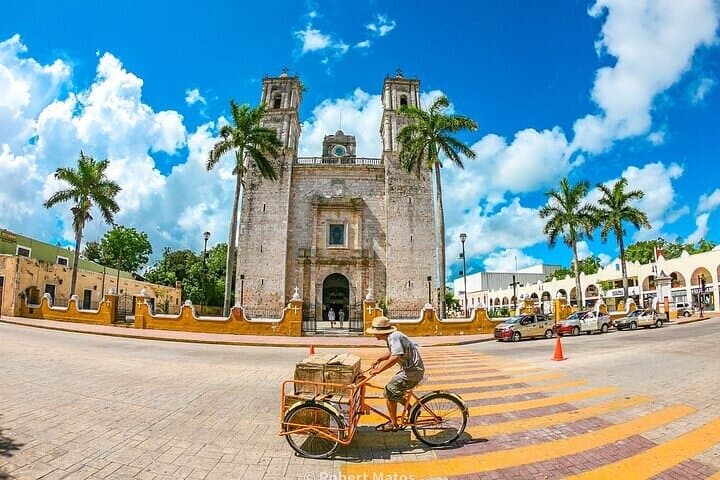
The day finishes in Valladolid, where Spanish colonial architecture and a slower pace offer a readable contrast to the ruins: a whitewashed church, a bustling market, street food stalls dishing out cochinita and marquesitas.
Practical notes: this is a long (≈12-hour) day with considerable walking and some steep steps at the archaeological site; bring a swimsuit, towel, biodegradable sunscreen, cash for lockers and rentals, and a light layer for the air-conditioned return. Start early, hydrate often, and respect restricted areas at the ruins — photography is fine but climbing the pyramid is not.
moderate.
12 hours.
Low-to-moderate fitness: expect several miles of walking on packed dirt and stone, standing through a 1–1.5 hour guided section and climbing staircases that are steep but short.
No; climbing the main pyramid is prohibited for preservation and safety reasons — you can photograph and walk the site but not ascend the structure.
Yes; cenotes visited on organized tours are monitored and life jackets are mandatory due to slippery access and depth — follow guides’ instructions.
The full-day tour is about 12 hours and typically includes round-trip transport from Tulum, a light breakfast, entrance fees, buffet lunch, guided time at Chichén Itzá, and supervised swims at two cenotes (some rentals and lockers may cost extra).
Children can participate but infants must sit on laps; the tour involves walking and stairs and is not recommended for people with spinal, heart, or pregnancy restrictions per operator notes.
Chichén Itzá was a major late-classic to post-classic Maya center combining Puuc and Toltec influences; many structures align with astronomical events like equinox shadow serpents.
Cenotes are fragile freshwater systems; visitors should use biodegradable products, avoid touching rock formations, and follow local rules to minimize pollution and disturbance.
Only Vacations & Tours operates guided outdoor trips and adventures with an emphasis on safety, stewardship, and memorable experiences.
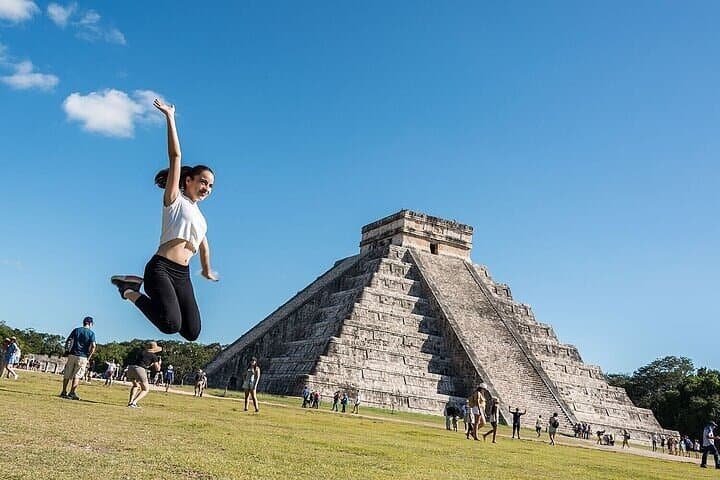
You step onto the air-conditioned bus in Tulum before dawn, the highway unspooling through low limestone scrub as the driver pushes inland toward one of the Yucatán’s most recognizable skylines: El Castillo rising sharp against a cobalt morning.
You step onto the air-conditioned bus in Tulum before dawn, the highway unspooling through low limestone scrub as the driver pushes inland toward one of the Yucatán’s most recognizable skylines: El Castillo rising sharp against a cobalt morning.
At Chichén Itzá the guide moves with practiced cadence — pointing out the angular shadow-play on the pyramid, the acoustics of the Great Ball Court, and the carved columns of the Temple of the Warriors. The site’s stones hold layers of Maya politics, astronomical practice, and ritual life; the layout matches cycles of the sun and seasons, and the plaza still hums faintly with that legacy.
Geology and water are part of the story here: cenotes like Ik Kil and Suytun are collapse sinkholes in porous limestone that expose groundwater — cold, clear, and culturally sacred to generations of Maya people. You’ll have time to swim under light shafts or float with a life jacket, aware that these pools are both geological windows and fragile ecosystems.
The day finishes in Valladolid, where Spanish colonial architecture and a slower pace offer a readable contrast to the ruins: a whitewashed church, a bustling market, street food stalls dishing out cochinita and marquesitas.
Practical notes: this is a long (≈12-hour) day with considerable walking and some steep steps at the archaeological site; bring a swimsuit, towel, biodegradable sunscreen, cash for lockers and rentals, and a light layer for the air-conditioned return. Start early, hydrate often, and respect restricted areas at the ruins — photography is fine but climbing the pyramid is not.