THE ADVENTURE COLLECTIVE® · Independent discovery and booking for outdoor travel

Catch spring at its most cinematic: three days that move from Chicago to Washington, D.C., timed for the National Cherry Blossom Festival. Walk the Tidal Basin and Hains Point Loop, visit the memorials, and learn the history behind the 1912 gift of trees from Tokyo.
Catch spring at its most cinematic: three days that move from Chicago to Washington, D.C., timed for the National Cherry Blossom Festival. Walk the Tidal Basin and Hains Point Loop, visit the memorials, and learn the history behind the 1912 gift of trees from Tokyo.
You step off the coach into March air that tastes faintly of river and cold stone. The Tidal Basin is a ribbon of pale pink and white, branches bowing toward the water as if to admire themselves. Tour guides call the blooms a short, electric season — a week or two where the city’s monumental architecture becomes a frame for the trees Tokyo gifted in 1912.
Verified experiences and guided adventures in the surrounding area.
Operated by Jupiter Legend Corporation · Washington, DC
You step off the coach into March air that tastes faintly of river and cold stone. The Tidal Basin is a ribbon of pale pink and white, branches bowing toward the water as if to admire themselves. Tour guides call the blooms a short, electric season — a week or two where the city’s monumental architecture becomes a frame for the trees Tokyo gifted in 1912.
This three-day itinerary moves fast without feeling rushed. From an early departure in Chicago the route threads through Pittsburgh’s steel-era vistas before arriving in the capital for a day devoted to spring’s most theatrical showstopper: the National Cherry Blossom Festival. The program stitches together the Jefferson Memorial’s classical curve, the reflective surface of the Lincoln Memorial pool, and the quieter, under-visited loop at Hains Point, where a 4.4-mile trail circles a man-made stretch of parkland and offers broad river views.
Geology here is urban but revealing: the Potomac’s floodplain and the dredged land of East Potomac Park remind you how much of Washington is engineered — islands and channels created to tame tides and craft scenic promenades. Culturally the cherry trees are both diplomatic gift and civic ritual: their annual bloom has become a marker of international friendship and local pride, drawing crowds and parades while also spotlighting changing climate patterns that alter bloom timing.
Practical guidance keeps the poetry useful. Expect a lot of walking on paved or crushed-stone paths; the day’s core sightseeing blocks are short stopovers at major monuments, with a longer optional walking segment along Hains Point. Timing is everything: arrive at the Tidal Basin at first light to avoid crowds and capture reflections on glass-calm water. Bring layers — mornings can be sharp, afternoons pleasantly warm — and a waterproof shell if the forecast looks unsettled.
Logistics: the tour includes two hotel nights and breakfasts, with an optional in-depth East Potomac Park walk. The operator handles transit between cities, but plan airport or city transfers independently. For festival planning, monitor the National Cherry Blossom Festival dates (typically mid-March to mid-April) and check bloom forecasts: peak bloom can shift a week either way.
Final note: treat the blossoms both as spectacle and living heritage — stay on paths, avoid picking, and carry out trash. The trees ask only for simple respect; in return they offer one of the country’s most concentrated, photographic bursts of spring.
easy.
3 days.
Suitable for most fitness levels; be prepared for several hours of walking and short periods of standing.
Peak bloom usually falls between late March and early April, but timing varies by year—monitor the National Cherry Blossom Festival’s peak bloom predictions before you travel.
Most stops are exterior visits at the Lincoln Memorial, U.S. Capitol, and White House viewpoints; specific museum admissions are not included unless noted as optional.
No — Hains Point is a mostly flat, 4.4-mile paved loop suitable for walkers, joggers, and casual cyclists; the optional in-depth walk is gentle but long.
Yes — hotels provide breakfast, and public facilities are available near major memorials, though lines can form during peak festival days; bring snacks for in-between stops.
Infants and small children can be accommodated; strollers are allowed but be aware of crowded paths around the Tidal Basin.
The operator notes that bloom timing varies and may affect viewing—no refunds are offered for natural variance, so flexible travel dates are recommended.
The National Cherry Blossom Festival commemorates the 1912 gift of 3,000 cherry trees from Tokyo to Washington, a gesture of diplomacy that has become an annual civic event.
High foot traffic stresses tree roots and parklands; stick to designated paths, minimize single-use plastics, and respect signage to protect the trees and shoreline habitat.
Jupiter Legend Corporation operates guided outdoor trips and adventures with an emphasis on safety, stewardship, and memorable experiences.
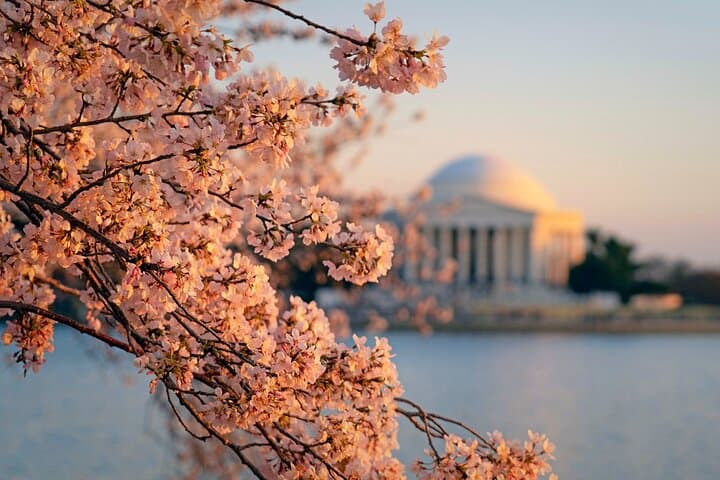

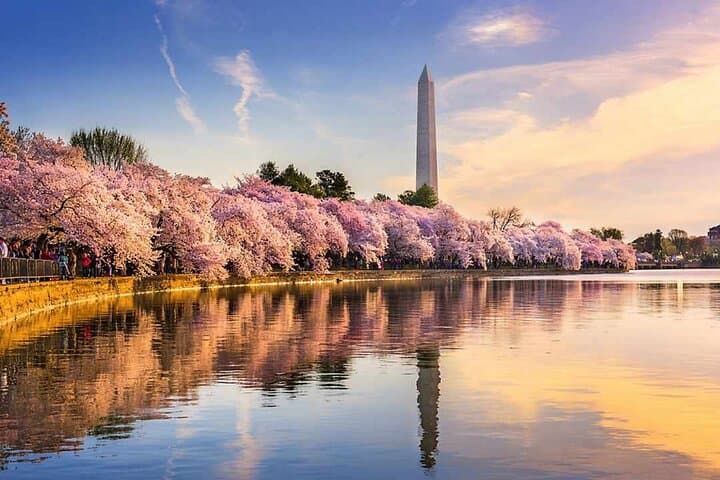
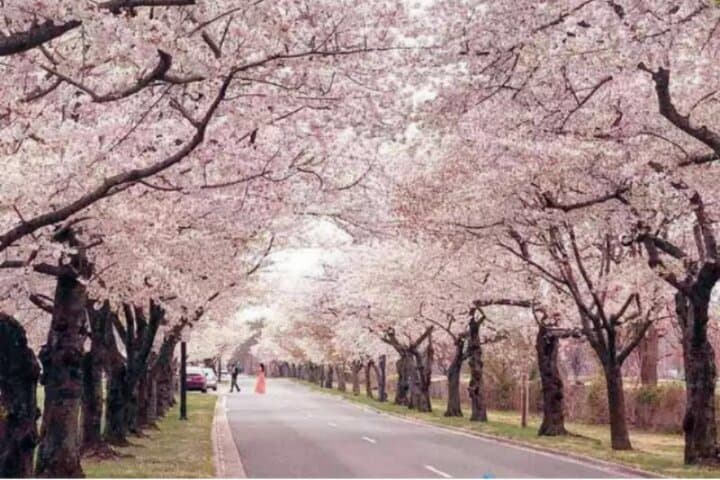
You step off the coach into March air that tastes faintly of river and cold stone. The Tidal Basin is a ribbon of pale pink and white, branches bowing toward the water as if to admire themselves. Tour guides call the blooms a short, electric season — a week or two where the city’s monumental architecture becomes a frame for the trees Tokyo gifted in 1912.
You step off the coach into March air that tastes faintly of river and cold stone. The Tidal Basin is a ribbon of pale pink and white, branches bowing toward the water as if to admire themselves. Tour guides call the blooms a short, electric season — a week or two where the city’s monumental architecture becomes a frame for the trees Tokyo gifted in 1912.
This three-day itinerary moves fast without feeling rushed. From an early departure in Chicago the route threads through Pittsburgh’s steel-era vistas before arriving in the capital for a day devoted to spring’s most theatrical showstopper: the National Cherry Blossom Festival. The program stitches together the Jefferson Memorial’s classical curve, the reflective surface of the Lincoln Memorial pool, and the quieter, under-visited loop at Hains Point, where a 4.4-mile trail circles a man-made stretch of parkland and offers broad river views.
Geology here is urban but revealing: the Potomac’s floodplain and the dredged land of East Potomac Park remind you how much of Washington is engineered — islands and channels created to tame tides and craft scenic promenades. Culturally the cherry trees are both diplomatic gift and civic ritual: their annual bloom has become a marker of international friendship and local pride, drawing crowds and parades while also spotlighting changing climate patterns that alter bloom timing.
Practical guidance keeps the poetry useful. Expect a lot of walking on paved or crushed-stone paths; the day’s core sightseeing blocks are short stopovers at major monuments, with a longer optional walking segment along Hains Point. Timing is everything: arrive at the Tidal Basin at first light to avoid crowds and capture reflections on glass-calm water. Bring layers — mornings can be sharp, afternoons pleasantly warm — and a waterproof shell if the forecast looks unsettled.
Logistics: the tour includes two hotel nights and breakfasts, with an optional in-depth East Potomac Park walk. The operator handles transit between cities, but plan airport or city transfers independently. For festival planning, monitor the National Cherry Blossom Festival dates (typically mid-March to mid-April) and check bloom forecasts: peak bloom can shift a week either way.
Final note: treat the blossoms both as spectacle and living heritage — stay on paths, avoid picking, and carry out trash. The trees ask only for simple respect; in return they offer one of the country’s most concentrated, photographic bursts of spring.