THE ADVENTURE COLLECTIVE® · Independent discovery and booking for outdoor travel

Board a 90-minute guided cruise from the Michigan Avenue Bridge to see Chicago’s architectural evolution up close. Guides weave engineering, style and civic history into a concise riverfront tour suitable for all travelers.
Board a 90-minute guided cruise from the Michigan Avenue Bridge to see Chicago’s architectural evolution up close. Guides weave engineering, style and civic history into a concise riverfront tour suitable for all travelers.
The boat slips away from Wendella's dock beneath the Michigan Avenue (DuSable) Bridge and the city reshapes itself around you: low-slung warehouses give way to glass facades and ornate masonry, each building leaning into the river's curve as if to be seen.
Verified experiences and guided adventures in the surrounding area.
Operated by Wendella Tours & Cruises · Chicago, Illinois
The boat slips away from Wendella's dock beneath the Michigan Avenue (DuSable) Bridge and the city reshapes itself around you: low-slung warehouses give way to glass facades and ornate masonry, each building leaning into the river's curve as if to be seen.
The Chicago River tour condenses more than a century of urban change into 90 minutes. Guides trace the river’s engineered history — including the 1900 reversal that rerouted wastewater away from Lake Michigan — and point out Prairie School, Beaux-Arts, Art Deco and Modernist examples by designers who remade the skyline. You’ll pass the Wrigley Building’s white terra-cotta, the Tribune Tower’s Gothic fragments, Marina City’s corn-cob towers and the imposing Merchandise Mart, all framed by water that once powered industry and now mirrors glass and steel.
Culturally the river is central to Chicago’s public life: festivals, boat races and the annual dyeing of the river for St. Patrick’s Day. Geologically, the river follows glacial-era channels carved into fair-weather clay and filled by lake-level shifts long before the city’s architects arrived.
Practical guidance: arrive 30 minutes early to claim indoor or outdoor seating; tours run year-round with climate-controlled indoor cabins and onboard restrooms. Dress in layers — wind off the river chills faster than streets — and bring a camera with a wide lens for riverside façades. The cruise is accessible to most travelers, requires no special fitness, and is ideal for first-time visitors seeking a concentrated primer on Chicago’s built environment.
easy.
1.5 hours.
Suitable for all fitness levels; minimal mobility required for boarding
Departures are from Wendella’s docks at the northwest corner of the Michigan Avenue (DuSable) Bridge, at the foot of the Wrigley Building.
Contact the operator in advance—indoor cabins are level boarding on many boats, but assistance and accessibility accommodations should be confirmed.
Yes, professionally trained architectural guides provide live narration covering history, design and engineering highlights along the route.
Full refunds are available if you cancel at least 24 hours beforehand; the operator may also cancel or reschedule tours in severe weather.
The river’s flow was reversed in 1900 through an ambitious engineering project to protect Chicago’s drinking water—an act that reshaped the city’s growth and public health.
Recent riverfront projects focus on water quality and shoreline habitats; choose operators who follow no-discharge rules and support local conservation efforts.
Wendella Tours & Cruises operates guided outdoor trips and adventures with an emphasis on safety, stewardship, and memorable experiences.
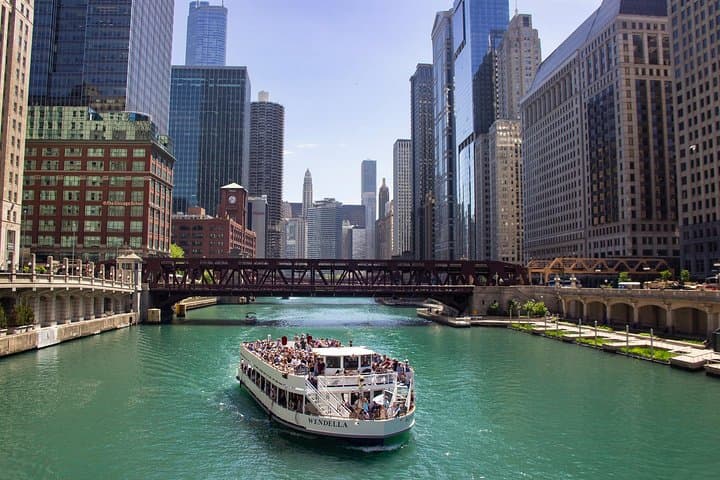
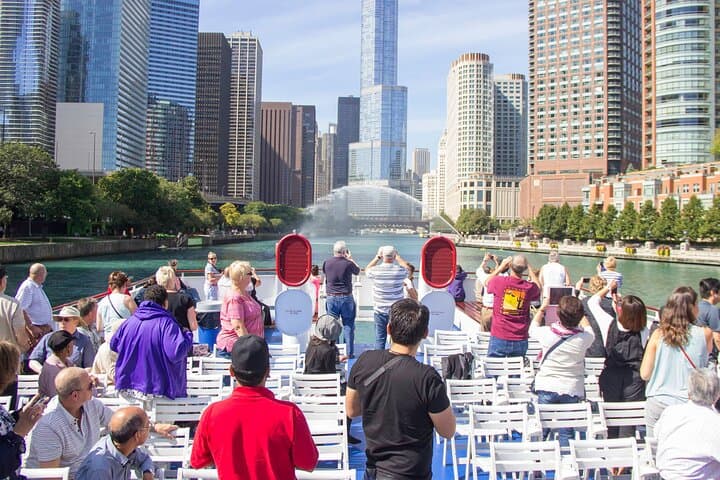
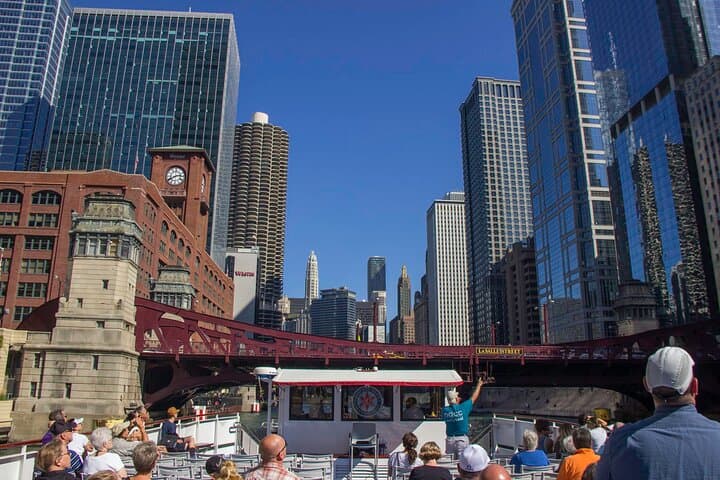
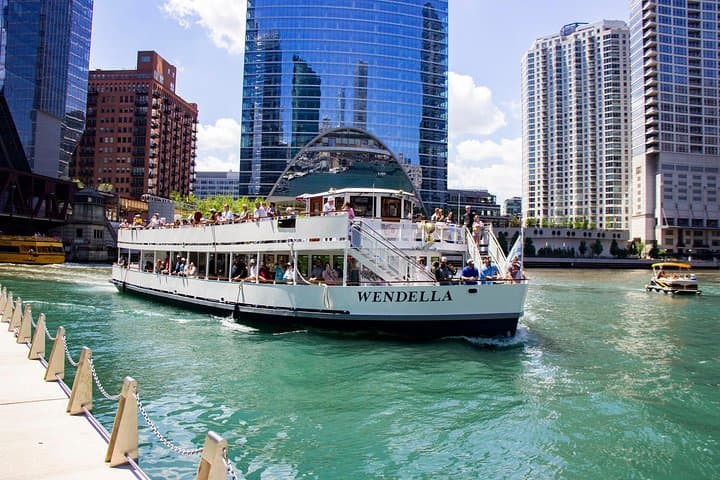
The boat slips away from Wendella's dock beneath the Michigan Avenue (DuSable) Bridge and the city reshapes itself around you: low-slung warehouses give way to glass facades and ornate masonry, each building leaning into the river's curve as if to be seen.
The boat slips away from Wendella's dock beneath the Michigan Avenue (DuSable) Bridge and the city reshapes itself around you: low-slung warehouses give way to glass facades and ornate masonry, each building leaning into the river's curve as if to be seen.
The Chicago River tour condenses more than a century of urban change into 90 minutes. Guides trace the river’s engineered history — including the 1900 reversal that rerouted wastewater away from Lake Michigan — and point out Prairie School, Beaux-Arts, Art Deco and Modernist examples by designers who remade the skyline. You’ll pass the Wrigley Building’s white terra-cotta, the Tribune Tower’s Gothic fragments, Marina City’s corn-cob towers and the imposing Merchandise Mart, all framed by water that once powered industry and now mirrors glass and steel.
Culturally the river is central to Chicago’s public life: festivals, boat races and the annual dyeing of the river for St. Patrick’s Day. Geologically, the river follows glacial-era channels carved into fair-weather clay and filled by lake-level shifts long before the city’s architects arrived.
Practical guidance: arrive 30 minutes early to claim indoor or outdoor seating; tours run year-round with climate-controlled indoor cabins and onboard restrooms. Dress in layers — wind off the river chills faster than streets — and bring a camera with a wide lens for riverside façades. The cruise is accessible to most travelers, requires no special fitness, and is ideal for first-time visitors seeking a concentrated primer on Chicago’s built environment.