THE ADVENTURE COLLECTIVE® · Independent discovery and booking for outdoor travel

Walk the Loop with a local guide and watch Chicago’s skyline and stories unfold — from gilded department-store interiors to the reflective sweep of Cloud Gate. This private 2-hour route covers the city’s architectural milestones and photo stops in Millennium Park.
Walk the Loop with a local guide and watch Chicago’s skyline and stories unfold — from gilded department-store interiors to the reflective sweep of Cloud Gate. This private 2-hour route covers the city’s architectural milestones and photo stops in Millennium Park.
You start under the glowing marquee of the Chicago Theatre, the city’s pulse delivered in the click and rumble of the elevated train above. The Loop unfolds around you — polished granite, cast-iron facades, and modern glass reflecting Lake Michigan’s light. A guide leads the way, carving narratives out of stone and steel as you move from the entertainment district to the open plaza of Millennium Park.
Verified experiences and guided adventures in the surrounding area.
Operated by Jarrett · Chicago, Illinois
You start under the glowing marquee of the Chicago Theatre, the city’s pulse delivered in the click and rumble of the elevated train above. The Loop unfolds around you — polished granite, cast-iron facades, and modern glass reflecting Lake Michigan’s light. A guide leads the way, carving narratives out of stone and steel as you move from the entertainment district to the open plaza of Millennium Park.
This walk traces Chicago’s rebirth after the 1871 Great Fire and its rise as the birthplace of the modern skyscraper. Expect stops at Marshall Field’s (now Macy’s) Tiffany dome, the Picasso sculpture in Daley Plaza, the structural innovations of Willis Tower, and the transformation of rail yards into Millennium Park — an urban reclamation project that reshaped the lakefront.
Geologically the Loop sits on glacially flattened plain at Lake Michigan’s edge; the soil and shoreline shaped where the city grew and how engineers anchored tall buildings. Culturally the Loop mixes civic pride (City Hall, the Art Institute lions) with the city’s commercial grit: a place where architecture tells class, craft, and controversy.
Practical details: the route is about 1.5–2 miles on paved sidewalks, mostly flat and wheelchair accessible; plan for roughly two hours with photo stops. Wear supportive walking shoes, carry water, and layer for lake-effect wind. Mornings and late afternoons bring softer light for photos; weekends are busier near Millennium Park. Bring a charged phone for photos and public transit fare if you’re connecting elsewhere. This is a compact urban adventure — easy on the legs but rich in stories.
easy.
2 hours.
Suitable for most fitness levels; participants should be able to walk 1.5–2 miles on flat surfaces.
The tour runs about two hours and covers roughly 1.5–2 miles on flat, paved sidewalks with several short stops for commentary and photos.
Yes — the itinerary and public spaces in the Loop are wheelchair accessible; notify the operator of any mobility needs when booking.
This walking tour focuses on exterior architecture and public spaces; interior admissions (like Willis Tower Skydeck) are not included but may be discussed at stops.
Tours can be canceled or rescheduled for severe weather; light rain usually proceeds — bring a rain layer and follow the guide’s directions for safety.
After the 1871 Great Fire Chicago rebuilt quickly, innovating steel-frame construction and birthing architects like Louis Sullivan and Daniel Burnham who shaped modern skyscraper design.
Millennium Park reclaimed industrial rail yards into green public space; visitors are asked to stay on paths, pack out trash, and respect plantings to protect the park’s ongoing restoration efforts.
Jarrett operates guided outdoor trips and adventures with an emphasis on safety, stewardship, and memorable experiences.
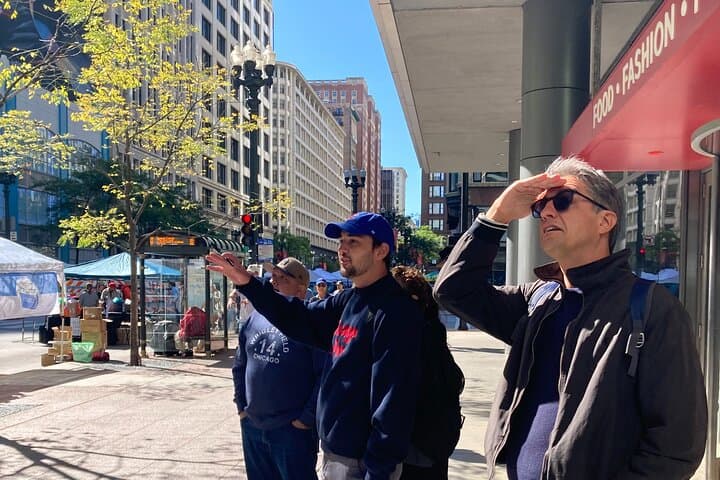
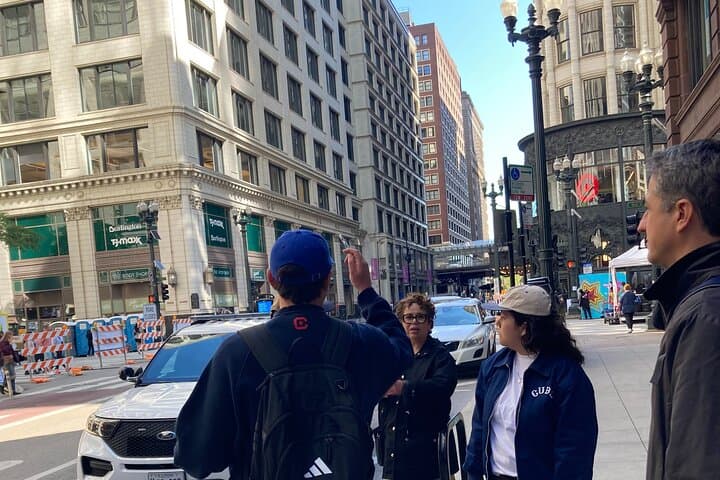
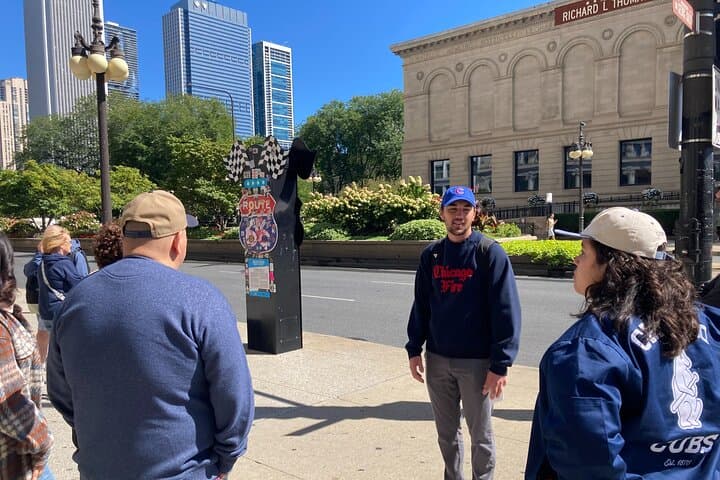
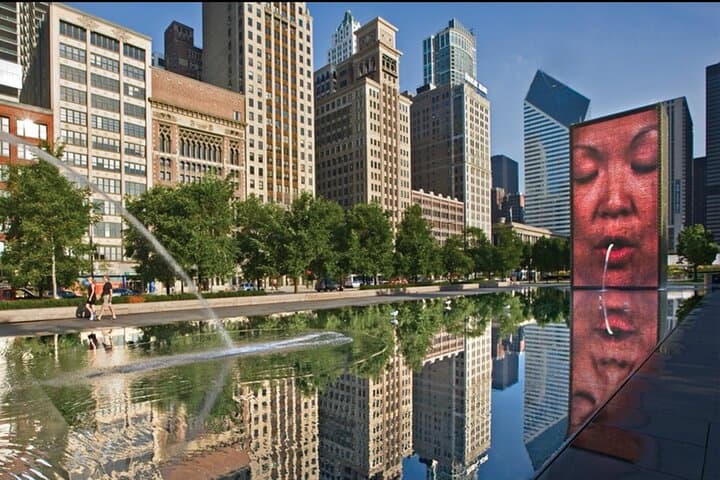
You start under the glowing marquee of the Chicago Theatre, the city’s pulse delivered in the click and rumble of the elevated train above. The Loop unfolds around you — polished granite, cast-iron facades, and modern glass reflecting Lake Michigan’s light. A guide leads the way, carving narratives out of stone and steel as you move from the entertainment district to the open plaza of Millennium Park.
You start under the glowing marquee of the Chicago Theatre, the city’s pulse delivered in the click and rumble of the elevated train above. The Loop unfolds around you — polished granite, cast-iron facades, and modern glass reflecting Lake Michigan’s light. A guide leads the way, carving narratives out of stone and steel as you move from the entertainment district to the open plaza of Millennium Park.
This walk traces Chicago’s rebirth after the 1871 Great Fire and its rise as the birthplace of the modern skyscraper. Expect stops at Marshall Field’s (now Macy’s) Tiffany dome, the Picasso sculpture in Daley Plaza, the structural innovations of Willis Tower, and the transformation of rail yards into Millennium Park — an urban reclamation project that reshaped the lakefront.
Geologically the Loop sits on glacially flattened plain at Lake Michigan’s edge; the soil and shoreline shaped where the city grew and how engineers anchored tall buildings. Culturally the Loop mixes civic pride (City Hall, the Art Institute lions) with the city’s commercial grit: a place where architecture tells class, craft, and controversy.
Practical details: the route is about 1.5–2 miles on paved sidewalks, mostly flat and wheelchair accessible; plan for roughly two hours with photo stops. Wear supportive walking shoes, carry water, and layer for lake-effect wind. Mornings and late afternoons bring softer light for photos; weekends are busier near Millennium Park. Bring a charged phone for photos and public transit fare if you’re connecting elsewhere. This is a compact urban adventure — easy on the legs but rich in stories.