THE ADVENTURE COLLECTIVE® · Independent discovery and booking for outdoor travel

Walk two hours through Chicago’s architectural spine with a private guide who brings the Wrigley Building, Palmer House lobby, Carbide and Carbon, Reliance Building and Chicago Cultural Center into clear focus. Practical route, flat sidewalks, and custom stops make this a compact introduction to the city’s design history.
Walk two hours through Chicago’s architectural spine with a private guide who brings the Wrigley Building, Palmer House lobby, Carbide and Carbon, Reliance Building and Chicago Cultural Center into clear focus. Practical route, flat sidewalks, and custom stops make this a compact introduction to the city’s design history.
You step out of LondonHouse onto Michigan Avenue and the city rearranges itself around you: the Chicago River threading steel and glass, a clock tower presiding over the bend, and the wind off Lake Michigan nudging you upriver.
Verified experiences and guided adventures in the surrounding area.
Operated by Guydeez · Chicago, Illinois
You step out of LondonHouse onto Michigan Avenue and the city rearranges itself around you: the Chicago River threading steel and glass, a clock tower presiding over the bend, and the wind off Lake Michigan nudging you upriver.
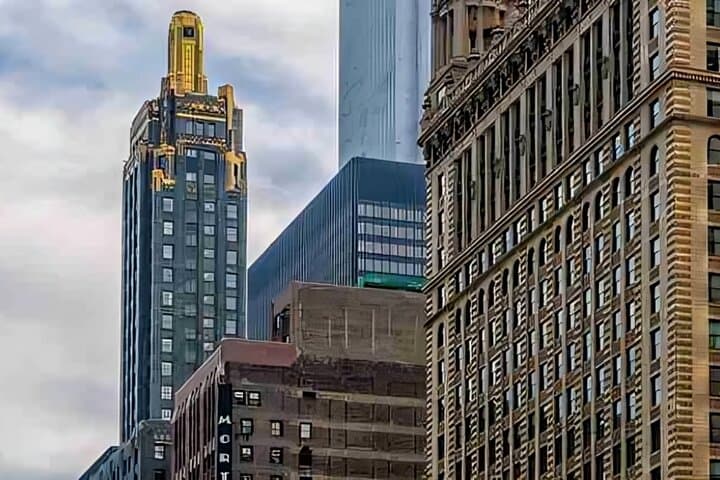
Over the next two hours a guide sketches the city in layers — the white terra-cotta of the Wrigley Building, the gilded opulence of the Palmer House lobby, the dark green sheen of the Carbide and Carbon, and the Reliance Building's glass curtain that hinted at modern architecture. Those facades tell a practical story: post‑1871 Fire rebuilding, the Chicago School’s experiments with steel framing, and the Art Deco burst in the 1920s when ornament met commerce.
Geology here is quiet but influential — Chicago sits on a glacial lake plain, the flatness making for wide avenues and big sightlines; the river was reshaped for industry, now daring you to look upstream and imagine barges and bridges at work.
Culturally, this stretch is civic theater: theaters, civic halls, lobbies that double as living museums. Local insights include quieter windows early morning, and the benefit of a private guide who can tailor stops without queueing for interiors.
Practical guidance: meet at LondonHouse (85 E Wacker Dr), wear supportive walking shoes, and dress in layers — lake winds can change a warm day. The route is entirely paved and wheelchair‑accessible, with minimal elevation and a steady, conversational pace. Bring a transit card for after‑tour options, a charged phone for photos, and a light rain jacket if showers are forecast. Afterward, extend your survey onto the Riverwalk or pop into the Chicago Cultural Center to see the Tiffany dome up close.
easy.
2 hours.
Suitable for most fitness levels; requires comfortable walking for up to two hours on flat pavement.
Yes — the route uses paved sidewalks and accessible entry points; confirm any specific mobility needs when booking so the guide can adapt stops.
No — this is an exterior and lobby walking tour; entry fees for museums or paid attractions are not included but the guide can help arrange tickets.
This listing is private — your group will be the only party, and the guide customizes the pace and points of interest accordingly.
Meet your guide in front of LondonHouse Chicago (85 E Wacker Dr); the tour also finishes there unless you arrange an alternate drop‑off.
The downtown corridor was rebuilt rapidly after the Great Chicago Fire of 1871; innovations in steel‑frame construction and curtain walls here shaped modern skyscrapers.
Historic preservation efforts protect many façades while the city balances river restoration and public access; stay on marked paths and support local conservation programs when possible.
Guydeez operates guided outdoor trips and adventures with an emphasis on safety, stewardship, and memorable experiences.
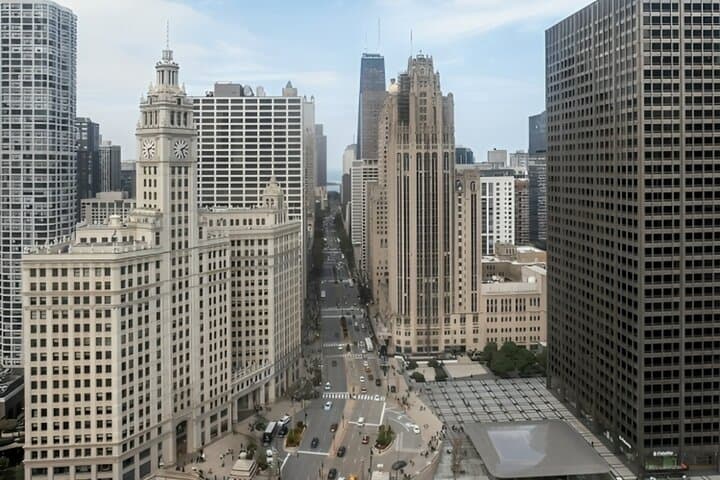
You step out of LondonHouse onto Michigan Avenue and the city rearranges itself around you: the Chicago River threading steel and glass, a clock tower presiding over the bend, and the wind off Lake Michigan nudging you upriver.
You step out of LondonHouse onto Michigan Avenue and the city rearranges itself around you: the Chicago River threading steel and glass, a clock tower presiding over the bend, and the wind off Lake Michigan nudging you upriver.
Over the next two hours a guide sketches the city in layers — the white terra-cotta of the Wrigley Building, the gilded opulence of the Palmer House lobby, the dark green sheen of the Carbide and Carbon, and the Reliance Building's glass curtain that hinted at modern architecture. Those facades tell a practical story: post‑1871 Fire rebuilding, the Chicago School’s experiments with steel framing, and the Art Deco burst in the 1920s when ornament met commerce.
Geology here is quiet but influential — Chicago sits on a glacial lake plain, the flatness making for wide avenues and big sightlines; the river was reshaped for industry, now daring you to look upstream and imagine barges and bridges at work.
Culturally, this stretch is civic theater: theaters, civic halls, lobbies that double as living museums. Local insights include quieter windows early morning, and the benefit of a private guide who can tailor stops without queueing for interiors.
Practical guidance: meet at LondonHouse (85 E Wacker Dr), wear supportive walking shoes, and dress in layers — lake winds can change a warm day. The route is entirely paved and wheelchair‑accessible, with minimal elevation and a steady, conversational pace. Bring a transit card for after‑tour options, a charged phone for photos, and a light rain jacket if showers are forecast. Afterward, extend your survey onto the Riverwalk or pop into the Chicago Cultural Center to see the Tiffany dome up close.